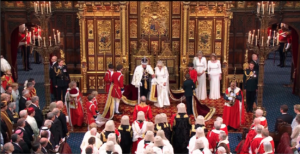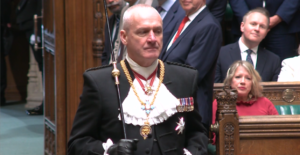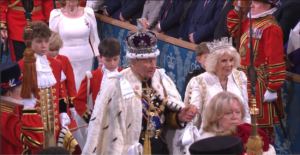
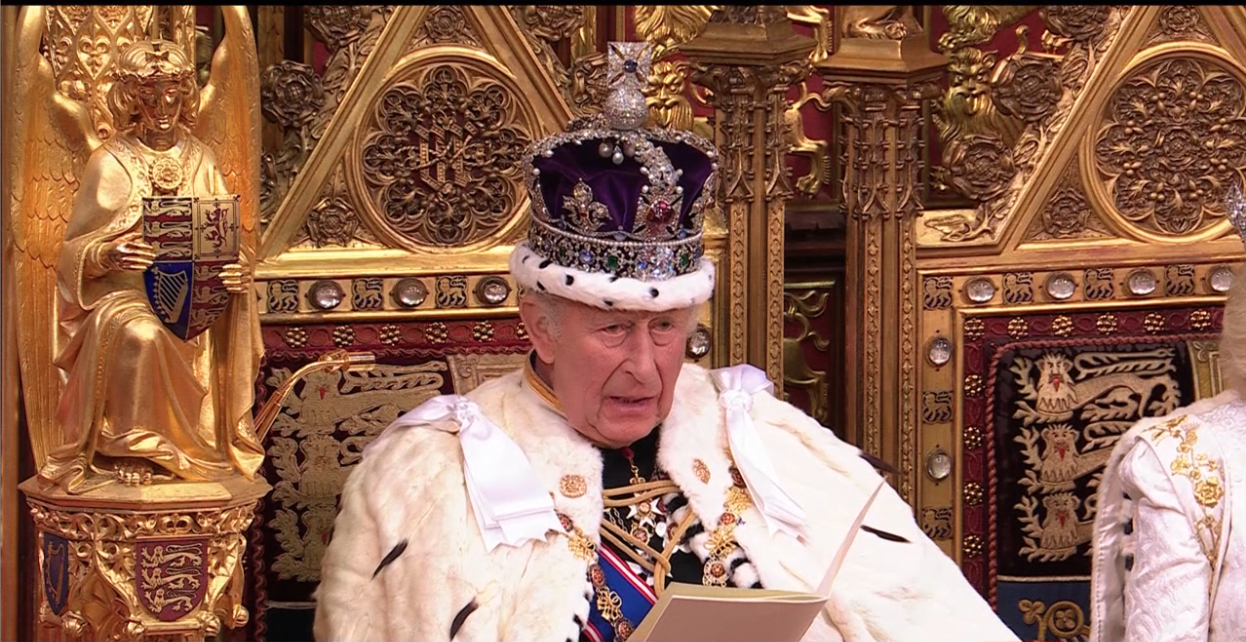
The streets of Westminster were lined with the usual choreographed grandeur on Wednesday morning, as the Household Cavalry escorted King Charles III to the Palace of Westminster. Yet, behind the velvet curtains of the State Coach and the diamond-encrusted weight of the Imperial State Crown, the atmosphere inside the Palace was anything but stable. This was the 2026 King’s Speech – the announcement of 35 bills designed to signal a government in its prime.
As Sir Keir Starmer stood at the bar of the House of Lords to hear the legislative programme for the coming session, his presence felt like a study in political survival. The backdrop to this regal pomp is a Labour Party in open revolt. Reports suggest that the number of Labour MPs calling for his resignation has now surged past 90, more than the 81 threshold required to trigger a formal leadership challenge, although there was no formal challenger at time of going to pixel.
Most damagingly, whispers suggest that the Home Secretary has privately informed the Prime Minister that his time is up, urging him to set a clear timetable for a departure to avoid a humiliating forced exit. While Health Secretary Wes Streeting is reportedly on “manoeuvres” and his allies are suggesting he will launch a leadership bid tomorrow.
The government is leaning heavily into “Economic Security and Growth,” a mantra intended to distract from the internecine warfare currently consuming the cabinet. The centrepieces of the speech are the creation of “British FBI”, the nationalisation of the steel industry, closer ties to the EU and a revival of HS2.
Also included in the King’s Speech is an NHS Modernisation Bill, which aims to scrap the NHS England “quango.” This represents a massive centralisation of power back to the Department of Health, a move that Streeting has long championed. By moving towards AI integrated healthcare systems, the government hopes to slash waiting lists, but critics argue that structural upheaval during a leadership crisis is a recipe for disaster.
On the energy front, the Energy Independence Bill and the Electricity Generator Levy Bill aim to decouple gas and electricity prices, scaling up homegrown renewables to protect the UK from global market shocks. While these measures are technically sound, they require a level of sustained political capital that Starmer may no longer possess. The Steel Industry (Nationalisation) Bill aims to save British Steel through state ownership: a move that will likely appease the unions and be popular with his own backbenchers.
National security remains a cornerstone of the 2026 agenda. The Police Reform Bill proposes the creation of a “British FBI,” a national agency designed to tackle organised crime and cross-border threats with greater autonomy. This is paired with the National Security Bill, which addresses cyberstrikes and mass casualty planning, and the Tackling State Threats Bill, aimed at curbing the influence of foreign proxies.
However, the inclusion of the Immigration and Asylum Bill, promising “firm but fair controls,” highlights the government’s ongoing struggle to manage the Channel crossings.
The Removal of Peerages Bill, widely referred to in the corridors of power as the “Mandelson Law”, is perhaps the most aggressive constitutional move in the speech. It grants the government powers to strip life peerages, a move long seen as overdue by critics of the House of Lords.
Similarly, the Representation of the People Bill aims to cement a new electoral demographic by lowering the voting age to 16. While framed as a move for youth empowerment, critics view it as a desperate attempt by a failing administration to “gerrymander” the future electorate before they are swept from power.
Below is a complete breakdown of the 35 Bills:
The 2026 King’s Speech is one of the most packed legislative calendars in modern history. Below is the full list of bills announced:
1. Immigration and Asylum Bill: Establishing “firm but fair” controls and streamlined processing.
2. Police Reform Bill: Creating a ‘British FBI’ to tackle national and organised crime.
3. Commonhold and Leasehold Reform Bill: Finally ending the “feudal” leasehold system.
4. Steel Industry (Nationalisation) Bill: Bringing British Steel into public ownership.
5. NHS Modernisation Bill: Scrapping the NHS England quango to increase ministerial accountability.
6. European Partnership Bill: Pursuing closer trade ties with the EU without rejoining the single market.
7. Remediation Bill: Legally forcing the fix of unsafe cladding on all residential buildings.
8. Clean Water Bill: Establishing a new integrated regulator to punish water company polluters.
9. Public Office (Accountability) Bill: Known as “The Hillsborough Law,” enforcing a duty of candour on public officials.
10. Energy Independence Bill: Accelerating grid delivery and homegrown renewable scaling.
11. Social Housing Renewal Bill: New investment frameworks and increased tenant protections.
12. Education for All Bill: Comprehensive SEND reform and school standard harmonisation.
13. Representation of the People Bill: Lowering the voting age to 16 and expanding accepted forms of ID.
14. Northern Powerhouse Rail Bill: Statutory backing for Liverpool to York high-speed upgrades.
15. Small Business Protections (Late Payments) Bill: Imposing a strict 60-day limit on invoice payments.
16. Conversion Practices Bill (Draft): A long-awaited ban on sexuality and gender conversion therapy.
17. Ticket Tout Ban Bill (Draft): Making the resale of tickets above face value illegal.
18. Competition Reform Bill: Granting the CMA new powers to intervene in digital markets.
19. Regulating for Growth Bill: Mandating that regulators prioritise economic growth in their decision-making.
20. Sporting Events Bill: Establishing the legal framework for major events, including EURO 2028.
21. Enhancing Financial Services Bill: Modernising regulation to maintain London’s competitiveness.
22. Highways (Financing) Bill: Creating new mechanisms for funding large-scale road schemes.
23. Sovereign Grant Bill: Reducing the grant following the completion of Buckingham Palace repairs.
24. Digital Access Services Bill: Creating a secure framework for a national Digital ID.
25. Removal of Peerages Bill: Dubbed the “Mandelson Law,” allowing for the stripping of life peerages.
26. Civil Aviation Bill: Reforming airport expansion protocols and slot allocations.
27. Taxi and Private Vehicle Hire Bill: Modernizing rules dating back to the Victorian era.
28. Railways and Passenger Bill: Formally establishing “Great British Railways” as a single directing body.
29. Northern Ireland Troubles Bill: Addressing the complex legacy issues and victims’ rights.
30. Courts Modernisation Bill: Restricting jury trials for certain low-level offences to clear backlogs.
31. Nuclear Energy Bill: Scaling up the next generation of small modular reactors.
32. Tackling State Threats Bill: Expanding powers against foreign proxies and espionage.
33. Armed Forces Bill: Establishing a dedicated Defence Housing Service for service personnel.
34. National Security Bill: Focused on cyber-resilience and mass casualty event planning.
35. Electricity Generator Levy Bill: Decoupling gas from electricity prices to lower household bills.
As the King concluded his speech and the procession made its way back to Buckingham Palace, the focus shifted immediately to the fragility of the Prime Minister’s position, with the big question of the day being whether or not Sir Keir will be in post long enough to deliver any of the measures announced today.