
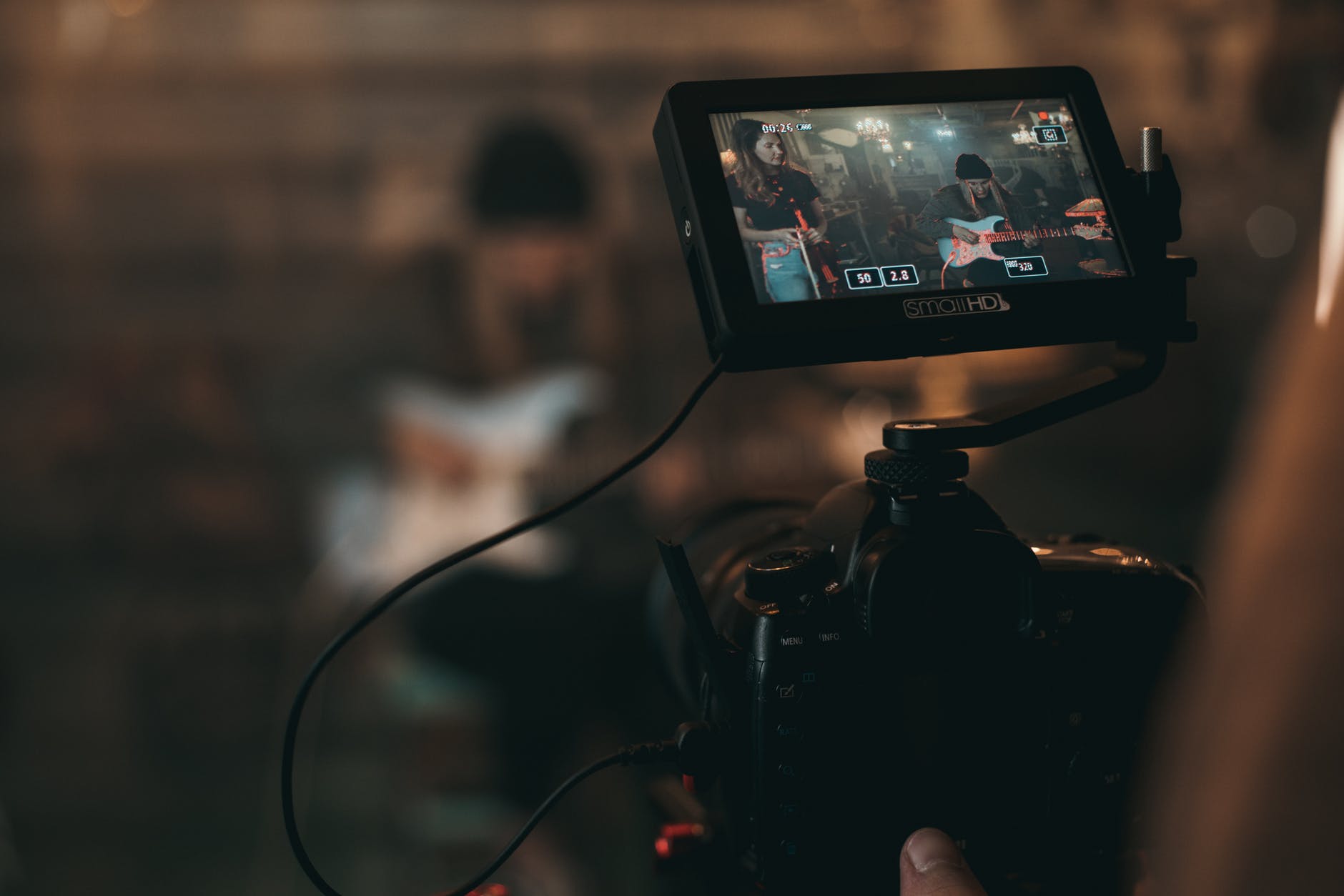
In the UK, it is largely permissible under the law to photograph or record people without their permission in public places that are open to the general public. But where the subject of the film has a legitimate expectation of privacy, it is otherwise. In their own house or in a non-public place, it can be unlawful to take a film of them without their approval. What also seems to be a criminal offense is filming someone with the intention to harass or intimidate him or her. The same applies when an act of filming is done in voyeurism or to satisfy sexual urges. Respecting the privacy of an individual and taking the necessary permission are always good to capture a movie or a photograph, especially in non-public places.
What does the law say about filming someone without consent?
Generally, a person is not permitted to capture an individual (in a personal place) with a camera without their consent, or without them knowing it. Overall, it is permissible to video record an activity or conversation that occurs in a place of public place. In addition, there is no privacy implied.
In the United Kingdom, no one could take videos of anyone in a clandestine place without consent. Well, a tape or a video cassette asks you the same question as to whether you are audio or video recording. The legal situations of other countries might be similar, i.e., there is a situation in Canada.
Is it illegal to film someone without consent?
The footage of a person may include the processing of his/her personal information, including images of his/her face or voice recordings. In such an event, the recording has to adhere to the principles in the Act. As a point of illustration, the shooting has to be carried out with a given and legitimate purpose at hand. When collection of data collection is carried out, the information should never be retained beyond the necessary period of time.
On top of this, filming is carried out in an open space. It can be done mostly without inhibition, provided that it does not disturb the privacy of those shot. But in the general course of things, where the recording is carried out in a place that is not a public domain or a place inside a person, as in the case of his/her house, then they need to be explicit to do the recording.
What are the legal consequences you may face?
Depending on their location, filming people without their consent, e.g., where they live, may be a criminal offense. In the same breath, one is not allowed to record a private conversation without the consent of both parties; this is illegal, and one may be prosecuted. Ancillary rules exist to control these rules, covered under the Regulation of Investigatory Powers Act (RIPA) or the Data Protection Act.
What happens if a video goes viral without your consent?
In circumstances where a video of yourself has taken a life of its own without your permission, it can be in your rights to lock in on a difficulty that was a breach of your privacy. All this is based on the character of the photos or videos and the manner it was acquired. Consequences will vary in:
1. Right To Privacy
In a number of jurisdictions, the law grants an individual a right to privacy, which bars disclosure of their personal facts in public. In the event the video leaks personal information about you or you can be identified based on where you are seen in the video, and you have a reasonable expectation of privacy, take action. You may plead the invasion of privacy.
2. Copyright Law
When the video material consists of your copyright-protected items, such as voice or other creative work, you may have a copyright infringement claim.
3. Defamation
In case the video has a false and harmful character and has damaged your reputation, you may have a defamation claim. In case another person posts a video against your will and contrary to your legal rights, then you must seek the help of a lawyer. They are learned on the laws of your jurisdiction. Besides, they can consult you about your legal rights and assist you in actions. It incorporates the sending of the cease and desist letter, the lawsuit, among others.
What is the penalty for opening someone else’s mail in the UK?
Opening someone else’s mail in the UK is an offence that can be punishable by a fine, or by both a fine and up to six months in prison. It is also an offence to dishonestly retain or open mail which has been deficiently delivered to you, with the intended outcome of malice or to a person without a justifiable cause, under section 84 of the Postal Services Act 2000. Postal businesses can get up to two years’ imprisonment.
Unintentional or innocent opening is not usually prosecuted in most cases. In a situation where the harmful person suffers damage due to the unlawful opening, he/she may also have civil consequences. The more common penalties are a maximum prison sentence of six months, but in more serious cases, like post workers or malicious motives, offenders can receive up to two years.
The only change assigned to this offense in 2025 is not mentioned in terms of being changed about penalty. General postal offences and related punishments continue to be in the same statutes. You can be penalized and even jailed upon opening the mail dishonestly or in bad faith. The chances of being prosecuted when openings are innocent or not intentional are less.
Thus, the main penalty for the illegal opening of letters addressed to another person in 2025 may be up to six months of prison or fines, depending on the circumstances of the given case. Most of the new 2025 penalties in the UK are caused by taxes and late charges, which do not include the postal offences.
Are you allowed to open someone else’s mail?
In the UK, it is generally illegal to read someone else’s letter that you are not supposed to see. The Postal Services Act of 2000 classifies it as a criminal and dishonest act to open and keep mail delivered to you in error with the intent to injure another person and without a reasonable cause.
A prosecution is less likely to be brought as a result of an unintentional or harmless opening, e.g., when you have the genuine belief that the mail is yours. Should you come into possession of the mail that belongs to another person, it should be mailed to the correct individual or returned to the post office unopened.
However, the intent is also a key factor to consider when deciding whether an act is legal or not; if a case accidentally opens someone else’s mail UK, there is no malice or injury to the legal recipient, it might not be seen as a crime. It is also illegal to make use of information contained in wrongly opened emails to perpetrate financial gain or cause any ill consequences to the recipient. Even postal workers are subject to discipline should they open or delay mail intentionally.
Is it an offence to open someone else’s mail in the UK?
In the UK, in fact, opening the mail of another person is also a criminal offence. The Postal Services Act 2000 makes it a crime when one intentionally postpones or opens a postal packet in transit on its way to be delivered without reasonable cause. Having or reasonable suspicion that a postal package was delivered to him/her in error to hurt another person is also criminal. The maximum punishment for this crime is six months in prison and/or an unlimited fine. In the case of similar crimes, postal operators get a much heavier punishment, up to two years ‘ imprisonment.
Is there any case of a leaked video without permission in the UK?
Especially, regulations against revenge porn and unauthorized circulation of personal sexual photographs or videos make it unlawful to transmit individual or personal videotapes without consent. It can be followed by criminal charges, jail time, as well as fines. Victims of such violations are in a position to report to the police or obtain legal help. Moreover, according to the UK laws that guarantee privacy, non-consensual recording and broadcasting of the recordings in a place where it is prohibited or using them in a manner that causes harm or harasses others may be illegal.
How have UK courts assessed damages for published videos without permission?
The character of the material, quantity of distribution, loss or hurtfulness the claimant has exceeded, and infringement of copyright or privacy legal lawfare are the main factors taken into account by the UK courts in calculating the damage to uploaded videos that qualify without acquiring assent. The possible damages in the cases of privacy claims are high, especially in cases where the videos in question are intimate, private, or otherwise emotionally upsetting.
An example would be that due to the highly personal effect and far-reaching nature of intimate videos, a 2023 case of revenge porn resulted in the High Court awarding 60,000 pounds in general damages and special damages for other expenses. Another privacy case of secretly recorded yet unpublished films led to damages above 50,000 pounds, which also included future therapy charges and compensation for psychological harm.
The “user principle,” which determines what a willing licensee would have paid to a willing licensor in copyright infringement cases assessing damages for unauthorized video usage, is applied in addition to possible additional damages for egregious or careless violation. Depending on the particulars of each case, these can cost anywhere from a few hundred to several thousand pounds.
How do copyright claims compare to privacy claims for leaked videos?
The exclusive rights of the artist or copyright owner to their original work, including videos, are safeguarded by copyright claims. Unauthorized use, distribution, or reproduction of copyrighted content is the main subject of these allegations. Injunctions to remove the content, damages based on lost license fees or profits, and occasionally statutory damages are the usual forms of remedies. As opposed to guarding the issue of privacy, the copyright law aims at facilitating creativity and guarding economic interests.
On the one hand, privacy interests protect individuals against videos published or shared without their consent, which offend their privacy or make them angry. The misuse of private information or breach of confidence is at the heart of these allegations. With an emphasis on secrecy and personal dignity, damages are frequently granted to make up for emotional suffering, reputational damage, and invasions of privacy.
Though it is sometimes possible to suppress the content under the copyright law in the name of privacy, UK courts consider that copyright is not used in the first place so as to preserve the right of privacy. The issue of censorship and expressions of free speech may occur in response to copyright claims, where sensitive or confidential material may be involved. Privacy law proposes an easier solution in cases of damage, intrusion of privacy, or intimate videotapes.