Greenwich (Parliament Politics Magazine) – A historic artwork has been rescued and relocated to a Royal Greenwich primary school, preserving local heritage for future generations.
A rare mural set up during the construction of a new social casing in Blackheath has been restored and dislocated to a near abecedarian academy.
One of the best- saved pieces of importantpost-war sculptor and artist William Mitchell’s work is the Brooklands tempera, which was commissioned as public art in the 1950s.
As part of the 1,750-home Greenwich Builds program under the council’s casing Our Greenwich plan, the artwork was set up in an abandoned community center that was being demolished to make room for new social housing.
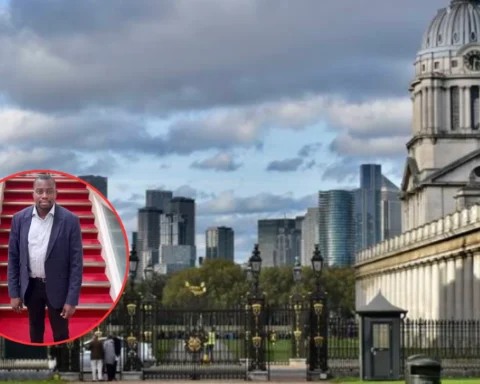
Councillor Anthony Okereke, Leader of the Royal Borough of Greenwich, said:
“The Brooklands mural reminds us how local and national government came together after World War 2 to create social housing on a massive scale, for the benefit of everyone in society.
The mural’s rescue, restoration and relocation to make way for a new generation of social housing seems a fitting way to pay tribute to this era in our history, continuing the legacy of public good of which William Mitchell’s mural is part.
We hope it will enrich the lives of pupils in its new home at Brooklands Primary School, and thank both the Heritage of London Trust and the Twentieth Century Society for their generous support and expertise, helping us preserve this part of Royal Greenwich’s cultural legacy for future generations.”
Ward members for Blackheath Westcombe, Councillors Leo Fletcher, Mariam Lolavar and Christine St. Matthew-Daniel, said:
“It has been our privilege to work with local residents, the Heritage of London Trust and the Twentieth Century and Blackheath Societies to protect and preserve this culturally significant mural.
We are delighted that this rare example of William Mitchell’s work has been restored so beautifully, and remains at the heart of Blackheath where it can continue to inspire local people for many years to come.”
The mural was meticulously cleaned to get rid of paint damage, decades’ worth of embedded grime, and stabilize the chipboard’s top layer, which was delaminating.
Pigmented resin was used to fill in losses, and acrylic wash was used to repair and color damaged areas. Temple Studios completed the restoration.
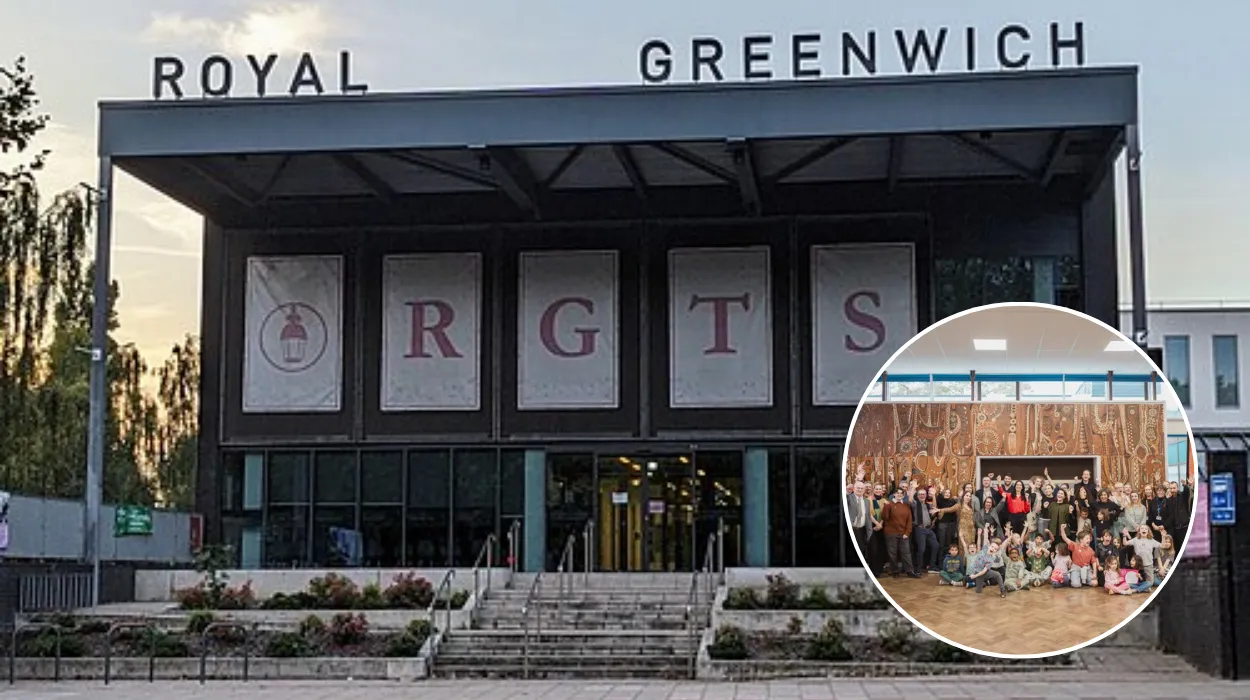
The mural’s new site, Brooklands Primary School, was constructed concurrently with the Brooklands Estate and is only 250 meters from the former community center.
In response to Mitchell’s work, students created their own artwork while learning about the methods and tools used to repair artwork before installation.During the unveiling event, a number of kids gave speeches discussing what they had learnt in the workshops; one of them said that
“having this mural in my school makes me feel special”.
From the 1950s onward, William Mitchell created a number of enormous public puppets and showpieces. The fiberglass reliefs on the doors of Liverpool’s Metropolitan Cathedral, the notorious Egyptian staircase in Harrods, the concrete Stations of the Cross in Clifton Cathedral, and a striking tempera in the Curzon Cinema in Mayfair are just a many of his workshop that are listed on the public register, further than any otherpost-war artist.
A London County Council Patronage of the trades design, the Brooklands tempera was finished in 1958 and was commissioned for the clubroom of the Brooklands Park Estate, a post-war casing development constructed in Blackheath between 1955 and 1958.
How will the school incorporate the mural into student learning?
The primary academy plans to incorporate the saved William Mitchell tempera into pupil literacy by using it as a hands-on educational resource for art, history, and original heritage assignments. scholars will study the tempera’s cultural ways, similar as relief work and concrete sculpting, gaining sapience intomid-20th-century public art.
The academy intends to integrate the tempera into broader class themes touching on community identity, conservation, and artistic appreciation. Artists and heritage experts will also visit the academy to give shops and addresses about the tempera’s restoration process, fostering pupil engagement with trades preservation and inspiring creativity.
The tempera’s proximity to the academy point offers unique openings for systems involving exploration, attestation, and indeed designing new community artworks, helping children connect with their original terrain and the history of Royal Greenwich.