

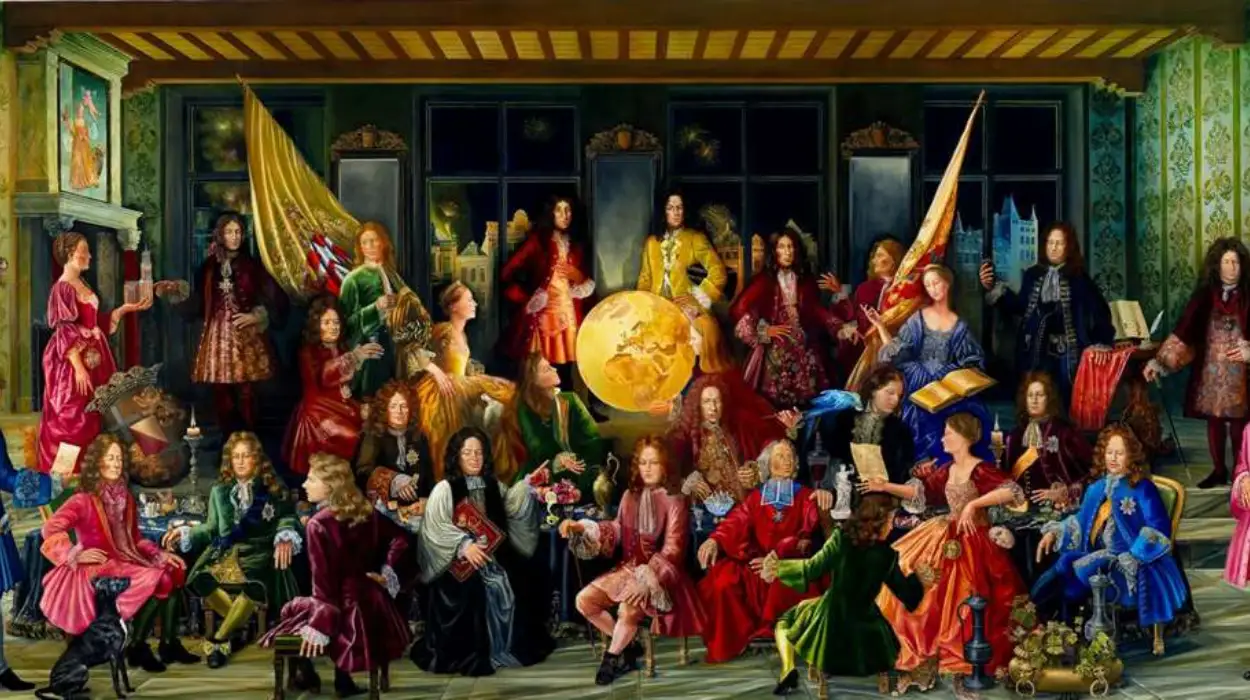
The Treaty of Utrecht was an agreement between Britain and France, concluded on 11 April 1713 at Utrecht in the Netherlands, as part of the series of treaties ending the War of the Spanish Succession. The treaty recognized Queen Anne as the legitimate sovereign of England and officially ended French support for the claims of the Jacobite party to the British throne.
Territorially, it resulted in major concessions by France in North America. France agreed to restore the entire drainage basin of Hudson Bay to Britain and to compensate the Hudson’s Bay Company for losses suffered during the war.
In addition, France agreed to cede all claims to Newfoundland and to evacuate its base there at Plaisance (Placentia), although French fishermen retained certain rights on the Newfoundland coasts (see French Shore). Moreover, Acadia, whose capital of Port-Royal (Annapolis Royal) had been captured by a New England expedition in 1710, was to pass to Britain, although France continued in possession of a part of the territory (modern New Brunswick) because of differences of interpretation in the size of the territory. Lastly, France retained Cape Breton Island, where it began to construct the fortress of Louisbourg and Ile Saint-Jean (Prince Edward Island).
The Background of the Treaty of Utrecht
Before we dive into the Treaty of Utrecht, it is important to discuss the events leading up to the treaty and why it was necessary in the first place.
The Spanish Succession Crisis
In 1700, Charles II, the King of Spain, died childless. Much of Europe was left in limbo about who should rule Spain. The Spanish Empire in 1700 was enormous, with territory spanning Eastern and Western Europe, the Americas, and Asia. Whoever gained control of Spain could potentially become the most powerful monarch in Europe.
Charles II named Philip of Anjou, the grandson of King Louis XIV of France, as his heir. This news worsened relations between powers, especially those in Britain, the Dutch Republic, etc. These powers feared a unified France and Spain with two powerful monarchies fused as one through Philip.
The War of the Spanish Succession
In 1701, the War of the Spanish Succession would begin. France and Spain would battle against Britain, the Dutch Republic, and Austria as they attempted to form a coalition against France. The war dragged on for over a decade, losing millions of lives, leading to economic stagnation in Europe.
By 1711, both sides were too tired to continue fighting. Peace negotiations in Utrecht began in order to come to a peaceful solution that would end the war. These negotiations would lead to the eventual signing of the Treaty of Utrecht.
The Main Goals of the Treaty
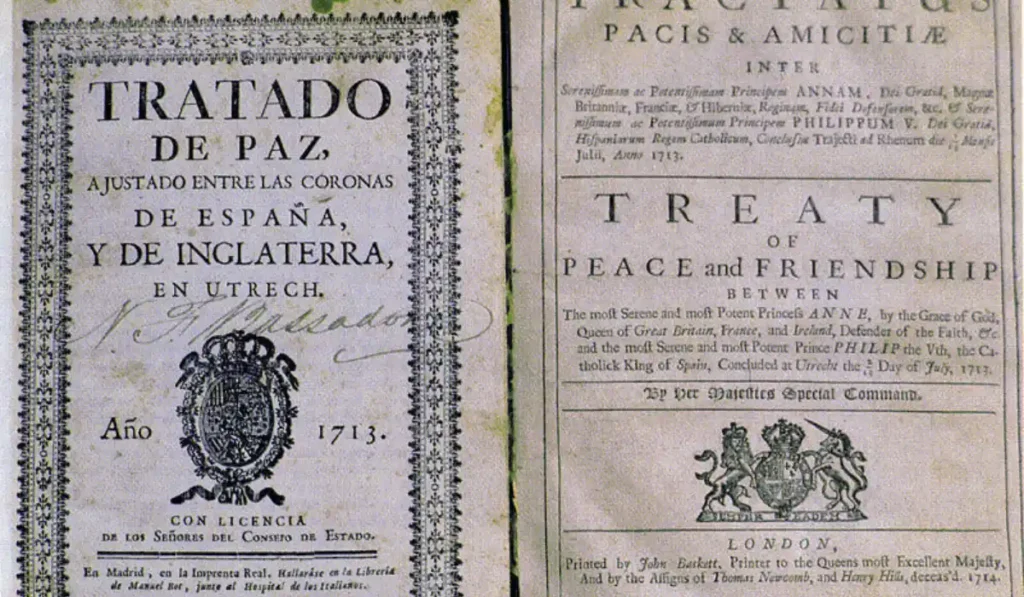
The treaty had three key goals:
- To conclude the War of the Spanish Succession.
- To prevent a united France and Spain with one king.
- To limit the imbalance of power in Europe.
Impacts of the Treaty of Utrecht
The Treaty of Utrecht had an extensive effect that is still felt today, not only in Europe but around the world. The results of the treaty influenced politics, trade, and diplomacy for centuries. The major effects were
1. The War of the Spanish Succession Was Ended: The treaty was the official conclusion to a war that lasted over a decade. Europe had enough warfare, destruction, and loss of irreplaceable lives and wealth.
2. European Balance of Power: The treaty introduced the concept of balance of power: one country should not have the opportunity to become too powerful. France was dealt a blow, Spain lost land, and Britain and Austria came out with more power and territory. This would have political implications for Europe in the future.
3. Britain Emerges as a World Power: Britain came out as one of the big winners. By obtaining Gibraltar, Minorca, and a large chunk of Canada, Britain was ensuring its naval and colonial expansion. These lands built upon modern improvements, including previously conquered lands, and laid a foundation for extending the British Empire.
4. The Decline of Spain’s Dominance: Spain was the loser with the loss of its empire in Europe, notably the former Spanish Netherlands, Naples, Milan, and Sardinia. Although Spain still had overseas colonies, it did not have the same level of dominance in Europe.
5. Territorial Displacement in Europe: The treaty altered the balance of power in Europe, as Austria’s gains included substantial territory in Italy and the Low Countries.The Dutch Republic established a defensive barrier against France. Changes in territory provided some distance between the chances of military and economic dominance from a possible French-Spanish superpower.
6. The expansion of colonial trade: Britain also received control over slave trading to Spanish colonies, Asiento de Negros, and this is a tragedy in terms of human suffering; it also benefited the British economy and geographical control over the Americas and the Caribbean regions.
7. The creation of modern diplomacy: The Peace of Utrecht treaty represented the importance of negotiation and compromise between statesmen. The agreement itself would be used as a model for future peace settlements, encouraging other states to use treaties as a way of restoring diplomatic stability.
8. The other longer-term European rivalries: The Peace of Utrecht treaty ended one war, but the agreement did not settle all rivalries. France and Britain remained entrenched in competition throughout Europe, North America, and Asia. In fact, subsequent wars have roots in the territorial division from Utrecht, e.g., the Seven Years’ War.
The Treaty of Utrecht and Britain
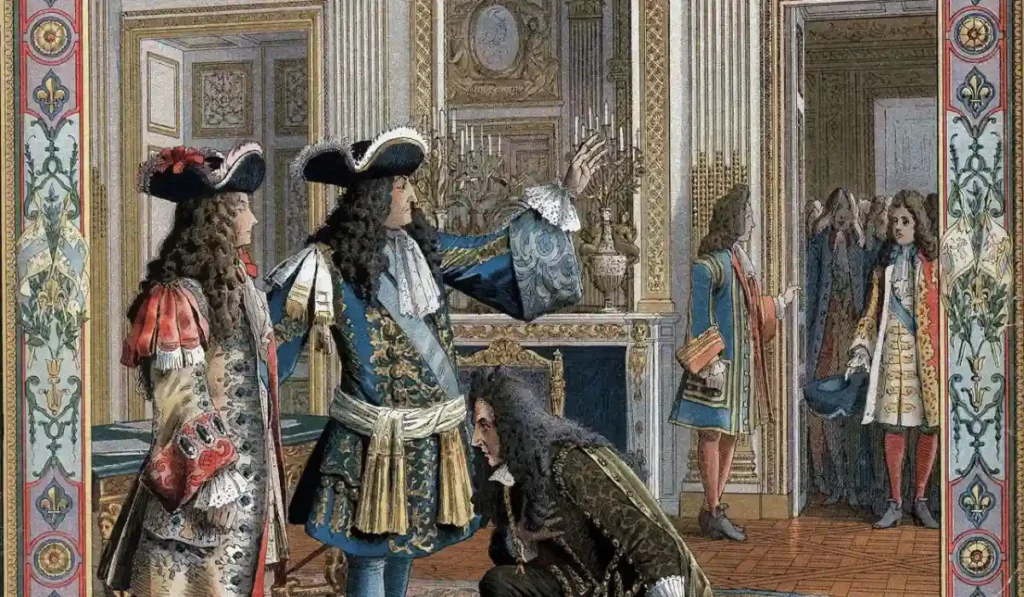
The signing of the treaty was of particular significance for Britain.
- Military and Naval Power: By gaining Gibraltar and Minorca, Britain gained two important naval bases (Gibraltar did not belong to Spain) in the Mediterranean. This allowed the Royal Navy to have greater power over their commercial trade routes.
- Expansion in the Americas: The territories gained in Canada furthered Britain’s claim and would come to play a vital role in relations with France when, perhaps not ironically, the Seven Years’ War broke out.
- Trade Opportunities: The Asiento agreement allowed Britain the right to trade in Spanish colonies. This was not only immediately associated with the slave trade, but it also greatly helped Britain’s economy and claimed a global trade network.
The Legacy of the Treaty of Utrecht
The Treaty of Utrecht remains significant in world and European history.
- It ended a costly and destructive war.
- It changed the map of Europe.
- It created the notion of maintaining a balance of power.
- It helped Britain develop as an empire.
- Furthermore, it proved the decline of Spain as a world power.
- Today it is still read in schools and universities because of its historical significance.
What exactly was the Treaty of Utrecht? The basic answer is that it was a peace treaty signed in 1713 that ended the War of the Spanish Succession. It allowed Philip V to remain King of Spain but avoided a situation where both Spain and France were ruled by the same monarch. It redefined the map of Europe, it empowered Britain, and it impacted Spain.
The Treaty of Utrecht was not just an end to war. It was momentous in world history. It illustrated how international diplomacy could create countries and empires. The effects of the treaty can still be seen today in contemporary European politics and international relations. Understanding the Treaty of Utrecht helps us understand how the modern world was built on individual peoples, nations, struggles, compromises, and agreements.
