
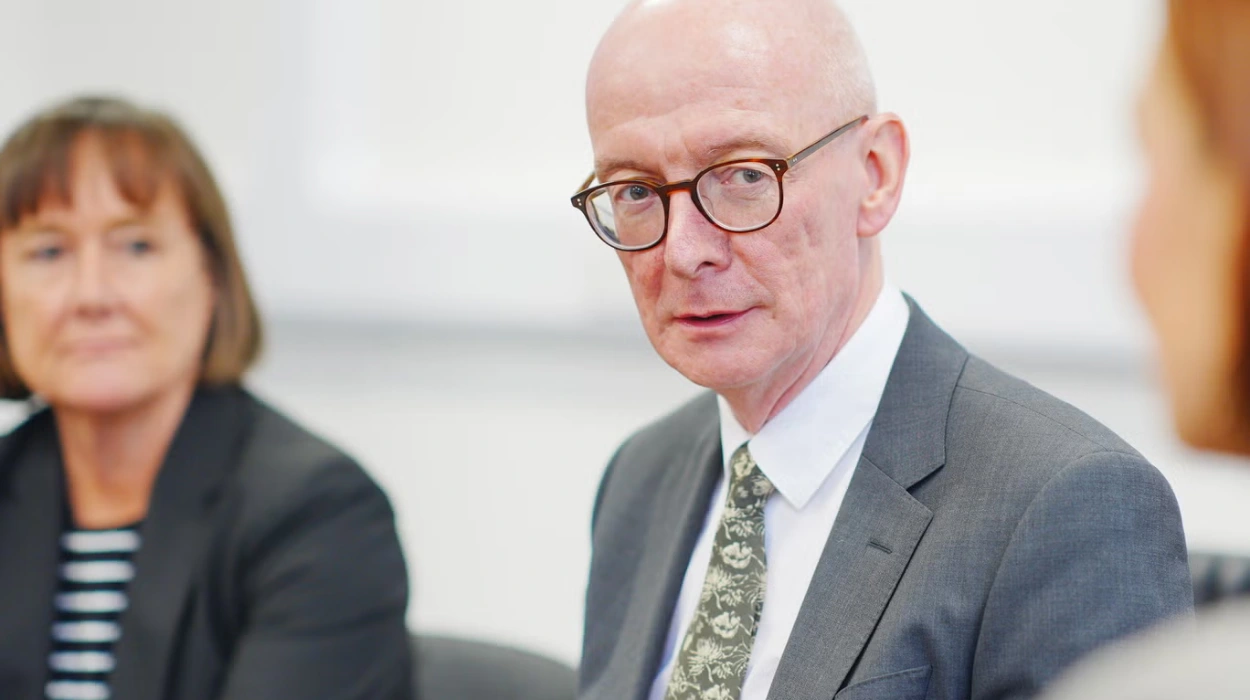
UK (Parliament Politics Magazine) – Work and Pensions Secretary Pat McFadden leaves the door open to PIP and disability benefit changes, saying no options are ruled out under budget rules.
As reported by The Independent, Labour appears to be preparing for further disability benefit cuts as a senior minister refuses to rule out revisiting plans shelved earlier this year.
What did Pat McFadden say about future disability benefit cuts?
Addressing a cross-party committee, when asked about future cuts, Pat McFadden replied he is
“not ruling out”
potential benefit cuts.
He said,
“I have only been in the job for three months, and if I start ruling things out it will just close doors in the future, so I am not ruling anything out.”
Mr McFadden told the committee the Timms Review is not intended to raise expenditure on PIP.
Responding to a question from the Liberal Democrats’ Steve Darling, he said,
“It has to work within the budgetary parameters of the rest of the Government, within the fiscal rules that the Government abide by.”
Mr Darling said,
“The previous Conservative Government left Britain’s benefits system broken, tearing up our economy and driving our health and care system into the ground – and the current Government’s failure to create growth and jobs has done nothing to help.”
He added,
“Many across the country will be worried to hear the Work and Pensions Secretary refuse to rule out a repeat of last summer’s benefits debacle. Ministers don’t seem to understand that hitting disabled people who are already in work makes their employment prospects worse, not better.”
Mr Darling continued,
“The Government must learn from past mistakes and instead manage the welfare bill down by fixing its root causes – finally repairing our health and care services and making it easier for people to work.”
His remarks followed Labour’s second autumn Budget, warning that the Chancellor’s policy changes may raise spending by £11bn in 2029/30, mainly due to reversing welfare cuts and scrapping the two-child benefit cap.
How is Labour handling future PIP cuts after MP backlash?
Earlier this year, Labour’s plans to tighten PIP eligibility faced backlash from advocacy groups and MPs. The government abandoned the plans in June after more than 100 Labour MPs threatened to vote against the measures.
During the debate on the legislation in August, Sir Stephen Timms announced the concession and said his review of the benefit is not intended to make cuts.
At the end of October, Mr Timms announced changes to the review’s terms of reference, clarifying that it will align with the Office for Budget Responsibility’s projections for future PIP spending.
What did Keir Starmer say about welfare reform and future spending?
Speaking after the Budget, Prime Minister Sir Keir Starmer said he intends to “reform the welfare state,” which has grown significantly under the last government.
Mr Starmer cited a review led by Alan Milburn into the growing number of young people not in education, employment, or training, calling the situation a “massive waste of potential.”
The prime minister’s official spokesperson said,
“I think the Milburn review is expected in spring next year, final report in summer 2026 the Timms review will conclude by Autumn 2026.”
They added,
“It is absolutely vital that we get these reviews right. This system has not been reformed properly for many, many years, but we have set out clear steps to ensure welfare spending is on a sustainable trajectory.”
What did James Taylor say about the PIP review?
James Taylor, Director of Strategy at disability equality charity Scope, said,
“There are problems with PIP that need fixing, such as assessments getting it wrong, and a lack of trust between assessors and disabled people.”
He added,
“This review will shape the future of PIP for years to come, so getting it right is crucial. It’s encouraging that a group of disabled experts will be ‘at the heart’ of this review, but a lot of good faith has been put in ministers’ commitments to co-produce reforms with disabled people. It’s vital the government keeps this promise. This process should not be used to restrict access to PIP or any other part of the benefit system.”
What did the DWP say about the Timms Review on PIP?
A DWP spokesperson said,
“We want a welfare state that is there for those who need it and supports people into work, while delivering fairness to the taxpayer. That’s why we’re launching the Timms Review to make sure PIP is fair and fit for the future, which is being co-produced by disabled people and their representative organisations.”
What is disability benefit in the UK?
In the UK, the main disability benefits are Personal Independence Payment (PIP), Universal Credit with a health element, and Employment and Support Allowance (ESA).
PIP helps 16-State Pension age claimants with long-term health or disability costs, covering daily living and mobility.
Universal Credit provides extra support for under-State Pension age claimants with limited work capability and low income; new rates from April 2026.
Employment and Support Allowance (ESA) pays those under State Pension age who cannot work due to illness/disability, based on National Insurance contributions.
