
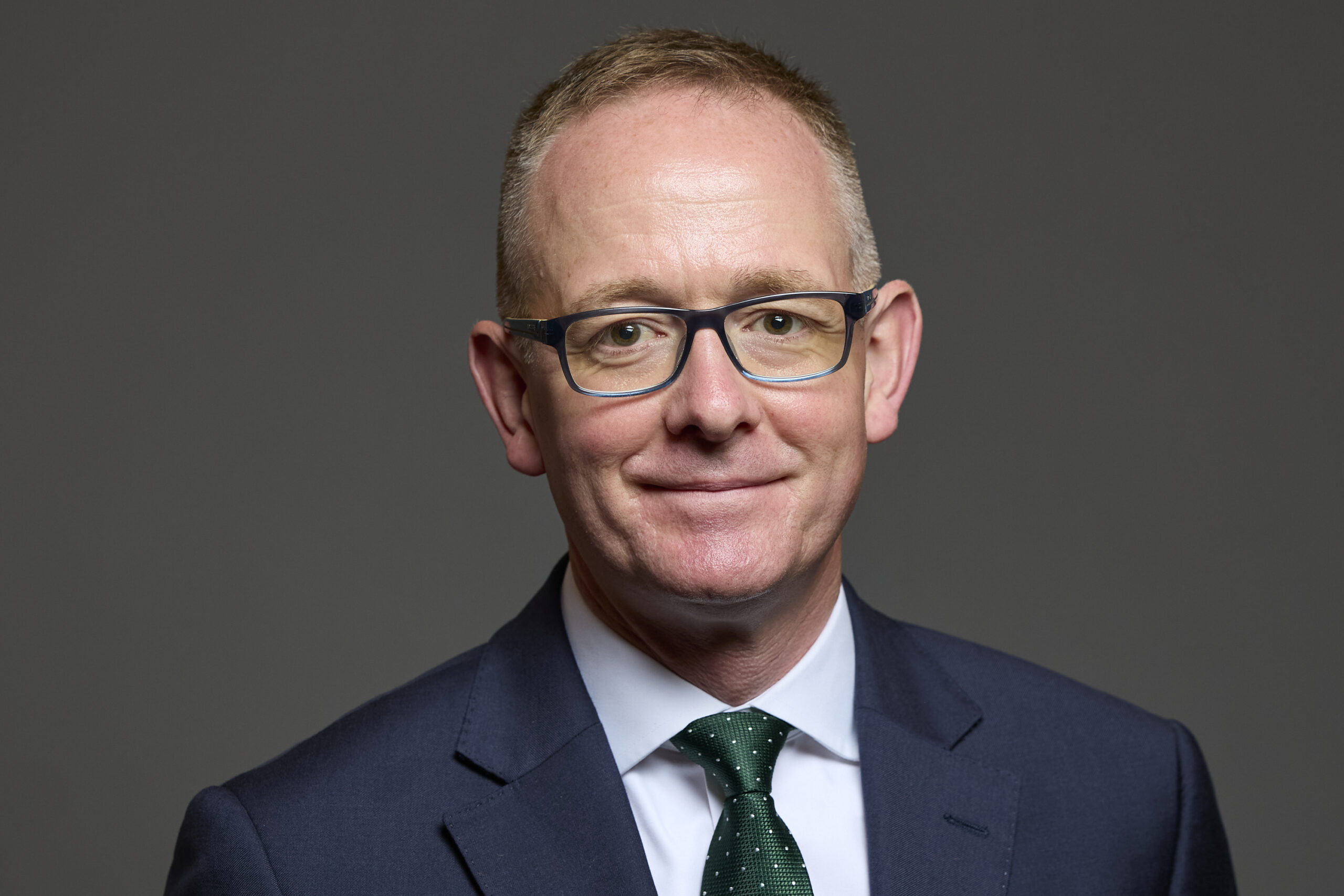
Network Rail’s new timetable has come into force – and it is bad news for passengers in our rural communities, like my own in the Scottish Borders.
LNER have described the changes as ‘transformational’ – they certainly are.
For big cities – London, Edinburgh, Newcastle, York, and many others – it is good news. It means more trains, and faster journeys between those cities.
That comes at a cost, however – to our rural communities.
For the Scottish Borders, the timetable changes mean that LNER trains will only call at Berwick-upon-Tweed once every two hours, and journey times will take longer.
Thousands of people in the Scottish Borders and North Northumberland rely on Berwick station for work and pleasure, and it is in the top 30% of most used stations nationally.
Our rural communities depend on train services, bus services and public transport links, because there are no alternatives. When trains don’t run on time, it has a far greater impact. It is not simply a case of ‘catching the next one’. That next train service could be several hours away.
To make the situation worse, LNER’s punctuality at Berwick-upon-Tweed station is far from outstanding – in the latest performance period, just 65% of trains arrived at the station on time.
That means services are being dramatically cut, whilst trains are turning up late a third of the time.
That isn’t a situation that I find acceptable for our rural communities.
I am particularly concerned about the impact this will have on disabled people. Having to change trains halfway through a journey is frustrating for all of us. Will I make the connection? How far will the next train be from the platform I’m coming in on? Do I have to pay again?
For disabled passengers, direct services are not a convenience, they are often the only practical and dignified way to travel long distances. Wheelchair spaces are extremely limited on trains. Network Rail’s timetable changes will further limit passengers’ choice, and that is not a situation I find acceptable.
Our railways have been the subject of fierce debate for decades. Who should run our train services? Why are ticket prices so expensive? Why do trains always seem to be late?
One of the few manifesto promises this Labour government has kept was to nationalise our railways. Whether that is the right or wrong decision is a debate we can have.
However, it means this Labour government, and them alone, will be held to account for the performance of train services and the experience of passengers using those services.
One of the reasons I find cuts to train services so bizarre is because of the Labour government’s complete and utter obsession with net-zero at all costs. With less reliable train services, people in my constituency could be more likely to fly from Edinburgh or Newcastle, because it is quicker and more reliable.
That isn’t going to help the environment.
The consequences of fewer trains has ramifications beyond passengers too. Tourism will be affected. We have some of the most beautiful parts of the United Kingdom – but day trips to the Borders will become harder, and people may choose alternative destinations. There is also the impact on other sectors, like taxi drivers – who have already been hammered by new taxes from the Labour government in the Budget – who will have fewer opportunities to pick up passengers.
People rely on our rail services. This year marks the 200th anniversary of passenger railway services in our country – and this is not the time to see our network downgraded. I am not prepared to see people in the Scottish Borders, and rural communities across the UK suffer worse public transport than they do today.
Going forward, I’ll be focusing my efforts on demonstrating the real-world, negative impact these changes will have for local people now the new timetable has come into force.
Passengers in rural communities deserve good access to public transport, just as people in urban areas do. That is what I’ll keep fighting for.
Passengers in rural communities deserve good access to public transport, just as people in urban areas do

5 mins read

Latest from UK Parliament

The Treasury is preparing the ground for a possible shift in fiscal policy as the Chancellor,

Small, independent businesses are the backbone of our economy. In my constituency of Isle of Wight
Abortion is a generally safe procedure for women. It is not my purpose in bringing this
For more than two centuries, families have made their homes on Britain’s rivers and canals. Yet

For too long, creative education has been treated as an optional extra in our schools: a