London (Parliament Politics Magazine) – Swedish activist Greta Thunberg was arrested in London for protesting in support of Palestine Action hunger strikers, highlighting solidarity and political tensions.
According to Ben Quinn of The Guardian, London police arrested human rights activist Greta Thunberg during a protest supporting Palestine Action hunger strikers.
How did Greta Thunberg join a London protest supporting Palestine Action hunger strikers?
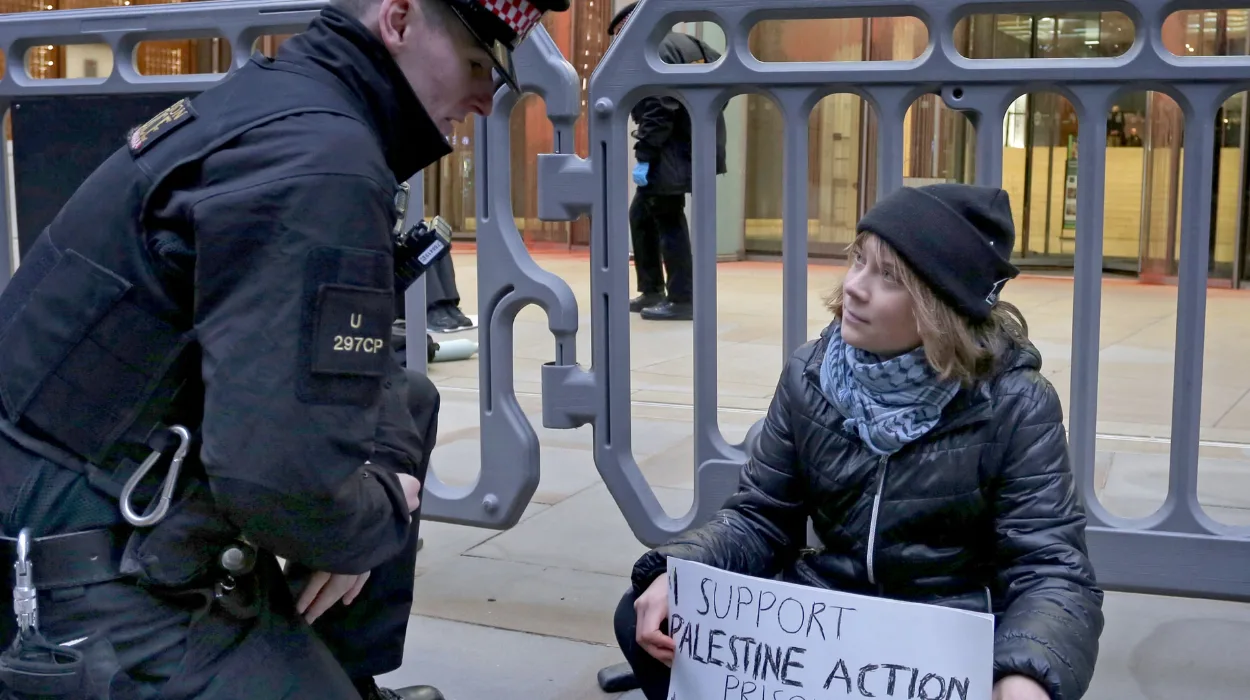
During a protest outside a London insurance office, Greta Thunberg held a sign reading,
“I support the Palestine Action prisoners. I oppose genocide.”
She added in a statement,
“It is up to the state to intervene and put an end to this by meeting these reasonable demands that pave the way for the freedom of all those who choose to use their rights trying to stop a genocide, something the British state has failed to do themselves.”
According to reports, two activists covered the front of Aspen Insurance in red paint using fire extinguishers before chaining themselves to the building.
The campaign group Prisoners for Palestine said Aspen, a global insurer, was targeted for providing services to Elbit Systems UK, an Israeli weapons manufacturer.
Defend Our Juries said the protest supported several prisoners on hunger strike while awaiting trial for alleged Palestine Action offences before the group was banned.
A spokesperson for the group said,
“Greta Thunberg held a sign saying, ‘I support the Palestine Action prisoners. I oppose genocide.’ “It’s not clear if the Met Police have made another one of their mistakes in interpreting the crazy ban on Palestine Action or whether the state has now turned anyone expressing support for prisoners locked up beyond the legal time limit for taking action to stop a genocide into alleged terrorists.”
A total of eight prisoners went on hunger strike. The initial two have reached day 52, facing serious health concerns, and three have stopped because of critical risk.
Campaigners have questioned Greta Thunberg’s arrest under counter-terrorism laws, despite hundreds being previously detained for holding “I support Palestine Action” signs.
Families and supporters of hunger strikers have called on Justice Secretary David Lammy to intervene and resolve the deadlock. On Monday, lawyers sent a letter claiming his refusal violated the Ministry of Justice policy on hunger strikes.
The hunger strikers are calling for immediate bail, an end to the Palestine Action ban, and the removal of restrictions on their communications.
The action against Aspen came after reports that two insurers, previously targeted by Palestine Action, had stopped covering UK subsidiaries of Israel’s arms manufacturer, Elbit Systems.
Allianz and Aviva have terminated their agreements with Elbit Systems UK and UAV Engines, and both have been contacted for comment.
Last weekend, after pressure on Ireland’s Gaelic Athletic Association to end its Allianz sponsorship, the insurer told RTÉ it
“has no relationship with Elbit Systems and does not engage in any Middle East-related investment or underwriting.”
What did the City of London police say about arrests over the Fenchurch Street protest?
A City of London Police spokesperson said,
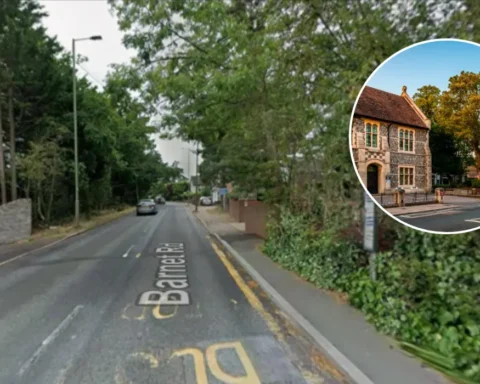
“At around 7 am this morning, hammers and red paint were used to damage a building on Fenchurch Street. A man and a woman have been arrested on suspicion of criminal damage. They glued themselves nearby and specialist officers are working to release them, and bring them into police custody.”
They added,
“A little while later, a 22-year-old woman also attended the scene. She has been arrested for displaying an item (in this case a placard) in support of a proscribed organisation (in this case Palestine Action) contrary to Section 13 of the Terrorism Act 2000.”
Why did the UK ban Palestine Action?
Palestine Action was founded on July 30, 2020. It was created by Huda Ammori and Richard Barnard.
The UK government banned Palestine Action as a terrorist organization under the Terrorism Act 2000 in July 2025. This classification makes membership, support, and even displaying signs that could be interpreted as backing the group a criminal offense.
The ban comes after activists broke into RAF Brize Norton, damaging two military refueling aircraft and causing an estimated £7 million in damage.
The UN Human Rights office has also criticized the ban, arguing it misuses counter-terrorism law to suppress legitimate protest and has a “chilling effect” on free speech, leading to over 2,300 arrests for expressions of support since the ban took effect.