

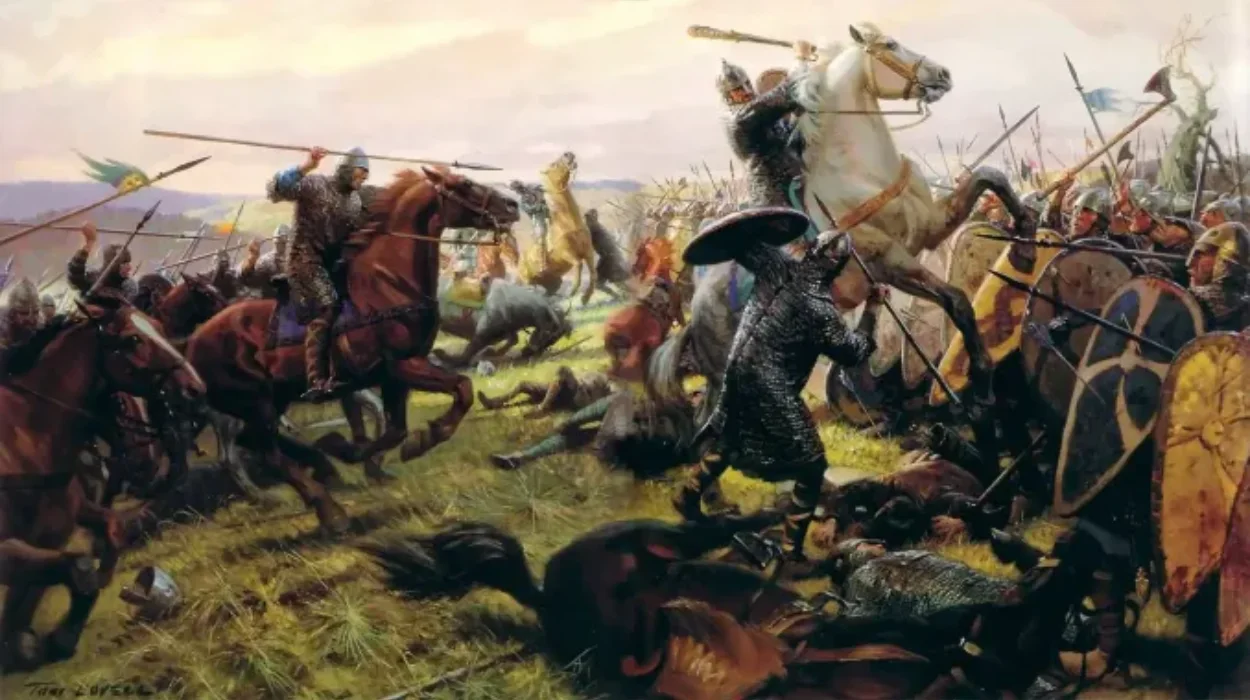
The Norman conquest of Ireland is one of the most important events in medieval history. It not only altered the political boundaries of the island but also impacted Irish culture, law, and land ownership for centuries. In order to understand this, it is important to consider when and why the Normans conquered Ireland and how they influenced Irish society.
When did the Normans invade Ireland?
The Norman conquest of Ireland began in 1169 with the first set of Norman adventurers, but the formal conquest is generally dated to 1171, when King Henry II of England landed in Ireland with a large, specifically royal army to secure his control over Ireland.
- 1169 – The First Landing: A band of Anglo-Norman knights, led by Richard de Clare, commonly referred to as Strongbow, attempted to help Diarmait Mac Murchada, the deposed King of Leinster, reclaim his throne.
- 1170 – Strongbow’s Reinforcements: Strongbow came to Ireland with more soldiers following this and achieved decisive victories and married Diarmait’s daughter Aoife for political control.
- 1171 – Henry II’s Intervention: Due to growing concerns over Strongbow’s power, King Henry II came to Ireland with a large force and claimed overlordship, placing the conquest directly under royal authority.
The Normans’ conquest of Ireland was not a singular event but a process that played out over many years.
Why did the Normans conquer Ireland?
The Norman conquest of Ireland has many variables in play, so the reasons are not straightforward. The factors below all played a role in Ireland being a target of Norman expansion.
1. Internal Irish Factionalism
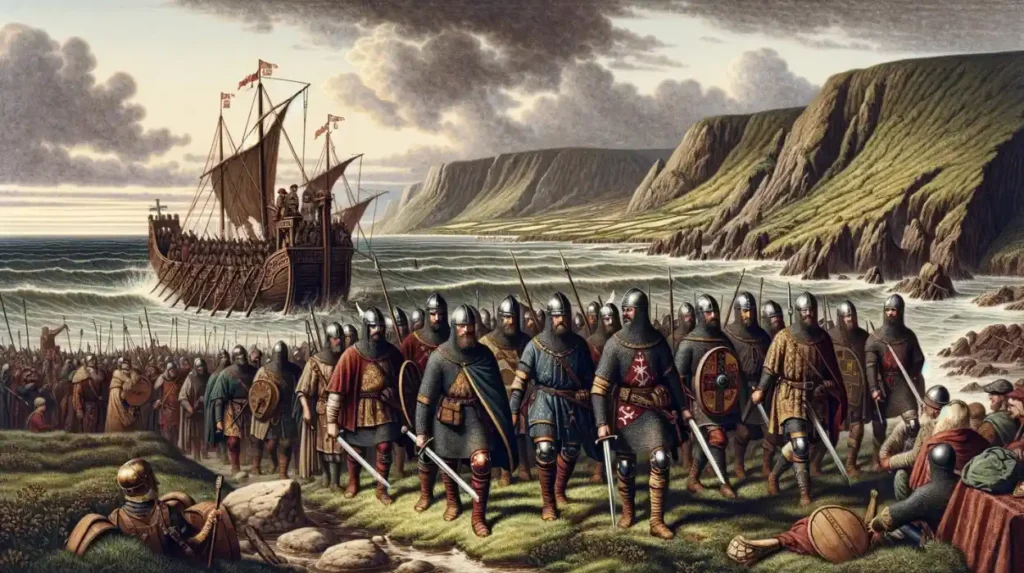
The whole process began with Irish politics: Diarmait Mac Murchada had been expelled from his kingdom of Leinster by his rivals and had to go abroad to seek assistance. He approached Henry II of England, and Henry permitted some Norman lords to go help him. This opened the door for the Normans to enter into Ireland.
2. Strongbow’s Ambitions
Richard de Clare, or Strongbow, saw this as an opportunity to acquire land, titles, and political power. By marrying Diarmait’s daughter, he was in a position to inherit his territory in Leinster and an important foothold on the island of Ireland.
3. Expansion of Norman Power
The Normans had already conquered England in 1066 and parts of Wales in the years afterward. A conquest of Ireland was a natural extension of their expansionist ambitions. The island’s proximity and political divisions represented an opportunity.
4. Henry II’s Power
As soon as Strongbow realized too much power for himself, Henry acted to reinforce loyalty to the crown. His direct involvement in 1171 was to prevent the emergence of an independent Norman kingdom in Ireland and to extend royal authority.
How the Conquest Occurred
Norman conquest was possible through military strength, marriages, and political alliances.
Military Dominance
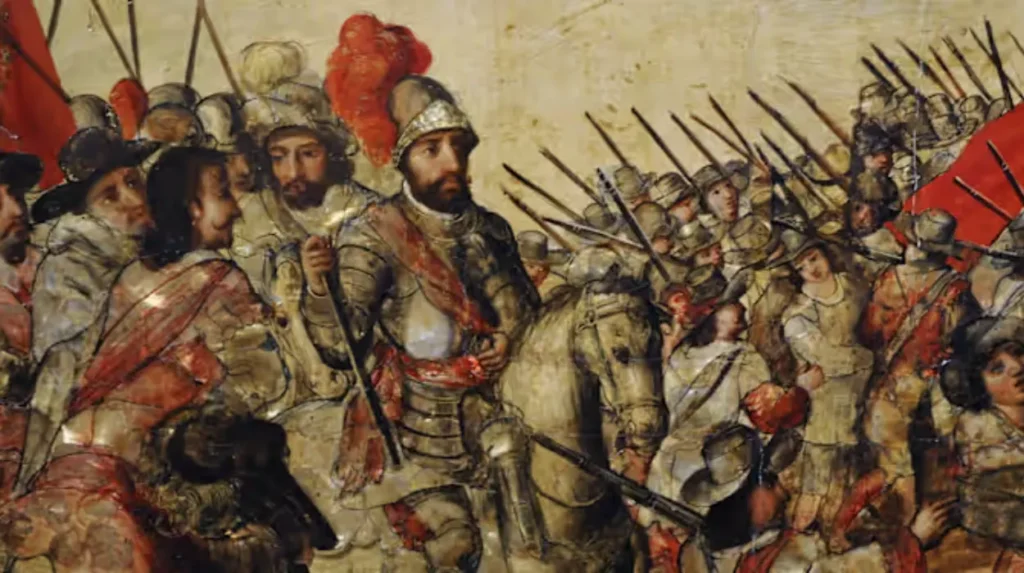
The Normans brought new war-making capabilities, including heavily armored knights and a perfect warfare capability. The Irish were brave fighters, but organization was never a strong point; they also fought in a divided manner, making Norman resistance difficult.
Marriage and Alliances
Strongbow’s marriage to Aoife, daughter of Diarmait, was a very clever political move. It established Norman claims over Irish lands as legitimate and tied Norman ambitions to local Irish politics.
Henry II’s arrival
By 1171, Henry’s involvement formalized the conquest of Ireland. Many Irish kings submitted to Henry and collectively recognized Henry’s overlordship in return for retaining some local political power. The conquest of Ireland was political and military.
Resistance and Integration
It would be wrong to say the Normans conquered all of Ireland quickly or totally. Resistance was still a lived experience and continued in many island regions. The Normans retained strong zones of control in Leinster, Munster, and parts of Ulster; Gaelic Irish kings were very powerful in other regions.
Many of the Normans were “more Irish than the Irish themselves,” especially considering that they adopted local customs, traditions, and the Irish language, which were very important to them as natives. Through time, they blended; they had created a Norman-Irish identity.
The Impact of the Norman Conquest
The consequences of the conquest were profound and long-lasting.
1. Political Changes
The Normans established feudalism as they divided land into lordships under the control of Norman nobles. These changes disrupted the traditional Irish systems of landholding, which resulted in the loss of control of a considerable amount of land and power becoming more consolidated in the hands of the foreign settlers.
2. Cultural Change
The Normans assimilated into Irish society in some parts of the country. When they came to Ireland, they disrupted aspects of society and specific aspects of culture, such as forms of architecture, language, and the law. The Normans created castles and towns, some of which exist now.
3. Church Reforms
The conquest also provided an opportunity to align the Irish Church with Rome and with the English Church. The Normans helped with the renewal of structures and centralized the Irish church.
4.Long-Term Divisions
The conquest produced centuries of tension between Irish rulers and English authority. The Normans were able to assimilate into the customs, language, and practices, but their arrival laid the foundations for greater foreign domination of Ireland.
Legacy of the Norman Conquest
The Norman conquest of Ireland was not just a short-lived invasion; it marked the beginning of a long relationship between Ireland and England.
- It marked the first formal connection of the English crown and Ireland.
- It introduced the Irish to different forms of governance and land ownership.
- Furthermore, it set the stage for centuries of involvement in Irish affairs.
Historians debate whether the Normans fully conquered Ireland or simply became one part of the political landscape in the medieval era.
The Lasting Legacy of the Norman Conquest of Ireland
The Norman conquest began in 1169, driven by the ambitions of Norman knights, the rivalries of local Irish kings, and the authority of Henry II of England. It was neither a singular military event nor a singular territorial issue; it was a political and cultural event, and like so much of Irish and English history. It has left a cultural legacy and identity that persists to this day.
The Norman conquest of Ireland is a reminder of how local disputes can create an invitation for foreign intervention, how ambition can affect the fate of nations, and how cultures can intermingle in conflict. The legacy of the Norman conquest has diminished in some ways; it is still visible in Ireland’s castles, towns, and shared historical memory, and it now figures as one of the critical moments in Irish history.
