

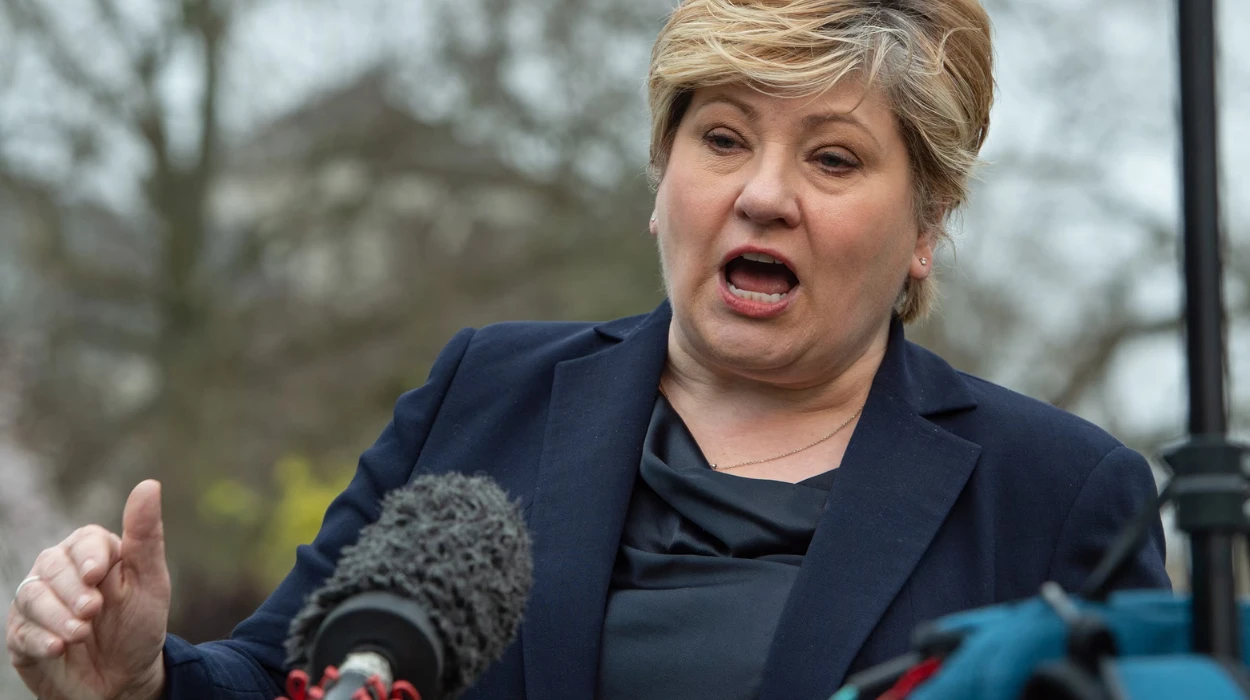
UK (Parliament Politics Magazine) – Labour MP Emily Thornberry warns lack of Western condemnation of US action in Venezuela could weaken international law and embolden China and Russia.
As reported by Peter Walker of the Guardian, a Labour MP has warned that Western silence over US military operations in Venezuela could embolden Beijing and Moscow to take comparable actions.
What did Emily Thornberry say about the US intervention in Venezuela?
The head of the Commons Foreign Affairs Committee, Emily Thornberry, warned that without a strong and coordinated response to US President Donald Trump’s weekend move to remove Nicolás Maduro as Venezuela’s president and take him to the US, could weaken long-standing international legal norms.
She expressed concern that the US had no clear plan for the aftermath following Maduro’s capture on Saturday, 3 January, and his transfer to New York.
During an interview, Thorberry said,
“But my primary problem is that, in any event, there is no legal basis for this and it sets a really bad precedent for countries such as China and Russia, who may also think: ‘Well, we’ve got spheres of influence, why can’t we do things like that within our sphere of influence, like Ukraine or Taiwan?’”
She added,
“And it’s quite difficult to say that they can’t, given that America has done it and there have been no consequences and very little criticism, at least from western governments.”
According to her, criticism from international allies, even in the absence of additional sanctions, could make countries reconsider their actions.
“To a certain extent the force of international law is that people generally accept that this is the way that you should behave, and if you don’t behave in that way, then there is an international condemnation. [It] may not sound like a great deal, but although governments always say they don’t care, they do care. They do care a lot, and there just needs to be certain international norms,”
the Labour MP said.
She warned that without any condemnation, international law almost moves on, allowing such actions to gain wider acceptance.
Thornberry refrained from direct criticism of Prime Minister Sir Keir Starmer, saying she recognized the importance of maintaining US-UK relations.
“I’m not going to pretend this isn’t difficult, and it is important that we keep a very important ally like America onboard. We have particularly the interests of Ukraine that we need to consider. But it’s meaningless if we don’t support international law,”
she added.
The Labour MP said Britain needed
“to be clearer that that this has been a breach of international law, and we do not agree that they should have done it.”
She continued,
“You just can’t go around snatching leaders from different countries, taking them back to your domestic courts and trying them it will just end in anarchy.”
What did Mike Tapp say about the UK response to Nicolás Maduro’s capture by the US?
Home Affairs Minister Mike Tapp said Monday that the US must set out its legal justification for the operation, and the UK was not prepared to offer a comment.
He stated that further details of the government’s response were likely to be announced in a Commons statement later on Monday by Foreign Secretary Yvette Cooper.
Tapp added,
“Where we are at this point is that we are not displeased that this man [Maduro] is no longer in charge, that we 100% respect an international rules-based system and legality, and we’re not pressured by social media and commentators to ensure we are quick in our response. It’s about diplomacy. It’s about talking to our allies and the United States.”
What did Sir Keir Starmer say about the US military action in Venezuela?
During an interview on the BBC’s Sunday with Laura Kuenssberg programme on Saturday morning, Labour leader Sir Keir Starmer refused to comment on whether President Trump’s military action in Venezuela had breached international law.
The Prime Minister stated he was gathering the full facts but would not “shy away from this,” calling himself a “lifelong champion of international law.”
Earlier, Sir Keir confirmed that the UK was not involved in Saturday’s large-scale strikes on Venezuela and that he had not discussed the operation with Trump, which led to the capture of Nicolás Maduro.
The Prime Minister posted on social media later Saturday that the UK
“viewed Maduro as an illegitimate president and did not mourn the fall of his regime.”
“The UK government will discuss the evolving situation with US counterparts in the days ahead as we seek a safe and peaceful transition to a legitimate government that reflects the will of the Venezuelan people,”
he added.
Sir Keir said,
“I want to get all the material facts together, and we simply haven’t got the full picture at the moment. It’s fast moving, and we need to piece that together.”
He added,
“I can be really clear with you that there was no UK involvement in this operation. I then need to speak to President Trump, I need to speak to our allies, but I don’t shy away from this. I’ve been a lifelong advocate of international law and the importance of compliance with international law.”
The Prime Minister continued,
“But I want to ensure that I’ve got all the facts at my disposal, and we haven’t got that at the moment. And we need to get that before we come to a decision about the consequences in relation to the actions that have been taken.”
How did Kemi Badenoch respond to the US operation in Venezuela?
Tory leader Kemi Badenoch said she would refrain from condemning or endorsing the US military action in Venezuela.
She added,
“What President Trump has done is certainly unorthodox. I’m not condemning it because I don’t want to see someone like Maduro in charge, but I’m not praising it either, because I think it raises lots of interesting questions about the world that we live in.”
On Saturday, the Conservative leader posted on X,
“I’m more interested in what Venezuelans risking their lives for democracy have to say.”
She continued,
“The UK’s responsibility is to understand the facts, assess where our national interest lies and consider the consequences for Venezuela’s people and for regional and global stability.”
Why did the US carry out a military operation in Venezuela?
The US launched a large-scale ground and air operation, called “Operation Absolute Resolve,” in the early hours of 3 January. Officials justified the action as an effort to arrest President Nicolás Maduro to face US criminal charges related to a “narco-terrorism conspiracy” and state-sponsored drug trafficking.
The operation involved months of planning and intelligence gathering, including rehearsals on a mock-up of Maduro’s compound. More than 150 aircraft from 20 bases struck military targets in and around Caracas, while elite special forces deployed via helicopters to raid the president’s safe house.
The military action successfully captured Nicolás Maduro and his wife, Cilia Flores. They were transported by helicopter to a US warship and later flown to New York. Some casualties were reported, including Cuban security personnel, though numbers remain unconfirmed.
Speaking after the operation, President Trump said the US would oversee Venezuela until a transition could be ensured. He pointed to plans for American oil companies to repair the country’s oil infrastructure and benefit from its reserves, while asserting the mission demonstrated “American military skill and power.”