
The UK’s geographic position, distant from fighting in Ukraine or Russian airborne or drone incursions in Estonia or Poland, can lead to people feeling the threat from Vladimir Putin is someone else’s problem. That could not be more wrong. We sit at the gateway to one of the most strategically important regions on earth: the High North and the Arctic. This geography gives us both outsized importance and real vulnerability.
Melting ice is opening new shipping routes and exposing potentially vast reserves of oil, gas and minerals. These changes explain why Russia and China are increasing their presence in the area. Russia is moving to dominate these routes militarily and economically while China is positioning itself as a “near-Arctic state,” investing in infrastructure and shipping lanes to secure influence over future trade corridors. The Arctic and High North are now epicentres of global competition, and it is time for the UK to learn its geography lesson and recognise that we are a frontline nation in this new, unstable world.
The consequences for ordinary British people are immediate. When Vladimir Putin illegally invaded Ukraine in 2022, the most vulnerable in our communities paid the price through higher energy bills. Future Kremlin actions will hit those same households hardest.
Subsea cables and energy assets in the North Sea are national lifelines underpinning energy supply, jobs and our digital economy. Russian disruption to those systems would have immediate consequences for households and businesses across the UK.
It is the first duty of government to protect its citizens and that is what we must do.
I have pressed the Ministry of Defence and the Department for Energy Security and Net Zero to outline what steps are being taken to defend our energy and infrastructure assets. The urgency to act was underlined by a blunt question a senior energy executive recently put to me: “If a Russian submarine appears next to one of our installations, who do I call?”. They need an answer.
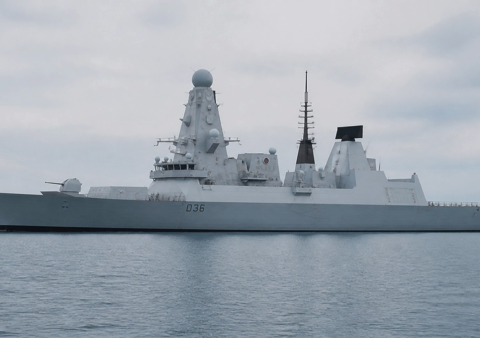
Russia understands the value of the High North and we are seeing a new and unprecedented military buildup of their forces, with reports of new airbases in the north-west Russian port city of Murmansk, increased deployment of air defence systems and a fleet of ice capable vessels designed for Arctic power projection. Putin is not retreating; he is acting deliberately to rebuild a large Russian sphere of influence.
My recent visit to Estonia made clear how Russia’s tactics threaten Baltic nations, and how peace in Ukraine would not necessarily end the threat to Europe. Putin will redeploy and reinforce where he believes his interests lie, and his eye is now turning to our own northern approaches.
Last week’s joint US-UK seizure of the Russian-flagged tanker Marinera in the North Atlantic demonstrated what effective cooperation can achieve, and I welcome that action. It also serves as a warning. The UK must be able to defend its interests independently as well as alongside allies. Putin is unlikely to retaliate against the United States directly and smaller partners can expect to feel the consequences. That should not make us fearful: it should make us prepared.
I welcome recent government initiatives to strengthen our armed forces and raising service pay, bolstering industrial partnerships and increasing investment in the Joint Expeditionary Force with High North allies were all essential steps. But these efforts must be matched by urgency and sustained funding. We need a clear path to the defence spending agreed at the NATO summit in The Hague and a Defence Investment Plan that commits to force development capable of giving Putin and his cronies pause. We must keep our people safe.
Practical measures matter. Greater use of east coast assets such as Rosyth or DM Crombie would improve response times, resupply capability and deterrence posture. Europe must also show it can act. Greenland is a strategic blind spot that requires a sustained European presence to monitor the Greenland Iceland UK gap and protect critical infrastructure. Norway and Denmark are already moving, and the UK must match that urgency.
We are not distant from conflict. We are a frontline nation. Time and again we have learnt that Putin’s regime reacts to action, not words. Delay is not defence. We cannot wait for threats to emerge before we act.
Russia understands the value of the High North, we must move quickly to plug Greenland Iceland UK gap

5 mins read


Latest from UK Parliament
The Treasury is preparing the ground for a possible shift in fiscal policy as the Chancellor,
Small, independent businesses are the backbone of our economy. In my constituency of Isle of Wight
Abortion is a generally safe procedure for women. It is not my purpose in bringing this
For more than two centuries, families have made their homes on Britain’s rivers and canals. Yet

For too long, creative education has been treated as an optional extra in our schools: a