

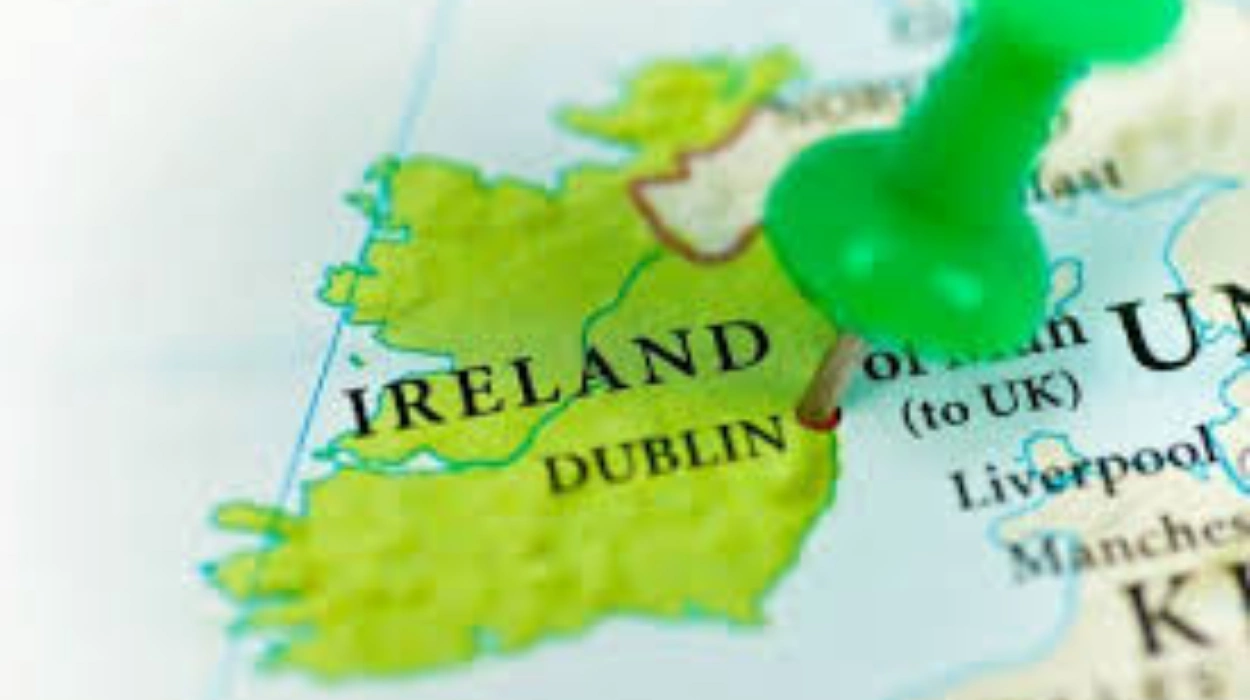
The story of Ireland’s partition (which led to Northern Ireland and what is presently the Republic of Ireland) is complicated. The partition was not a singular event but the result of decades of violence, fear, and political struggle, and more than a century of division. Central to this story is the Irish Home Rule movement. In exploring how the Irish Home Rule movement led to the partition of Ireland, we must consider both the internal divisions and the powerful external consequences of the movement.
What was the Irish Home Rule Movement?
Before we can see how it led to partition, we need to understand what the movement was.
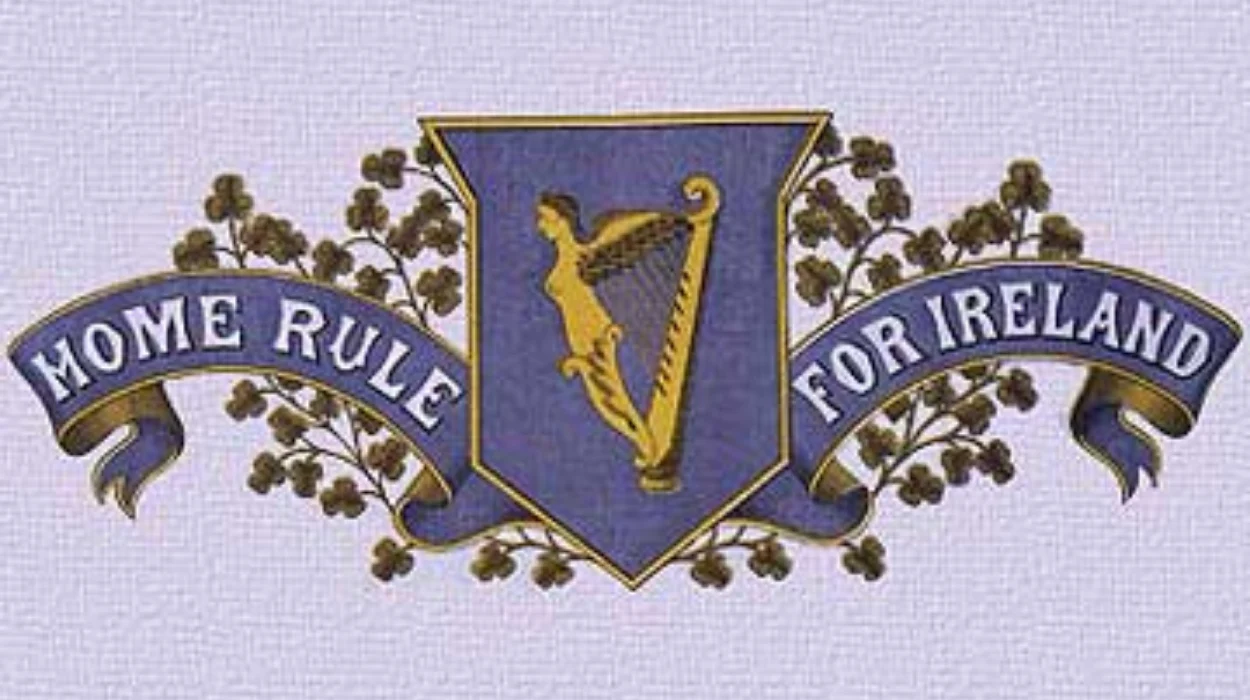
A Simple Goal: Self-Government, Not Full Independence
The Irish Home Rule movement began in the 1870s, and its stated goal was simple: self-government for Ireland within the United Kingdom. Leaders like Isaac Butt and Charles Stewart Parnell did not want full independence. They wanted a parliament in Dublin to decide Irish matters (e.g., education, agriculture, policing), while the UK Parliament in London controlled important matters (e.g., defense, foreign issues).
You could think of it like a family who wanted a little more independence to make their own choices at home but still wanted to live in the same house with the rest of the family.
Increasing Support and British Resistance
In Ireland, especially the Catholic majority, Home Rule was viewed as an achievable and peaceful prospect. Home Rule addressed many grievances regarding British rule, especially in terms of land legislation (the treatment of poor Irish tenants) and lack of local control. However, the idea of Home Rule was actively opposed by two groups:
- The British Conservative Party believed Home Rule was going to endanger the British Empire.
- Unionists in Ireland: A group mainly from the northern province of Ulster that was, almost entirely, Protestant and wanted to remain connected, or united, with Britain. Their cry was “Home Rule is Rome Rule,” which meant they considered a parliament in Dublin would be dominated by the Catholic majority, who may not represent their business interests, culture, or faith.
The Home Rule Bills: A Recipe for Crisis
The struggle for Home Rule brought forward a number of proposals to parliament in Britain, all of which failed and deepened the crisis.
The First Two Bills (1886 & 1893)
The first two bills for Home Rule were introduced by liberal Prime Minister William Gladstone. Both were defeated. They did something important: they normalized the idea of Home Rule as a massive political issue in Britain, and more significantly, they cemented Unionist resistance in Ulster.
The Unionists began to organize for the first time; they began to see themselves as a separate ‘people’ in Ireland, with a distinct identity and a fierce loyalty to the Crown.
The Third Home Rule Bill (1912-1914)
The third Home Rule Bill was the transformative one, and by 1912, the planets had aligned in Westminster, and it appeared it would inevitably go through. For Irish nationalists, it was a moment of victory. For the Unionists, it was the stuff of nightmares.
And this is how we can clearly observe how the struggle for Irish Home Rule contributed to the partition of Ireland; it forced a confrontation that could not be avoided.
The Fierce Backlash: How Unionists Resisted Home Rule
The Unionist reaction to the Third Home Rule Bill was not only political, it was revolutionary.
The Solemn League and Covenant
In 1912 close to half a million Unionists, men and women, signed the “Ulster Covenant.” It was a solemn promise to use “all means necessary” to oppose Home Rule. They contrasted their resistance to those freedom fighters of ancient Scotland. This was a forceful declaration that they would not accept rule from Dublin.
The Ulster Volunteer Force (UVF)
Words quickly turned to action. Unionists created a private army, the Ulster Volunteer Force (UVF), in 1913. By 1914 the UVF had imported thousands of rifles and bullets in what became known as the Larne Gunrunning. The Ulster Volunteers were clearly prepared to fight a civil war to remain inside the UK.
British support: The Curragh Mutiny
There was sympathy for Unionists in the British establishment. In 1914, British army officers stationed at the Curragh in Ireland said they would resign rather than be ordered to march against the UVF to impose Home Rule. The Curragh Mutiny was the astonishing moment to prove that the British government did not have the capacity to impose rule on Ulster using its own army.
The Nationalist Response and the Slide Towards Division
The nationalist reaction to Unionist militarism also pushed the prospect of partition closer.
The Irish Volunteers
The nationalists formed their own army in the Irish Volunteers to ensure Home Rule happened in response to the UVF, and they also smuggled guns. Ireland was now armed for war, two armies facing off against one another.
The Concept of Partition Emerges
With a situation presenting the threat of civil war in Ulster, the British government began looking for a way out. The notion of excluding some counties in Ulster from the Home Rule parliament temporarily was considered seriously for the first time.
This is where the partition was first planted. Initially, it was proposed that the temporary nature would be around six years to serve as a pause button for the Unionist worry. The temporary case solutions become permanent.
World War I: The Pause That Changes Everything
The start of World War I in August 1914 was a major turning point. The Home Rule bill had been passed as law but immediately was suspended until the end of the war. This suspension had two huge consequences.
It gave the Unionists time to cement and deepen their position. The UVF joined the British army in droves, fighting well and enhancing their claims that Ulster was loyal to Britain.
It radicalized lots of nationalists. Waiting for a promise that was repeatedly delayed. It all added up to the 1916 Easter Rising, which changed the battle from Home Rule to full independence.
After the war, everything had changed. The fight was no longer about Home Rule; it was between Irish Republicans fighting for their own republic and Ulster Unionists fighting to remain in the UK.
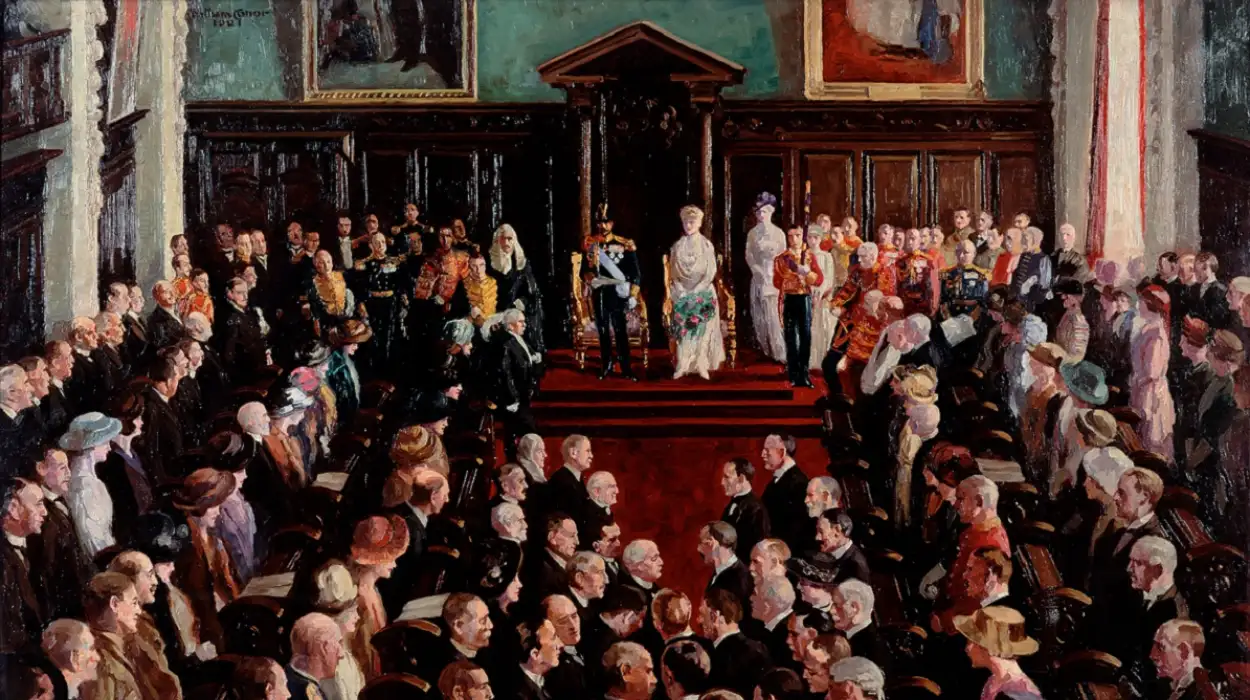
The Government of Ireland Act (1920)
By 1920, the British solution was the Government of Ireland Act. This legislation effectively instituted partition. It created:
- Two separate legislatures: one in Belfast for the six counties of Northern Ireland and another in Dublin for the rest of Ireland.
- Two distinct states: both would remain part of the United Kingdom.
This latest round of legislation provided the final legal confirmation of how the Irish Home Rule movement had been complicit with the partition of Ireland. It was a direct attempt to answer the “Irish Question,” two real choices for both sides of the debate: self-government for nationalists in the south and retaining a union link with Britain for unionists in the north.
The south denied this and fought a war of independence, resulting in the Irish Free State in 1922. The north accepted it, and Northern Ireland was created.
A Movement That Unintentionally Divided a Nation
The Irish Home Rule movement did not intend to partition Ireland. It creates a devolved form of government for Ireland as one entity. However, in its path to try to establish this power, it acted like a light to illuminate and expose the considerable underlying divide on the island.
By insisting on self-governance for all Ireland, the Home Rule movement invoked a violent and armed resistance from a section of the population who identified as British. The resistance was so acute and supported within Britain, the UK government felt obligated to appease this instance of Britishness, thus leading to the partition of Ireland.
As a result, the Irish Home Rule movement’s contribution to partition is indirect but significant. The well-meaning hope of a unified self-governing Ireland floundered on the solid rocks of Ulster Unionism, a force of British identity that Home Rule had in effect helped to identify. Partition was an unintended progeny of a movement of high floor and hopes.
