
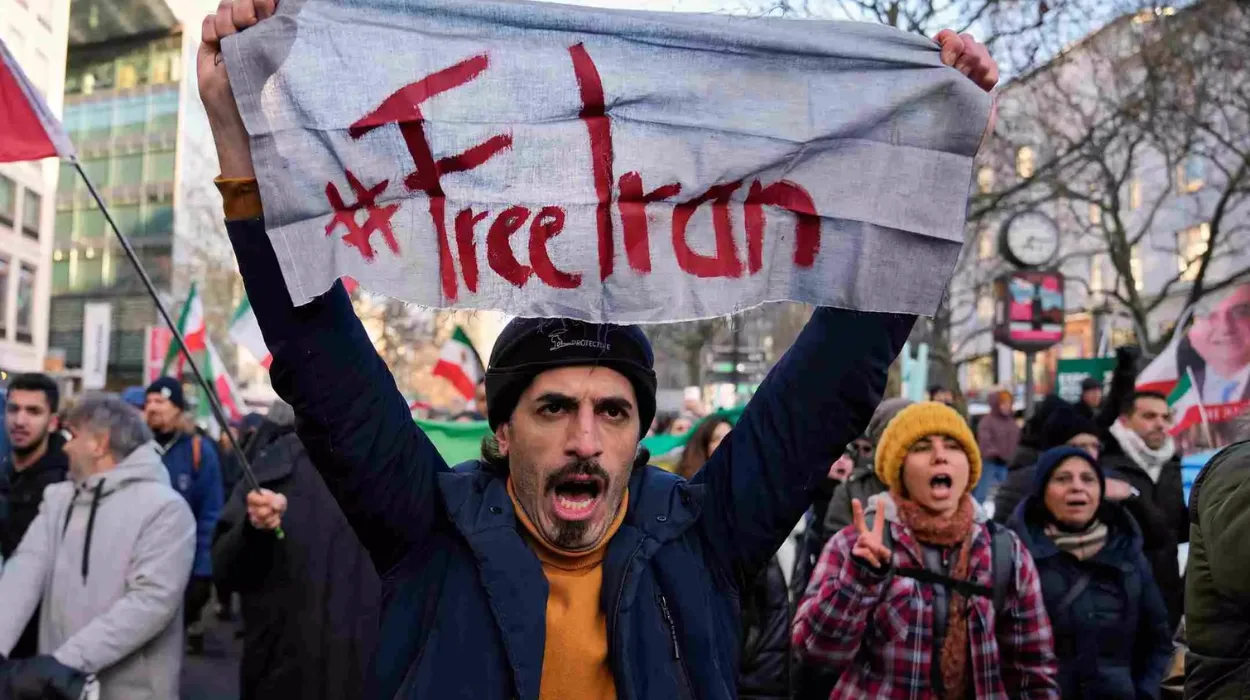
Tehran (Parliament Politics Magazine) January 18, 2026 – An Iranian official confirmed at least 5,000 deaths in protests that erupted on 28 December, including about 500 security personnel, marking the deadliest unrest since the 1979 Islamic Revolution. The judiciary indicated possible executions for acts deemed “Mohareb” while Supreme Leader Ayatollah Ali Khamenei accused US President Donald Trump of inciting the violence. Trump has threatened intervention if killings or executions continue, as protests over economic woes evolved into calls to end clerical rule.
An unnamed Iranian official in the region disclosed on Sunday that verified deaths from nationwide protests reached at least 5,000, encompassing roughly 500 security personnel killed by “terrorists and armed rioters”. As reported by Reuters staff writers including Parisa Hafezi, the figure accuses foreign-backed elements of targeting innocent Iranians during the upheaval that began on 28 December over currency collapse and economic hardship. The official stated the toll is unlikely to rise sharply, attributing responsibility to “Israel and armed groups abroad” for equipping those involved.
Protests swelled over two weeks into widespread demonstrations demanding an end to clerical rule, resulting in the highest casualty count since the 1979 Islamic Revolution. The clerical regime has consistently blamed unrest on foreign adversaries, including the United States and Israel, amid ongoing tensions following Israeli military strikes in June.
Supreme Leader Khamenei Points Finger at Trump

Supreme Leader Ayatollah Ali Khamenei addressed the nation in a public speech on Saturday, labelling Trump a “criminal” for the casualties resulting from his perceived support of protesters.
“We will not drag the country into war, but we will not let domestic or international criminals go unpunished,”
Khamenei stated, acknowledging “several thousand deaths” which he ascribed to “terrorists and rioters” connected to the US and Israel.
Trump responded on social media Friday by thanking Tehran’s leaders for calling off scheduled executions of 800 individuals. In a Saturday interview with Politico, he remarked, “it’s time to look for new leadership in Iran,” underscoring his repeated warnings of potential US intervention should the killings or judicial punishments persist.
Judiciary Signals Executions for Mohareb Offences
At a press conference on Sunday, Iran’s judiciary spokesperson Asghar Jahangir indicated that certain protester actions qualified as “Mohareb,” an Islamic legal term meaning to wage war against God, punishable by death. This development follows Trump’s threats against further violence or executions during the demonstrations.
US-based rights group HRANA reported on Saturday a confirmed death toll of 3,308, with 4,382 additional cases under review and more than 24,000 arrests documented. The discrepancy between official figures and independent tallies highlights challenges in verifying casualties amid restricted information flows.
Contrasting Casualty Estimates Spark Debate
Social media commentary has amplified conflicting reports on the protests’ toll. Eli Afriat, citing The Times newspaper, highlighted stark figures from doctors on the ground. Eli Afriat said in X post,
“The British newspaper The Times: Doctors on the ground in Iran say at least 16,500 protesters have been killed and about 330,000 injured. Many of the injured protesters died from a lack of blood; in some cases, Revolutionary Guards operatives reportedly refused to allow doctors to perform blood transfusions to save the wounded.
It was also reported that regime forces even dragged protesters from their hospital beds to arrest them. This morning, an Iranian source told Reuters: At least 5,000 have been killed in protests in Iran, of which about 500 are members of the security forces.”
The British newspaper The Times:
Doctors on the ground in Iran say at least 16,500 protesters have been killed and about 330,000 injured.
Many of the injured protesters died from a lack of blood; in some cases, Revolutionary Guards operatives reportedly refused to allow… pic.twitter.com/Grce9vZiaF
— Eli Afriat 🇮🇱🎗 (@EliAfriatISR) January 18, 2026
Michael Starr of the Jerusalem Post reacted to the Reuters disclosure with scepticism about official transparency. Michael Starr said in X post,
“Reuters: Islamic regime official says 5,000 dead in Iran protests. If that’s what they’re willing to admit, it must be far greater. The floor of the lowest estimate keeps rising.”
Reuters: Islamic regime official says 5,000 dead in Iran protests.
If that’s what they’re willing to admit, it must be far greater. The floor of the lowest estimate keeps rising.
— Michael Starr (@StarrJpost) January 18, 2026
These posts reflect public discourse contrasting the Iranian official’s 5,000 figure against higher estimates, including claims of Revolutionary Guards obstructing medical aid and hospital arrests.
Kurdish Northwest Emerges as Violence Epicentre
The official pinpointed the northwest Kurdish regions as sites of the fiercest clashes and highest fatalities, where separatist groups maintain activity. On 14 January, three sources informed Reuters of armed Kurdish separatists attempting to cross from Iraq into Iran, indicating potential external exploitation of the unrest.
An anonymous resident of a northwestern town described witnessing armed individuals posing as protesters firing at civilians using guns and knives, distinguishing them from unarmed demonstrators. The Norway-based Hengaw rights group documented some of the most severe confrontations in Kurdish areas since the late December outbreak.
Eyewitness Accounts Detail Street Chaos
A 40-year-old Pakistani doctor, Faizan Ali from Lahore, truncated his visit to his Iranian wife in Isfahan due to communication blackouts. Upon returning to Lahore, he recounted seeing violent mobs torching buildings, banks, and vehicles, including an incident where an individual stabbed a passer-by.
Tehran residents reported observing riot police directly firing at groups of young male and female protesters. Reuters has verified social media videos showing security forces employing forceful tactics against demonstrators across multiple locations.
Internet Restrictions Hinder Reporting

Internet blackouts severely complicated information dissemination, with partial restoration early Saturday before apparent reimposition, according to NetBlocks monitoring. State media and local accounts suggest the crackdown has substantially subdued the protests.
Protests commenced on 28 December against economic distress, exemplified by images of burning cars in Tehran on 8 January captured by Stringer/WANA via Reuters. Demonstrations had abated following intense suppression, as noted by residents and rights organisations.
Broader Context of Regime’s Narrative
The establishment routinely attributes disturbances to external foes. The official echoed this by implicating Israel and overseas armed factions in supporting street actions. Prior coverage, such as a 17 January Reuters report citing rights groups on over 3,000 deaths, provides baseline data leading to Sunday’s updated 5,000 verification.
The events unfold against Iran’s economic strains, including currency devaluation that ignited initial outrage. Nationwide scope encompassed urban centres and ethnic minority regions, with Kurdish areas bearing disproportionate impact.
Additional reporting came from Mubasher Bukhari in Lahore, with writing by Parisa Hafezi and editing by Philippa Fletcher and Alexander Smith, adhering to the Thomson Reuters Trust Principles.
Why Protests Erupted in Iran Over Economic Collapse?
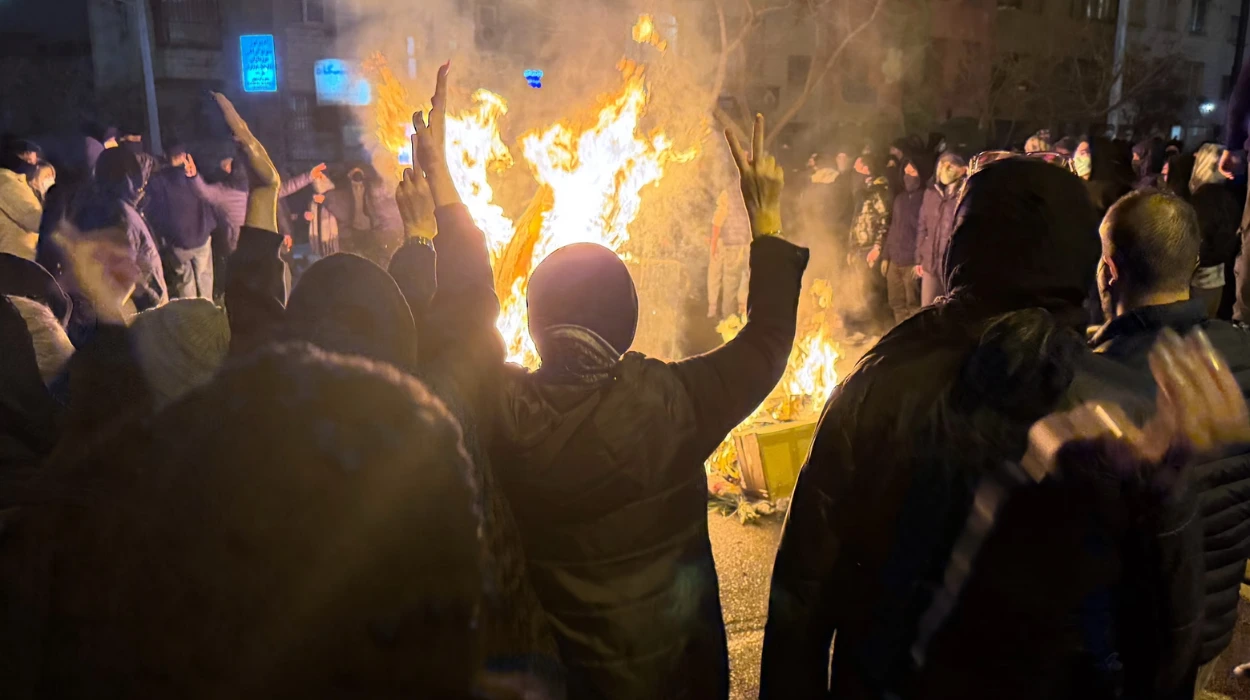
Protests ignited on 28 December amid severe economic distress, triggered by the collapse of the Iranian currency’s value. Images from Tehran on 8 January, captured by Stringer/WANA via Reuters, showed cars burning in streets during early demonstrations over financial hardship. These initial outbursts quickly expanded, with residents citing soaring inflation, unemployment, and shortages as key grievances that swelled into broader calls for regime change over two weeks.
The unrest marked the most sustained challenge to clerical authority since 1979, evolving from economic complaints to explicit demands to end the Islamic Republic’s rule. Residents and rights groups noted that the violent crackdown, including riot police shootings, has since subdued much of the activity, though underlying economic pressures persist.
Global Response to Iran’s Deadly Protest Crackdown
US President Donald Trump has taken a prominent stance, threatening intervention if protesters face further killings or executions. His Friday social media post thanked Iranian leaders for pausing 800 scheduled executions, while his Politico interview called for regime change, amplifying international focus on the crisis.
Supreme Leader Khamenei’s speech directly rebuked Trump as a “criminal,” framing the response as defence against foreign incitement. Rights groups like HRANA and Hengaw have drawn global attention through their tallies, while social media amplification via figures like Eli Afriat and Michael Starr has spotlighted discrepancies, prompting wider scrutiny.
