
Last year, we started a campaign to move away from single-use plastic to reusable or biodegradable alternatives.
We took aim at the cigarette butts, the most common item of plastic rubbish in the world, with a staggering 4.5 trillion littered every year. I am pleased to report that we have made some great strides in getting the UK Government to recognise this problem and have received support from parliamentarians from across the political spectrum.
Liberal Democrat peer, Earl Russell has just tabled an amendment to the Tobacco and Vapes Bill that I hope will find favour with all peers, mandating the Government to bring back a report on moving to biodegradable butts across the UK within 12 months.
If accepted, we could see the end of this type of single-use plastic within a couple of years, removing 6,000 plastic butts that are dropped in every constituency every day.
At times, this has felt like an uphill struggle after the former Government minister Andrew Gwynne, rejected the change. Even with a change of Minister, an amendment to the Bill in the House of Commons, moved by the popular Gosport MP, Dame Caroline Dinenage, which attracted wide support, was defeated after the Government whipped against it.
But now, as we seem to be on the cusp of getting the change approved, it seemed timely to look at some of the success UK stories, because it is too easy to focus on the negatives – on the failures, which can make the challenges we face and the changes we all need to make seem to daunting.
Shopping Bag Replacements
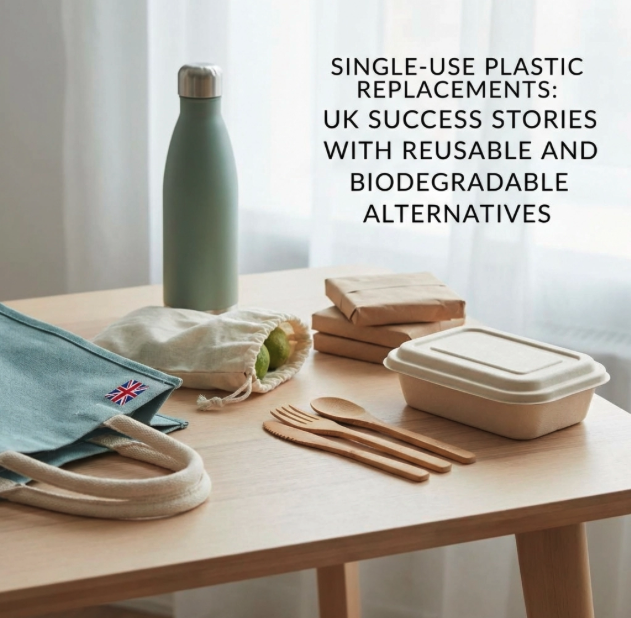
Major UK supermarket chains eliminated single-use plastic bags between 2015-2019. Tesco removed 1.8 billion plastic bags annually. Morrison’s implemented paper bags for loose items. Sainsbury’s introduced compostable carrier bags made from potato starch.
The plastic bag charge generated £178 million for environmental causes. Bag usage dropped 95% across England. Wales recorded 98% reduction following implementation.
Reusable bag adoption reached 85% consumer compliance. Cotton, jute, and recycled plastic alternatives replaced conventional carriers. Local councils distributed branded reusable bags at community events.
Coffee Cup System Overhaul
Costa Coffee trialled recyclable cups in 2019 across 2,600 UK stores. The cups contain polyethylene lining replacement with water-based barrier coating. Processing facilities accept new cup design through standard recycling streams.
Pret A Manger eliminated disposable cups in five London locations. Customers receive 25p discount for reusable cup usage. Sales data shows 15% increase in reusable cup adoption.
KeepCup manufacturing facility operates in Brighton. Production capacity reaches 2 million units annually. Material composition includes glass, ceramic, and recycled plastic options.
Local councils installed water fountains with cup washing stations. Bristol City Council recorded 40% reduction in disposable cup waste. Edinburgh implemented reusable cup loan scheme across municipal buildings.
Drinking Straw Alternatives
McDonald’s UK replaced 1.8 million plastic straws daily with paper alternatives. Implementation completed across 1,270 locations by September 2019. Customer satisfaction scores maintained 94% approval rating.
JD Wetherspoon eliminated plastic straws from 875 pubs. Metal and bamboo alternatives available on request. Straw waste reduction measured at 23 tonnes annually.
NHS hospitals adopted metal straws for patient dining services. Sterilisation protocols ensure hygiene compliance. Patient feedback indicates no operational disruption.
Educational Sector Initiatives
Plastic Free Schools programme registered 750+ institutions since 2017. Georgeham Primary School replaced individual milk cartons with four-pint recyclable containers. Students use reusable cups for milk distribution.
The school’s catering manager reported waste reduction: “Non-recyclable items fit in cereal bowl volume. Cost savings achieved through supplier negotiation.”
University of Edinburgh banned single-use cutlery across campus facilities. Students receive free reusable cutlery sets during orientation. Waste audit shows 78% reduction in plastic cutlery disposal.
Cardiff University installed water bottle filling stations in 45 buildings. Student union distributes branded reusable bottles. Annual plastic bottle purchases decreased by 2.3 million units.
Biodegradable Technology Development
Lyfecycle technology developed at Imperial College London produces self-destructing plastic alternatives. Material degrades completely within 24 months when exposed to environmental factors. Decomposition yields only CO2, biomass, and water.
The technology supplied cups for COP 26 environmental summit. Prince Charles received demonstration of degradation process. Commercial applications target food packaging and consumer goods.
Polymateria manufactured ‘Reach for Change’ bracelets from recycled cup material. Plastic shredding and pellet injection moulding created durable products. Full biodegradation occurs without toxin or microplastic release.
Food Service Sector Adaptations
Greggs replaced plastic sandwich packaging with cardboard alternatives. Implementation across 2,100 stores completed by 2020. Packaging maintains food safety standards while reducing plastic waste by 180 tonnes annually.
Nando’s eliminated plastic cutlery from 400+ UK restaurants. Wooden and metal alternatives provided for takeaway orders. Customer surveys indicate 92% satisfaction with replacement materials.
Deliveroo introduced biodegradable food containers for partner restaurants. Bagasse and paperboard options replace polystyrene containers. Drop test analysis confirms superior performance compared to conventional plastic.
Local food markets adopted compostable packaging requirements. Borough Market in London mandated biodegradable containers for all vendors. Waste volume decreased 45% within six months.
Retail Packaging Innovation
ASDA replaced plastic produce bags with compostable alternatives made from potato starch. Bags decompose in home composting systems within 12 weeks. Customer adoption rate reached 73% across fresh produce sections.
John Lewis eliminated plastic gift wrap options. Paper and fabric alternatives available at all 50 locations. Seasonal packaging waste reduced by 156 tonnes during Christmas period.
Amazon UK introduced paper padded envelopes replacing plastic bubble mailers. Recyclability increased through standard household waste streams. Implementation covers 85% of lightweight product shipments.
Council Water Bottle Programmes
London boroughs installed 200+ public water fountains between 2019-2021. Refill app indicates 50 million plastic bottles prevented from circulation. Each fountain serves average 150 users daily.
Brighton & Hove Council distributed 25,000 reusable bottles to residents. Council meetings eliminated single-use bottles completely. Municipal building plastic waste decreased 67%.
Manchester City Council partnered with City to Sea organisation for refill station network. 400 participating businesses offer free water refills. Annual plastic bottle reduction estimated at 3.2 million units.
Healthcare Sector Transitions
NHS Trust hospitals replaced plastic meal trays with reusable alternatives. Sterilisation protocols ensure infection control compliance. Annual plastic waste reduction measured at 45 tonnes across pilot sites.
Pharmacy chains eliminated plastic prescription bags. Paper and biodegradable options available for patient medication collection. Boots UK recorded 23% reduction in plastic bag usage within first year.
Care homes adopted reusable dining equipment for resident services. Metal and ceramic alternatives replace disposable plastic items. Staff training ensures proper hygiene maintenance procedures.
Transport Sector Applications
Network Rail replaced plastic water bottles in staff facilities with filtration systems and reusable containers. 24,000 employees received branded bottles. Annual plastic bottle procurement has been eliminated across 2,500 stations.
London Transport Museum shop stocks reusable alternatives exclusively. Tourist purchases include metal straws, bamboo cutlery sets, and cotton bags. Single-use plastic items removed from all retail locations.
Ferry services operating between mainland UK and islands eliminated plastic cutlery from catering operations. Metal alternatives are provided for passenger dining. Waste disposal costs are reduced through volume decrease.
The transition from single-use plastics demonstrates measurable environmental and economic benefits across multiple UK sectors, and of course, there are the huge environmental benefits.
Their success depends much on the engagement and communication with those using the products, and the availability of alternative material, but adoption rates exceed 70% across all these documented case studies.
This leads me to several conclusions. Firstly, it confirms that consumers/end users, call them what you want, are happy and willing to move away from single-use plastic. Secondly, organisations that engage with people about what they are doing and why, are much more likely to be successful. Finally, moving away from single-use plastic requires everyone to do their bit, including governments that should embrace this agenda.
Single-Use Plastic Replacements: UK Success Stories and why we should feel positive

10 mins read
Latest from Opinion

Displacement does not begin when someone crosses a border; it begins when home is no longer
Eight years ago Pret A Manger signed up to something called the Better Chicken Commitment. The

Boris Johnson says falling birth rates are not a disaster. It is an attractive argument. Calm,
How coercion, secrecy and abortion can be used to conceal exploitation The crimes of Jeffrey Epstein

I have always considered myself one of the good ones. In the quiet, ongoing battle against