

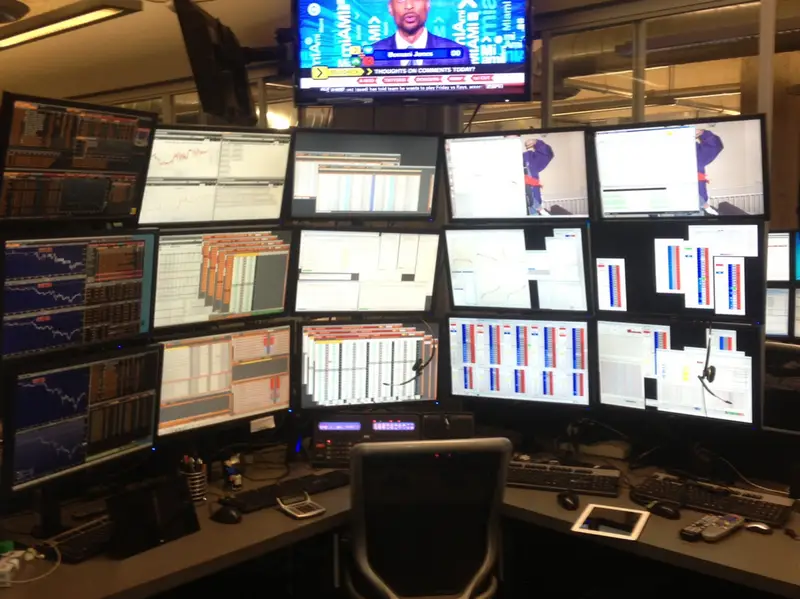
New York, United States, January, 2026 — Global forex markets are navigating one of their most complex periods in recent history as investors reassess political credibility, central bank direction, and escalating geopolitical risk. Trading desks across New York and other financial hubs report sustained volatility, with exchange rates reacting more sharply to confidence signals than to traditional economic indicators.
This environment marks a clear departure from the stability that characterized much of the previous decade, suggesting that currency markets are undergoing a deeper transformation rather than a temporary disruption.
Why Exchange Rate Stability Has Become Harder to Maintain
For many years, foreign exchange markets were guided by predictable monetary cycles and relatively coordinated global policy responses. Interest rate expectations, inflation trends, and economic growth indicators provided a stable framework for currency valuation. That framework has weakened considerably.
Today, currencies move faster and more abruptly, responding to political uncertainty, shifts in international alliances, and changes in global risk perception. As a result, global forex markets are increasingly influenced by forward-looking expectations rather than confirmed economic outcomes.
Political Credibility Becomes a Key Pricing Factor
Political leadership and policy clarity have emerged as critical drivers of currency confidence. Fiscal discipline, regulatory consistency, and diplomatic engagement are now closely scrutinized by investors assessing currency exposure.
Market participants note that global forex markets often react to political messaging well before policies are formally implemented, reflecting a market environment shaped by anticipation and perception rather than data alone.
Central Bank Policy Divergence Adds Pressure
Diverging monetary strategies among major central banks continue to amplify currency volatility. While some policymakers signal a cautious approach to support slowing growth, others remain focused on containing inflation through restrictive measures.
This lack of synchronization has intensified fluctuations across global forex markets, increasing uncertainty for investors, multinational corporations, and policymakers attempting to manage currency risk.
Geopolitical Risk Reshapes Capital Movement
Geopolitical developments have become a dominant force in currency pricing. Trade disputes, sanctions, and regional conflicts influence capital flows with unprecedented speed, often overshadowing domestic economic fundamentals.
These dynamics have made global forex markets highly sensitive to geopolitical headlines, reinforcing volatility during periods of international tension.
The Dollar’s Safe Haven Status Faces Reassessment
The US dollar remains the most widely used currency in global trade and finance, yet its traditional safe haven role is being reassessed. Political polarization and fiscal uncertainty have encouraged investors to diversify currency exposure.
This reassessment has altered behavior across global forex markets, influencing both long-term reserve strategies and short-term trading patterns.
European Currencies Reflect Uneven Economic Strength
European currencies present a varied picture. Economies with strong export performance and fiscal discipline have demonstrated relative resilience, while others face pressure from public debt, demographic challenges, and slower growth.
These contrasts are clearly visible in global forex markets, where currency performance increasingly reflects underlying structural differences between economies.
Emerging Market Currencies Show Mixed Performance
Emerging market currencies continue to experience uneven outcomes. Commodity-exporting countries benefit from favorable pricing and improved trade balances, while others struggle with capital outflows and rising debt servicing costs.
This divergence highlights how global forex markets distribute risk unevenly, rewarding economic resilience and penalizing structural vulnerability.

Technology Accelerates Currency Market Reactions
Advances in algorithmic trading, artificial intelligence, and real-time data analytics have transformed the foreign exchange landscape. Automated trading systems now react to breaking news within milliseconds, amplifying short-term price movements.
These innovations have reshaped global forex markets, increasing liquidity while also intensifying volatility during periods of uncertainty.
Investor Strategy Shifts Toward Risk Management
Institutional investors are increasingly prioritizing capital preservation over aggressive returns. Currency hedging strategies have expanded as asset managers seek to protect portfolios from sudden exchange rate swings.
One senior currency strategist said,
“Currencies are no longer reacting just to economic data; they are pricing trust, credibility, and political alignment.”
Liquidity Remains Resilient Despite Turbulence
Despite persistent volatility, liquidity across major currency pairs remains robust. Trading volumes suggest continued participation from banks, corporations, hedge funds, and asset managers.
This resilience demonstrates that global forex markets continue to function efficiently even under prolonged stress, absorbing shocks without systemic disruption.
Regulatory Oversight Plays a Stabilizing Role
Financial regulators are closely monitoring currency markets to ensure transparency and orderly trading conditions. Enhanced reporting requirements and oversight mechanisms aim to manage rapid cross-border capital flows.
Such measures are increasingly important as trading speed and market complexity continue to grow.
Structural Forces Point to Long-Term Change
Beyond daily price fluctuations, deeper structural forces are reshaping currency dynamics. Trade realignment, supply-chain localization, and reserve diversification strategies are influencing long-term demand for currencies.
These trends suggest that current volatility reflects a broader transformation rather than a short-lived market cycle.
Trade Balances Regain Strategic Importance
As globalization becomes more regionalized, trade balances have regained prominence in currency valuation. Economies with diversified exports and stable trade relationships are better positioned to weather currency volatility.
This renewed focus reinforces the connection between real economic activity and long-term exchange rate stability.
Corporate Currency Exposure Comes Under Scrutiny
Multinational corporations are reassessing currency exposure as exchange rate swings increasingly affect earnings forecasts. Hedging activity has expanded as companies seek to reduce profit volatility linked to currency movements.
Corporate demand now plays a larger role in shaping currency flows and liquidity conditions.
Retail Participation Adds a New Dynamic
Retail investors account for a growing share of currency trading volume, driven by digital platforms and low-cost access to global markets. While this broadens participation, it can also amplify sentiment-driven movements.
Market professionals emphasize the importance of financial education and risk awareness as participation continues to expand.
Energy and Commodity Prices Continue to Influence Currencies
Energy and commodity markets remain closely linked to currency valuation, particularly for exporters and import-dependent economies. Volatile pricing adds another layer of complexity to exchange rate forecasting.
This interdependence highlights the interconnected nature of modern financial systems.
Outlook for the Remainder of 2026
Looking ahead, analysts expect currency volatility to persist through the rest of the year. Political clarity, central bank communication, and geopolitical developments will determine whether stability gradually returns.
For investors, global forex markets will remain a critical barometer of confidence, risk appetite, and global economic alignment.
The Defining Test for Currency Markets Ahead
The foreign exchange landscape in 2026 reflects a world adjusting to fragmentation, technological acceleration, and shifting power dynamics. Exchange rates now reflect trust and credibility as much as economic performance.
How policymakers respond to this reality may define currency stability well beyond the current cycle.