
BEIJING, February 16, 2026 — According to Parliament News, that Energy market shifts are reshaping global crude flows as China increases Russian oil imports while India reduces purchases, redirecting trade routes across Asia and beyond. Shipping data from February confirms that volumes once destined for Indian refiners are increasingly arriving at Chinese ports, reinforcing a structural redistribution rather than a disruption in supply.
Market participants say energy market shifts are unfolding gradually but decisively. Tanker traffic, refinery utilization rates, and currency settlement frameworks all point toward a new geography of oil trade that reflects strategic realignment more than short-term volatility.
Energy analysts emphasize that this moment represents adaptation, not collapse. Global production remains steady. The difference lies in who buys, how they pay, and which routes cargoes follow.
The February Inflection Point
February trade flows provided tangible evidence of accelerating energy market shifts. Satellite tracking services recorded a noticeable increase in shipments from Russian Pacific ports to Chinese terminals. Simultaneously, Indian refiners adjusted procurement patterns, creating room for reallocation.
Import volumes are influenced by pricing advantages. Russian crude continues to trade at discounts relative to benchmark grades, making it attractive to refiners seeking margin stability. China’s refining sector, supported by strong domestic demand, has shown readiness to absorb redirected supply.
Energy market shifts in February highlight the flexibility embedded within global oil logistics. Cargoes move where incentives align.
China Strengthens Its Energy Position
China’s strategic approach reflects long-term planning. Authorities have emphasized energy security as a pillar of economic stability. Expanding reserves and diversifying supply channels remain national priorities.
The increase in imports aligns with refinery throughput growth. Industrial recovery, transportation demand, and petrochemical expansion contribute to higher crude intake. As energy market shifts redirect cargoes, China benefits from favorable pricing and consistent availability.
Infrastructure investments over the past decade have positioned Chinese ports and storage facilities to manage higher volumes efficiently. Modernized terminals, expanded pipelines, and integrated logistics systems enable seamless handling of incoming shipments.
India Adjusts Procurement Strategy
India’s recalibration of sourcing channels plays a central role in current energy market shifts. Refiners in the country continue to diversify supply portfolios, balancing Middle Eastern producers, domestic output, and alternative global partners.
Payment frameworks and shipping considerations influence these adjustments. As geopolitical complexities evolve, buyers reassess risk exposure and logistical convenience. India’s partial reduction in certain imports does not signal declining consumption but rather strategic repositioning.
Energy market shifts therefore represent rebalancing, not contraction.

Global Price Stability Amid Redistribution
Oil benchmarks have responded cautiously. While regional price spreads fluctuate, overall global supply remains intact. Traders emphasize that energy market shifts driven by buyer reallocation typically result in localized pricing differentials rather than systemic spikes.
Brent and other reference grades reflect steady production levels. Instead of reducing barrels, producers redirect them. This adaptability dampens extreme volatility.
Financial markets observe closely but remain measured. Energy equities fluctuate moderately, mirroring expectations of continuity rather than crisis.
Shipping Networks Reconfigure
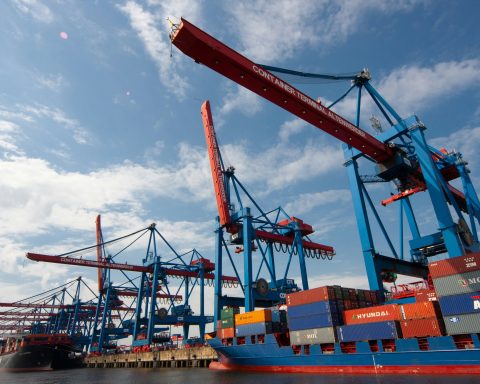
Maritime routes tell a compelling story. Tankers once bound for western Indian ports now chart courses toward eastern Chinese terminals. These logistical adaptations illustrate how deeply integrated the oil trade has become.
Insurance arrangements and settlement mechanisms have evolved to accommodate continued flows. Alternative payment structures reduce dependency on traditional financial channels. In this context, energy market shifts reveal innovation in transaction architecture.
Shipping analysts note that capacity utilization across major Asian ports remains robust, reinforcing confidence in sustained throughput.
Refinery Economics and Margin Calculations
Refinery profitability remains the decisive factor behind import patterns. Discounted feedstock improves refining margins, particularly when domestic fuel demand strengthens.
Chinese refiners, including independent processors, are incentivized to maximize throughput when cost structures align favorably. Energy market shifts therefore reflect microeconomic calculations within broader geopolitical frameworks.
Operational efficiency also plays a role. Advanced forecasting tools allow refiners to adjust procurement dynamically, responding quickly to pricing signals.
Financial Settlement Mechanisms
Currency diversification supports continuity in trade. Bilateral agreements using local currencies reduce exposure to sanctions-related constraints. These frameworks have matured significantly over recent years.
Financial strategists argue that settlement innovation is a defining feature of current energy market shifts. Stable transaction channels foster predictability, encouraging long-term contracts and infrastructure collaboration.
Such mechanisms reinforce resilience across the supply chain.

Strategic Energy Partnerships Deepen
Energy cooperation between major powers extends beyond crude shipments. Joint ventures in petrochemicals, infrastructure development, and storage facilities illustrate deepening interdependence.
Energy market shifts often mirror diplomatic alignment. Long-term agreements provide certainty that transcends monthly fluctuations. Political stability and economic cooperation reinforce trade momentum.
This alignment signals that energy flows are increasingly embedded within broader strategic frameworks.
Historic Comparison
The redistribution observed in 2026 echoes earlier turning points in global oil trade. In the 1970s, embargoes triggered structural changes in sourcing patterns. In the 1990s, post-Cold War realignment reshaped export destinations. More recently, the shale revolution altered supply dynamics across continents.
Today’s energy market shifts differ in form but not in principle. Markets respond to pressure by adjusting pathways. Rather than collapse, adaptation becomes the defining feature.
History demonstrates that oil trade rarely disappears under constraint. Instead, it migrates.
One Analyst Perspective
One senior commodities analyst summarized the moment succinctly:
“Global oil markets are extraordinarily adaptive, and when supply faces friction, demand simply reorganizes itself.”
That observation captures the essence of current developments without overstating volatility.
Economic Implications for 2026
Macroeconomic stability depends partly on energy continuity. Industrial production, transportation networks, and manufacturing chains rely on predictable fuel availability.
Energy market shifts, while significant, have not disrupted overall supply. Instead, they redistribute flows in ways that maintain global balance.
Inflationary pressures remain contained partly because aggregate production levels have not declined. Policymakers monitor developments carefully, but current data suggests stability rather than escalation.

Environmental and Policy Considerations
Long-term energy transitions remain underway. Renewable investments continue to expand, yet oil retains central importance in global commerce.
Energy market shifts coexist with decarbonization efforts. Governments balance climate commitments with immediate economic necessities.
Infrastructure designed for fossil fuels still underpins transportation and industry. Until alternatives scale further, oil trade adjustments will remain critical.
Geopolitical Dimensions
Diplomatic relations shape supply chains. Bilateral agreements, sanctions regimes, and strategic alliances all influence trade corridors.
Energy market shifts underscore the interplay between politics and economics. Countries navigate complex realities, weighing strategic autonomy against commercial opportunity.
While headlines emphasize rivalry, underlying transactions reveal pragmatic cooperation.
The Asian Energy Axis
Asia’s growing prominence in global consumption patterns strengthens its negotiating leverage. Demand growth increasingly centers in the region.
Energy market shifts highlight Asia’s role as the gravitational center of oil trade. As consumption trends evolve, suppliers align accordingly.
This development may redefine pricing power and benchmark relevance over time.
Long-Term Structural Realignment
Structural change unfolds gradually. Infrastructure investments lock in pathways that endure for decades. Once shipping lanes, payment systems, and storage networks adapt, reversal becomes less likely.
Energy market shifts therefore carry lasting implications. They shape investment decisions and diplomatic engagement beyond immediate headlines.
Industry observers expect continuity through the remainder of 2026.
What Comes Next
Looking forward, market participants will track refinery utilization, shipping capacity, and policy developments. Adjustments in Indian procurement could rebalance flows again.
Energy market shifts remain dynamic rather than fixed. Flexibility defines modern commodity trade.
If pricing advantages persist, the current configuration may solidify. If incentives change, cargoes will move accordingly.
A World in Motion
The global oil system functions as a living network. It responds to incentives, constraints, and opportunity. Energy market shifts reflect this fluidity.
As Beijing 2026 marks a period of recalibration, the broader narrative remains one of resilience. Producers continue pumping. Consumers continue refining. Traders continue routing cargoes where economics favor.
Rather than signaling instability, these developments illustrate adaptability at scale.
Energy market shifts remind observers that markets, like oceans, adjust to pressure by finding new channels.