

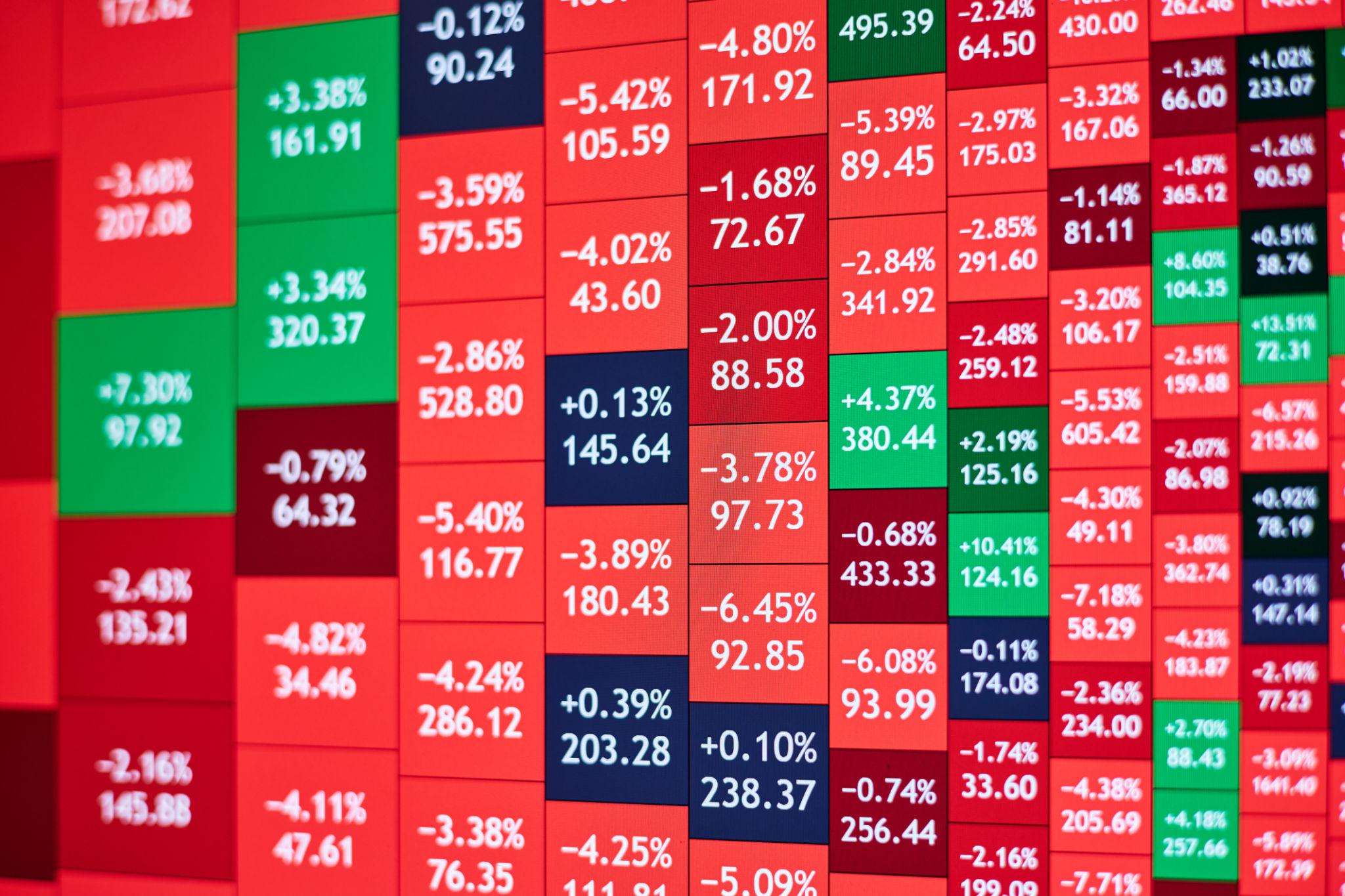
NEW YORK, February 17, 2026 — Parliament News — Global stock market volatility intensified across major financial centers this week as traders on Wall Street and international exchanges reacted to renewed pressure in technology shares, shifting interest rate expectations, and mixed global economic data. The rapid price swings have unsettled investors while prompting renewed debate about the durability of recent market gains.
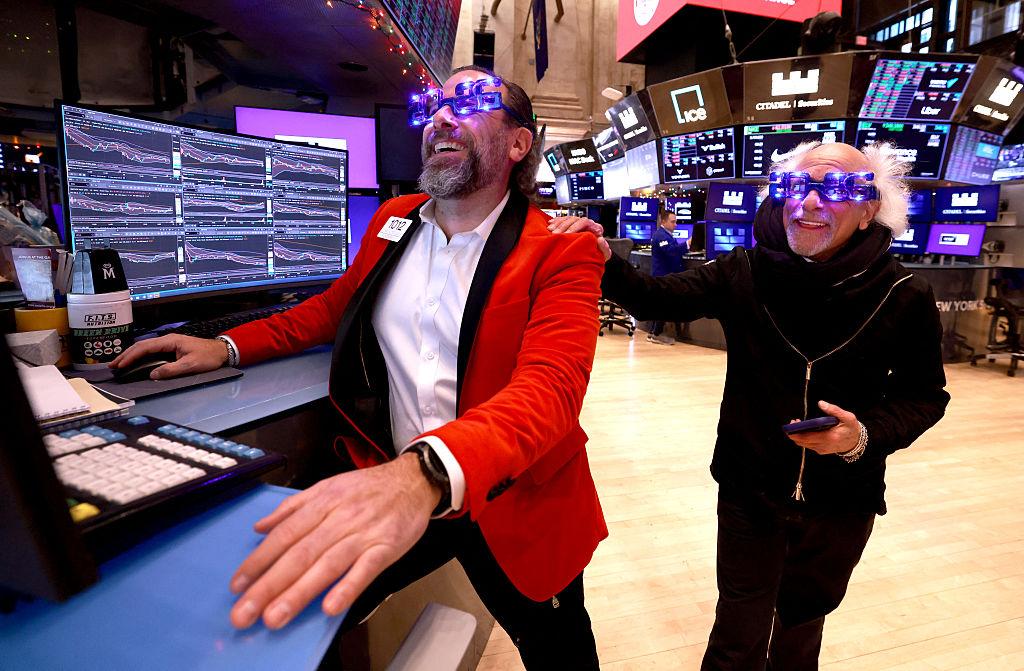
Trading activity at the New York Stock Exchange reflected sharp intraday fluctuations, with leading indices moving between gains and losses in compressed timeframes. Analysts describe the current environment as unstable yet orderly, with liquidity intact but confidence increasingly fragile.
Sudden Price Swings Across Global Exchanges
Global stock market volatility became evident early in the trading session as major U.S. benchmarks posted swift declines before partially recovering by midday. Similar patterns were observed in European and Asian markets, demonstrating the interconnected nature of global capital flows.
The Dow Jones Industrial Average and S&P 500 experienced noticeable oscillations, while technology heavy indices saw the steepest reversals. In London, the FTSE and other continental indices tracked similar momentum, reflecting synchronized investor reactions.
Market strategists noted that rapid swings are often triggered when economic uncertainty converges with high asset valuations. The widespread nature of the current fluctuations underscores broader investor caution rather than isolated sector weakness.

Technology Sector at the Center of Market Turbulence
A key driver behind global stock market volatility is renewed pressure on technology stocks. Companies that had previously led multi year rallies are now confronting earnings scrutiny and valuation concerns.
Higher borrowing costs have reduced appetite for speculative growth equities, leading to portfolio reallocations. Semiconductor manufacturers, artificial intelligence developers, and cloud computing firms experienced amplified trading volumes as investors reassessed forward guidance.
The Nasdaq Composite recorded the most pronounced fluctuations, signaling that risk sensitive assets remain particularly vulnerable during periods of uncertainty.
Economic Indicators Contribute to Investor Anxiety
Recent economic data releases have added complexity to market sentiment. Inflation figures show uneven moderation across regions, while employment data presents mixed signals regarding labor market strength.
Central bank officials continue to emphasize data driven decision making. Investors remain alert to any language suggesting extended monetary tightening or policy pauses.
Global stock market volatility often intensifies during transitions in monetary policy cycles, particularly when markets struggle to interpret forward guidance.
Bond and Currency Markets Mirror Equity Instability
The ripple effects of global stock market volatility extend beyond equities. U.S. Treasury yields fluctuated in response to shifting inflation expectations and equity selloffs.
Currency markets reflected cautious positioning, with the U.S. dollar strengthening during periods of equity weakness as investors sought relative safety. European and Asian currencies showed corresponding adjustments.
Such cross asset reactions illustrate how integrated modern financial systems have become, particularly during periods of rapid repricing.
Investor Strategy Shifts Toward Risk Management
Institutional investors have increasingly adopted defensive positioning strategies. Allocations to utilities, healthcare, and consumer staples have modestly increased as portfolio managers seek stability.
Global stock market volatility has also fueled higher demand for options contracts and hedging instruments. Trading desks report elevated derivatives activity aimed at mitigating downside exposure.
Retail participation remains active, though shorter holding periods and tactical trading approaches have become more common amid heightened uncertainty.
Geopolitical Developments Add Pressure
Beyond economic indicators, geopolitical developments have compounded global stock market volatility. Trade negotiations, regional conflicts, and election cycles continue to shape investor perception of risk.
Unexpected headlines have the capacity to trigger abrupt market reactions, particularly in sensitive sectors tied to global supply chains.
Despite these pressures, analysts emphasize that no systemic liquidity disruptions have emerged. Financial institutions remain well capitalized, reducing the likelihood of structural breakdown.
History of Global Stock Market Volatility
Periods of elevated global stock market volatility have historically occurred during inflection points in economic cycles. From the financial crisis of 2008 to the pandemic driven disruptions of 2020, markets have demonstrated resilience following intense fluctuations.
Historical analysis suggests that volatility spikes often serve as recalibration mechanisms rather than predictors of sustained decline. Price corrections can realign valuations with economic fundamentals.
Understanding historical precedent helps contextualize present turbulence, particularly when sentiment appears disproportionately reactive.
Corporate Earnings Season Intensifies Market Reactions
Earnings announcements have amplified market sensitivity. Several multinational corporations issued cautious outlooks, citing softer demand and cost pressures.
Although many firms met revenue expectations, forward guidance frequently triggered intraday selloffs. Investors appear increasingly focused on future projections rather than historical performance.
Global stock market volatility tends to accelerate during earnings season, especially when consensus expectations prove fragile.

Perspectives from Market Participants
Market observers offered varied interpretations of the current environment. Some view global stock market volatility as a temporary consolidation phase, while others warn of extended turbulence if macroeconomic uncertainty persists.
One senior portfolio manager in Manhattan stated,
“Volatility reflects uncertainty, not collapse, and disciplined investors must distinguish between noise and structural risk.”
This perspective underscores the importance of measured analysis amid rapid market swings.
A European equity strategist added that market resilience will depend largely on earnings stability and policy clarity in the coming quarters.
Impact on Global Investment Flows
Capital flows have adjusted in response to heightened volatility. Emerging markets experienced modest outflows during periods of intensified risk aversion, while developed markets retained comparatively stronger inflows.
Institutional funds continue to evaluate exposure to high growth sectors versus defensive holdings. Asset allocation strategies increasingly prioritize stability over aggressive expansion.
Global stock market volatility has reshaped investment conversations, particularly regarding diversification and long term positioning.
Long Term Structural Drivers Remain Intact
Despite current turbulence, structural drivers of economic growth remain operational. Technological innovation, infrastructure investment, and consumer demand continue to underpin economic expansion in major markets.
Analysts caution against conflating short term volatility with systemic deterioration. Equity markets have historically rebounded following adjustment phases driven by monetary and geopolitical uncertainty.
The broader economic framework remains resilient even as near term price movements unsettle investors.
Monitoring Key Catalysts Ahead
Investors are closely monitoring upcoming central bank meetings, inflation releases, and corporate earnings updates. Each development has the potential to recalibrate expectations.
Geopolitical diplomacy and trade negotiations will also influence sentiment. Market participants remain vigilant regarding potential disruptions that could extend volatility.
Global stock market volatility may persist in the near term as data flows continue shaping investor outlooks.
A Defining Test for Market Stability in 2026
The intensification of global stock market volatility represents a defining test for financial stability in 2026. While equity markets are experiencing sharp price swings, systemic foundations remain stable.
Liquidity conditions are adequate, regulatory safeguards are active, and corporate fundamentals remain largely intact. Investors continue adjusting strategies in response to evolving data rather than reacting to panic.
The coming months will determine whether volatility subsides into consolidation or evolves into a broader correction cycle. For now, financial markets remain vigilant, recalibrating in real time to economic and geopolitical developments.