


US EU trade agreement heads toward a decisive 2026 vote in Brussels.
Lawmakers debate economic growth, environmental safeguards, and regulatory alignment.
The outcome could reshape transatlantic trade and global markets for years ahead.
Brussels, Belgium – February 22, 2026 — According to Parliament News, that The US EU trade agreement has entered a decisive stage in Brussels in 2026, drawing intense political scrutiny, economic analysis, and global attention. European lawmakers are preparing for a high stakes parliamentary vote that could redefine transatlantic commerce for decades. The agreement, negotiated across multiple administrations and EU leadership cycles, seeks to modernize regulatory cooperation, reduce tariffs, and strengthen economic alignment between two of the world’s largest markets.
While supporters frame the deal as a necessary modernization of transatlantic trade, critics urge caution, citing concerns about environmental standards, domestic industries, and long term sovereignty. The debate unfolding in Brussels is not simply about tariffs or exports. It is about the future architecture of global commerce and how democratic economies cooperate in an era of shifting geopolitical realities.
Political Landscape in 2026
The debate surrounding the US EU trade agreement reflects broader political currents within Europe. Parliamentary blocs remain divided along ideological, economic, and environmental lines. Centrist and pro trade members argue that deeper integration strengthens Europe’s global competitiveness. Meanwhile, progressive and nationalist factions express concern about regulatory dilution and industrial vulnerability.
In 2026, European institutions face pressure to balance economic pragmatism with democratic transparency. Trade agreements must secure parliamentary approval, ensuring that elected representatives maintain oversight over cross border commitments. This institutional structure distinguishes European trade policymaking from executive driven systems elsewhere.
Political analysts note that timing is critical. With inflationary pressures moderating but growth projections uneven across member states, lawmakers are weighing whether the agreement could accelerate economic momentum or introduce short term disruptions.
Economic Stakes for Both Sides of the Atlantic
The US EU trade agreement represents a framework that covers goods, services, investment, intellectual property protections, and digital trade provisions. Combined, the United States and the European Union account for nearly half of global economic output. Any structural adjustment to their commercial relationship reverberates worldwide.
European exporters anticipate improved access to American markets in sectors such as advanced manufacturing, green technology, pharmaceuticals, and aerospace. Reduced tariff barriers and streamlined compliance rules could lower operational costs.
American firms, particularly in agriculture and digital services, view expanded European access as an opportunity for growth. Economists suggest that while aggregate trade volumes may increase, sector specific adjustments will require targeted support mechanisms.
The economic modeling behind the agreement forecasts gradual gains rather than immediate surges. Trade expansion typically unfolds over several years as supply chains recalibrate and investment flows adjust.
Regulatory Harmonization and Standards
A significant component of the US EU trade agreement focuses on regulatory alignment. Differences in environmental standards, consumer protections, and data governance have historically complicated transatlantic commerce.
European policymakers insist that harmonization must not compromise established safeguards. Climate commitments under the European Green Deal remain central to the EU’s policy identity. Any trade arrangement must reinforce, rather than weaken, emissions targets and sustainability standards.
Digital regulation also features prominently. Data privacy laws within the European Union differ substantially from American frameworks. Negotiators have worked to design interoperable systems that preserve privacy rights while facilitating digital trade and cross border services.

Strategic Geopolitical Considerations
Beyond economics, the US EU trade agreement carries strategic weight. In a global landscape characterized by supply chain vulnerabilities and emerging technological competition, transatlantic coordination enhances resilience.
Energy security, semiconductor production, and rare earth mineral supply chains are increasingly interconnected with trade policy. Closer alignment between Brussels and Washington could reduce dependency on unstable regions and strengthen shared democratic values in global markets.
At the same time, policymakers remain cautious about overreliance on any single partner. Strategic autonomy remains a recurring theme in European discourse, emphasizing the importance of diversified partnerships.
Public Opinion and Transparency
Public engagement with trade policy has evolved significantly over the past decade. Civil society organizations, labor groups, and environmental advocates demand detailed transparency. Parliamentary hearings have featured expert testimony analyzing labor standards, environmental protections, and dispute settlement mechanisms.
Trust remains a decisive factor. Lawmakers emphasize that citizens must understand how trade rules influence employment, consumer prices, and regulatory oversight. Without clear communication, even economically beneficial agreements risk public skepticism.
Impact on Small and Medium Enterprises
Small and medium enterprises represent the backbone of Europe’s economy. Simplified customs procedures and unified documentation standards could reduce administrative burdens for SMEs seeking cross border opportunities.
However, adaptation costs may arise. Smaller firms often require technical assistance to navigate updated compliance frameworks. Policymakers have proposed educational programs and digital portals to facilitate transition.
Long term competitiveness depends not only on tariff reductions but also on the capacity of businesses to innovate and expand sustainably.
Financial Market Reactions
Financial markets have responded cautiously as the parliamentary vote approaches. Investors generally favor predictability, and clarity surrounding the US EU trade agreement could influence currency valuations and cross border capital flows.
Equity markets in export oriented sectors have exhibited moderate volatility. Analysts emphasize that final ratification could encourage increased foreign direct investment, particularly in manufacturing and technology sectors benefiting from regulatory coherence.
Market participants remain attentive to the pace of implementation and potential amendments emerging from parliamentary debate.
Agricultural Sensitivities
Agriculture remains among the most sensitive components of transatlantic negotiations. European farmers have historically expressed concern about competition from American producers operating under distinct regulatory regimes.
Provisions addressing geographical indications and food safety standards aim to preserve European agricultural identity. Environmental safeguards tied to sustainable farming practices also form part of the broader negotiation framework.
Balancing agricultural competitiveness with sustainability objectives remains a delicate policy challenge.

Labor and Social Protections
Labor standards constitute another dimension of scrutiny. European lawmakers insist that trade expansion must coincide with strong worker protections. Mechanisms ensuring compliance with labor rights form part of the enforcement architecture.
Social equity considerations extend beyond employment. Policymakers examine how trade liberalization may influence regional disparities within member states. Targeted support programs may mitigate transitional impacts on vulnerable communities.
Historic Comparison
Transatlantic trade debates are not new. In the 1990s and early 2000s, earlier efforts to deepen economic integration encountered both enthusiasm and resistance. Past negotiations illustrate that major trade agreements often provoke intense public debate before eventual stabilization.
The US EU trade agreement echoes previous milestones where economic ambition intersected with political caution. Over time, many earlier accords became foundational pillars of global commerce despite initial controversy.
Historical experience suggests that comprehensive trade frameworks require patience, transparent communication, and adaptive implementation strategies. The current debate reflects similar dynamics seen in earlier eras of economic transformation.
Legislative Process and Ratification Timeline
The parliamentary procedure surrounding the US EU trade agreement involves detailed committee evaluations, proposed amendments, and full plenary debate before lawmakers cast their final votes. For the US EU trade agreement to advance, it must secure majority support within the European Parliament, after which individual member states move forward with implementing the relevant provisions under their national frameworks.
Observers expect extensive discussion before the decisive vote takes place. Proposed amendments to the US EU trade agreement may focus on strengthening enforcement mechanisms, refining dispute resolution systems, or reinforcing environmental and labor benchmarks. Depending on coalition negotiations and political alignment inside Parliament, the ratification timeline for the US EU trade agreement could stretch into late 2026.
This layered legislative structure ensures that the US EU trade agreement undergoes democratic scrutiny at multiple levels before becoming legally binding, reinforcing institutional accountability within the European Union.
Long Term Outlook
Looking ahead, the broader success of the US EU trade agreement depends on execution. Trade frameworks evolve through joint committees and periodic reviews addressing emerging technologies and environmental standards.
If effectively implemented, the agreement could reinforce innovation, sustainable growth, and regulatory cooperation across the Atlantic. However, its durability will rely on sustained political will and public confidence.
One senior lawmaker summarized the moment by stating,
“This decision will define not only our trade policy but the character of our economic partnership for a generation.”
That statement encapsulates the gravity of the parliamentary vote. The outcome will influence tariffs, regulatory collaboration, and strategic alignment in a rapidly shifting global environment.
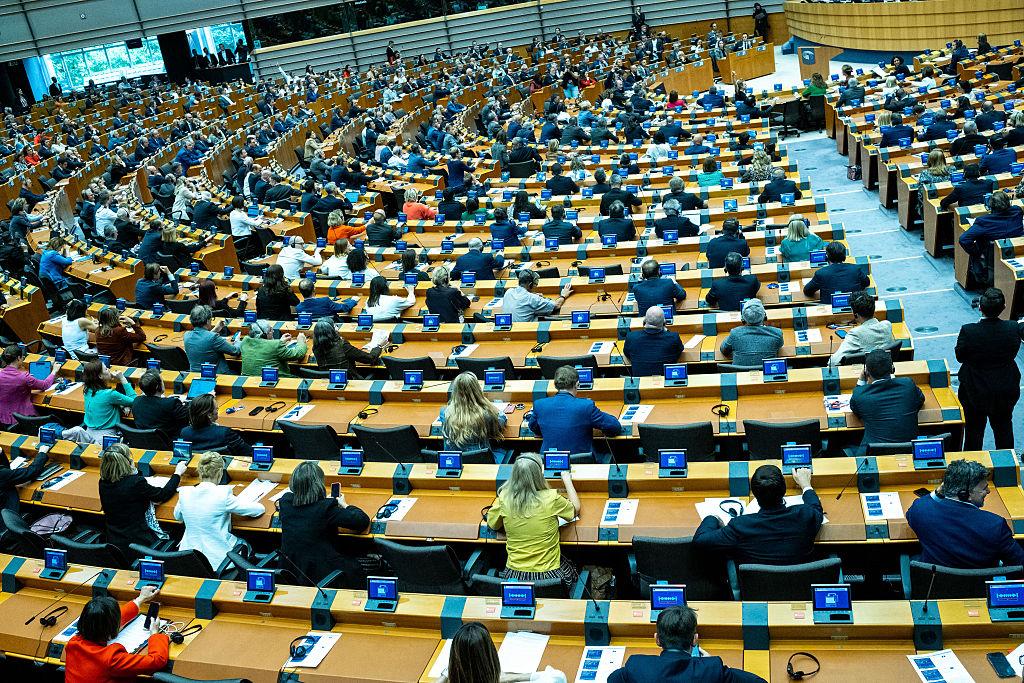
The Crossroads of Commerce and Democracy
As Brussels approaches the decisive vote in 2026, policymakers confront a defining choice. The debate extends beyond economic expansion and focuses equally on protecting democratic values while embracing new opportunity.
The proposed transatlantic framework now sits at the intersection of commerce and accountability. The US EU trade agreement could open a new era of coordinated growth and regulatory cooperation if approved. If lawmakers opt to delay or amend the US EU trade agreement, it may reflect shifting political priorities and a desire for stronger safeguards.
Trade policy in 2026 operates within a complex web of economic pressure, environmental responsibility, and geopolitical strategy. The final decision on the US EU trade agreement will reach far beyond Brussels, influencing global markets and alliances. Whatever the outcome, the US EU trade agreement represents more than a commercial pact; it is a statement about how democratic economies align their future. The direction chosen for the US EU trade agreement will help shape transatlantic relations for years to come.