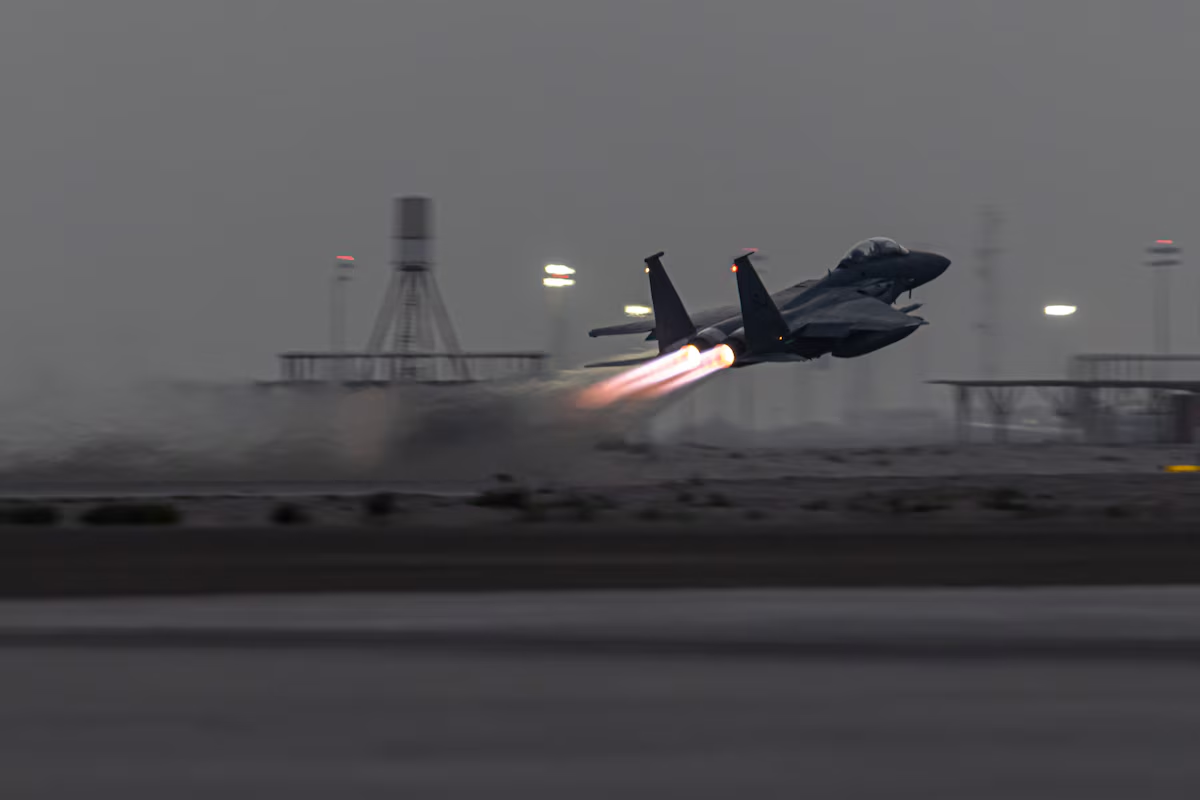
As the US and Israel launch a wave of coordinated military strikes on Iran, killing a number of the regime’s leaders, including Ayatollah Ali Khamenei, trigging immediate retaliatory strikes from Tehran across the region, the political reaction in Westminster has exposed deep fractures within the UK’s political landscape.
The Government’s response is limited to “defensive operations”, aimed at protecting UK assets and allies.
Speaking yester the Prime Minister Sir Keir Starmer sought to set out UK’s position, confirming that while the United Kingdom played “no role in these strikes,” despite British forces having significant assets in the region.
“The regime in Iran is utterly abhorrent,” the Prime Minister stated, citing the regime’s history of crushing dissent and backing over 20 potentially lethal attacks on UK soil in the last year alone. “They must never be allowed to develop a nuclear weapon.”
He went on to confirm that British planes are currently in the sky as part of “coordinated regional defensive operations” to protect allies and UK interests. However, his primary message was one of caution: “It is vital now that we prevent further escalation and return to a diplomatic process… Iran can end this now.”
It has been suggested that his failure to back the US is due to legal advice from the Attorney General Lord Hermer, who it is claimed has raised questions over the legality of the attacks on Iran under international law.
From the opposition benches, the positions of each vary. The right, (the Conservatives and Reform) the support for the military action was more full-throated.
Conservative leader Kemi Badenoch aligned herself firmly with the offensive, stating she stood with the US and Israel “as they take on the threat of the Islamic Republic of Iran and its vile regime.”
Reform UK leader Nigel Farage struck a similar chord, though he focused his rhetoric on the Iranian population. Farage said he was praying “for the right outcome for the wonderful Persian people” as the “attacks against this evil regime in Iran begin.”
The Liberal Democrats struck a more sceptical and critical tone, saying they feared a “protracted war”.
Sir Ed Davey, leader of the Liberal Democrats, while acknowledging that Iranians “deserve to live free from a brutal regime,” took aim at the nature of the intervention.
Davey warned that Donald Trump’s “unilateral and illegal military action won’t deliver freedom, peace and security,” adding a firm warning that the UK “can’t be dragged into another protracted Middle Eastern war by a US president.”
The Greens went even further describing the US and Israel as “Rogue States”.
Green Party leader Zack Polanski, who pointed to harrowing reports that a strike had hit a girls’ school, resulting in dozens of deaths, said “This is an illegal, unprovoked and brutal attack that shows once again that the USA and Israel are rogue states.”
He called for a fundamental shift in British foreign policy, stating, “The UK must end our cosy relationship with the USA and our ongoing support for Israel.”
A view echoed by the former leader of the Labour Party and current leader or Your Party, Jeremy Corbyn, who took to X (formally twitter) to say: “The attacks on Iran by Israel and the United States are illegal, unprovoked and unjustifiable. Peace and diplomacy was possible. Instead, Israel and the United States chose war. This is the behaviour of rogue states — and they have jeopardised the safety of humankind around the world with this catastrophic act of aggression. Our government must condemn this flagrant breach of international law, and urgently pursue a foreign policy based on justice, sovereignty and peace.”
Scotland’s First Minister, John Swinney of the SNP, called for the US and Israel to “demonstrate” the legality of the attacks against Iran and urged the countries to focus on working towards peace.
He said: “The Iranian government is an undemocratic, repressive regime and there must be a diplomatic solution to ensure they do not become a nuclear power.
“Recent history shows us that all nations must abide by the international rules-based system and it is for the United States and Israel to now demonstrate how this intervention is compatible with that position.
“The international community should now work together and at pace on a solution which focuses on de-escalation, ensures there is no additional loss of life and which provides a diplomatic route to ending the nuclear ambitions of the Iranian regime.”
As the situation evolves, the sheer range of responses from Westminster highlights a deeply fractured political landscape. From the Conservative and Reform’s support of the attacks, the Government’s cautious support for “defensive operations” only to the Greens’ and Your Party outright condemnation of the US and Israel denouncing them “rogue states,” these vastly differing views expose the fragmented state of UK politics. With crucial elections fast approaching in May, these divisions over Britain’s international alliances and its role in the Middle East look set to become a defining—and potentially explosive—battleground for a divided electorate.
A Nation Divided: Westminster Splits Over US-Israel Strikes on Iran