
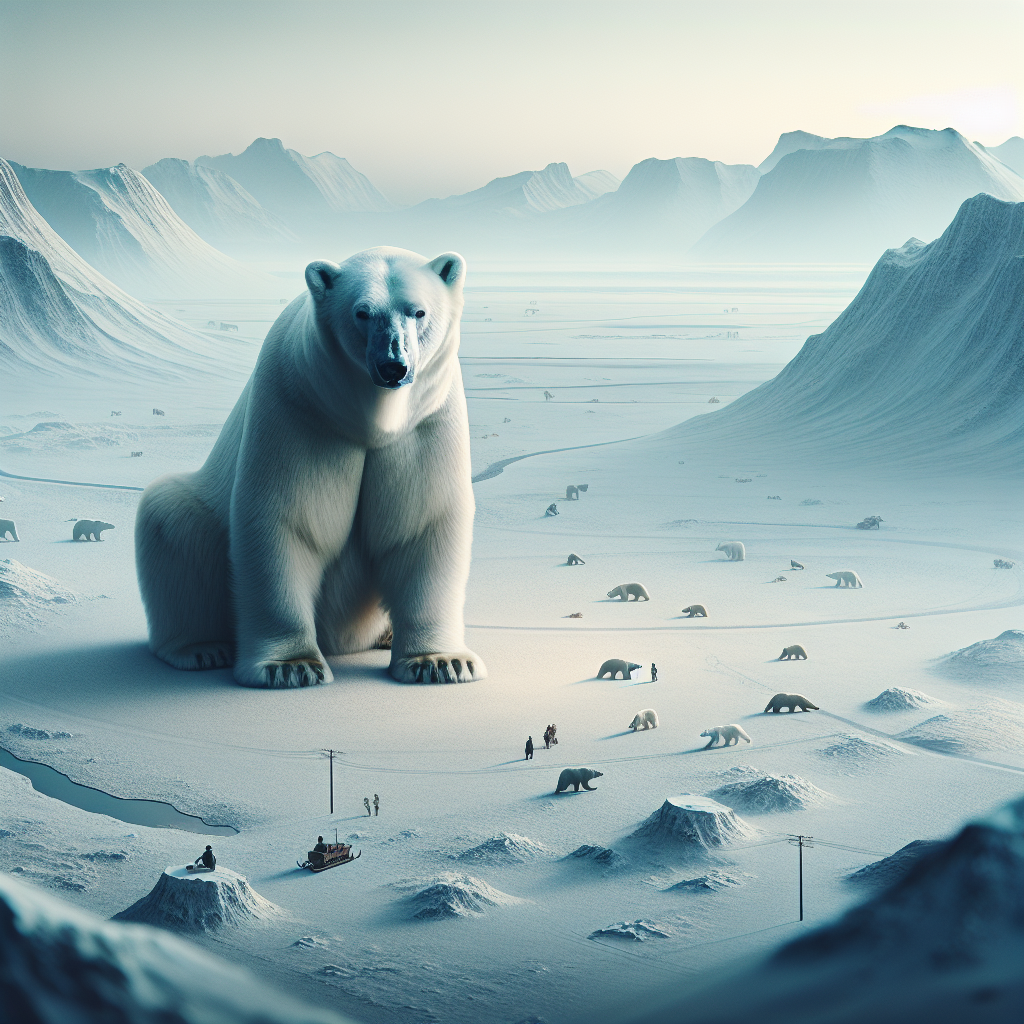
Headline: Polar Bears’ Land Habits Misconstrued as Threat to Humans
Recent research indicates that polar bears, often perceived as threats due to increasing land encounters, are not hunting people but are instead spending more time on shore due to diminishing sea ice. The study, conducted by a team of scientists from the University of Alberta, underscores the need for enhanced understanding of polar bear behavior as climate change alters their natural habitat. Published this month in the journal Ecology and Evolution, the research highlights how humans often misinterpret the bears’ presence on land, especially in areas frequently populated by people.
Shift in Habitat Dynamics
As sea ice continues to recede because of rising global temperatures, polar bears are forced to adapt their hunting techniques and habitat usage. Traditionally reliant on sea ice for hunting seals, their primary food source, many bears are now venturing onto land for extended periods. According to Dr. Sarah Thompson, the lead researcher on the study, "This behavior shouldn’t be viewed as a direct threat to human populations. Instead, it’s a clear sign of how climate change impacts wildlife."
The data collected over the past decade reveals a significant trend: an increasing number of polar bears are spending more time on land, particularly during the summer months when sea ice is scarce. The ice’s diminishing presence is a critical factor leading to this behavior shift. An increase in bear sightings near coastal communities has fueled fear and misconceptions among residents, who often see bears as predators targeting humans.
Understanding Polar Bear Behavior
The misconception that polar bears are hunting people is amplified by a few isolated incidents reported in the media. However, Dr. Thompson’s research shows that these bears are not actively seeking humans but are rather exploring unfamiliar territory in search of food. Bears typically use terrestrial foraging methods when their usual food sources are not available. This includes scavenging for bird eggs and hunting for carrion, rather than targeting live prey, like humans.
The scientists conducted interviews and gathered reports from local populations about their encounters with polar bears. Interestingly, they found that the majority of sightings occurred when the bears were scavenging or in search of food sources, rather than showing any aggressive behavior towards humans. Understanding these behavioral patterns is crucial for both conservation efforts and public safety.
Community Response and Wildlife Management
With the increase in polar bear encounters, communities near polar bear habitats are starting to implement measures to coexist with these magnificent animals. Wildlife management authorities are working with local residents to promote bear safety, educate the public, and develop strategies to minimize conflicts.
In the town of Churchill, Manitoba, known as the “Polar Bear Capital of the World,” local leaders have increased measures like bear-proof trash containers and community awareness programs. These initiatives aim to change the narrative surrounding polar bears, emphasizing that these animals are more often interested in foraging than in confronting humans.
A local conservation officer, James Markov, has been actively involved in community safety discussions. He comments, "It’s vital for everyone to understand that polar bears are a part of our natural environment, and as climate change reshapes their habitat, we need to adjust our perspectives and practices accordingly."
Climate Change and Its Impact
The findings from the University of Alberta study reflect broader climatic trends affecting not just polar bears but various species around the globe. Melting ice caps and rising ocean temperatures pose significant challenges to wildlife. For polar bears, the repercussions are particularly dire, as their reliance on sea ice for hunting and resting becomes increasingly fragile.
Research shows that polar bears rely on a specific balance of sea ice for reproduction and sustenance. As they adapt to life on land, there is growing concern about their nutrition, which could lead to adverse health effects over time. "Without addressing climate change, discussions around polar bear behavior risk being superficial," emphasizes Dr. Thompson.
As the world grapples with climate change, understanding how animal behavior changes can foster better human-animal relationships. This is crucial not only for human safety but also for the conservation of polar bears, who are already classified as vulnerable due to habitat loss.
The Role of Public Awareness
Increasing public awareness about polar bears and their changing habits is critical. Initiatives are underway to improve educational outreach about wildlife behaviors and climate change impacts. By providing facts and dispelling myths, experts hope to encourage more humane and informed responses among communities living near polar bear habitats.
Local schools in affected regions have begun educational programs that teach children about the ecological importance of polar bears and the effects of climate change. Teachers emphasize that safeguarding polar bears also means addressing larger environmental issues.
Conclusion: Towards Sustainable Coexistence
Ultimately, the changing behavior of polar bears serves as a wake-up call for society. As they navigate the dual dangers of climate change and a warming planet, education and understanding will play vital roles in promoting safety and conservation efforts. The challenge lies not just in managing polar bear encounters but in addressing the root causes of habitat change.
In light of the findings from the University of Alberta, fostering coexistence strategies will require collaboration among scientists, local communities, and policymakers. As the narrative shifts from fear to understanding, there lies an opportunity for more harmonious living with one of nature’s largest and most majestic creatures.