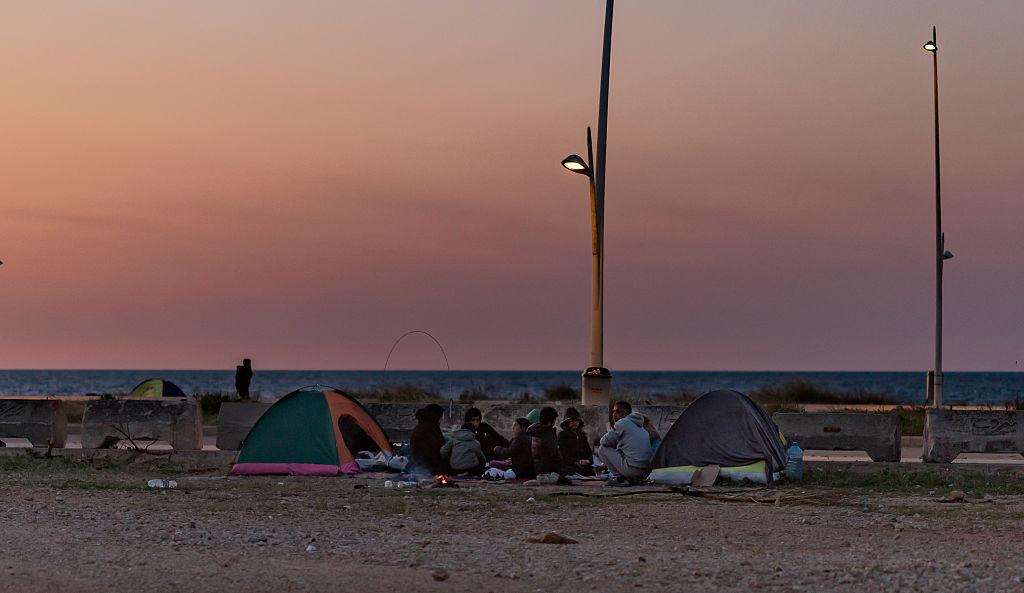
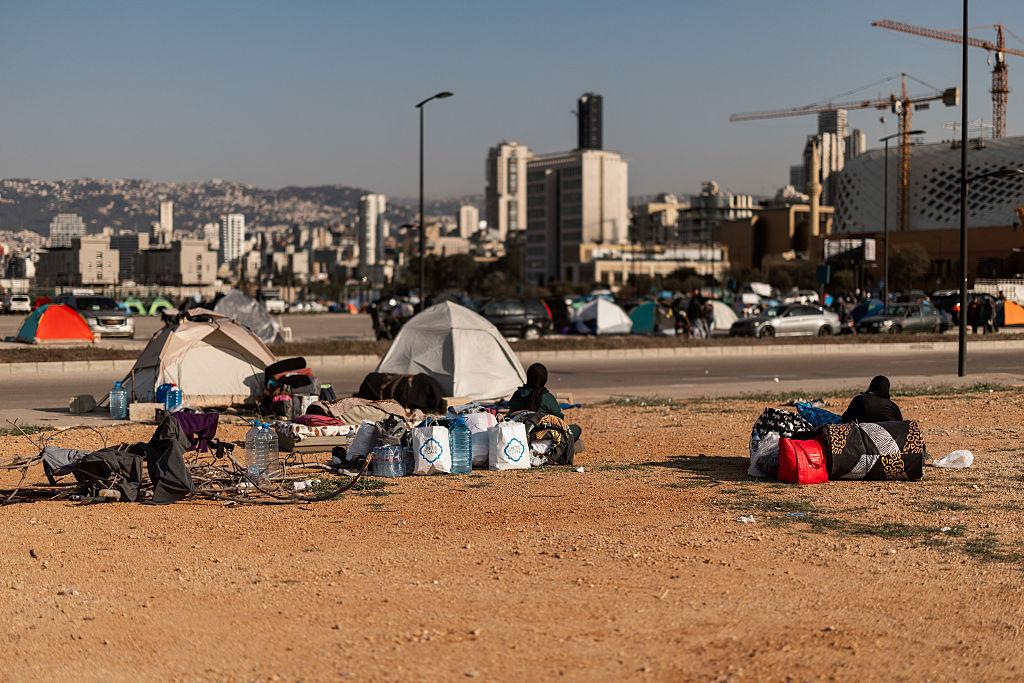
BEIRUT, Lebanon – March 15, 2026: According to Parliament Politics Magazine, The Beirut displacement crisis is rapidly unfolding as thousands of civilians fleeing Israeli airstrikes and military activity across southern Lebanon arrive in the capital seeking safety. Public spaces along Beirut’s Mediterranean waterfront have become temporary shelters where displaced families are setting up tents after leaving homes damaged or threatened by the escalating conflict.
Many residents arrived overnight carrying only essential belongings after abandoning their homes. Humanitarian organizations say the situation is developing quickly as the number of displaced civilians continues to rise. Authorities and aid groups are now working urgently to provide food, medical care, and emergency shelter for families affected by the growing crisis.
Officials warn that the Beirut displacement crisis could intensify if fighting continues, forcing more civilians to flee toward urban areas where humanitarian resources are limited.
Civilians Flee Southern Lebanon
Large numbers of families from southern Lebanese towns began moving toward Beirut after airstrikes damaged residential neighborhoods and created fears of further attacks. Roads leading into the capital have seen steady traffic as displaced civilians search for safer areas away from active conflict zones.
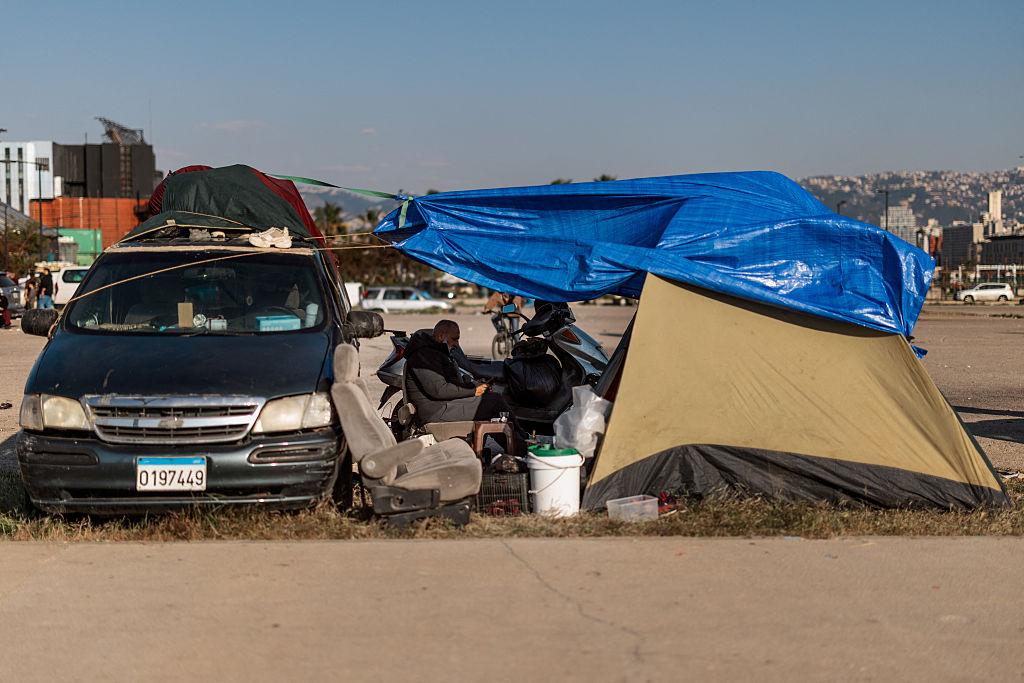
The Beirut displacement crisis has forced thousands of people to rely on improvised shelters. Many families have gathered in public parks and coastal areas where volunteers have helped them assemble temporary tents using tarps and donated supplies.
Humanitarian workers say the situation remains unpredictable. Some families expect to return home quickly if fighting subsides, while others fear their homes may have been severely damaged.
Children, elderly residents, and people with medical conditions are among the most vulnerable populations now seeking support.
Waterfront Areas Turn Into Temporary Camps
Beirut’s famous seaside promenade has become one of the most visible scenes of the Beirut displacement crisis. Rows of small tents now line sections of the waterfront where displaced civilians gather in search of stability.
Local residents and volunteers have organized community kitchens to provide meals to families staying near the coast. Medical volunteers are also offering basic healthcare services for displaced residents suffering from exhaustion, dehydration, or stress.
Despite these efforts, humanitarian groups warn that living conditions could become difficult if the number of displaced people increases significantly.
Shelter, sanitation, and healthcare resources remain limited and international assistance may soon be required to prevent a worsening humanitarian emergency.
Aid Organizations Struggle to Meet Needs
Lebanese charities and international relief organizations have mobilized emergency response teams to assist families caught in the Beirut displacement crisis. Aid groups are distributing food packages, bottled water, hygiene kits, and blankets to displaced residents.
Medical teams have established temporary clinics to treat injured civilians and address common health issues among displaced populations. Psychological support is also becoming an important need as families cope with trauma and uncertainty.
However humanitarian agencies say Lebanon’s economic crisis has weakened public infrastructure, making the response more difficult. Relief groups are urging international donors to provide immediate support.
Without additional assistance, experts warn that humanitarian conditions could deteriorate quickly.
Historical Comparison With Previous Conflicts
Lebanon has experienced similar waves of displacement during past regional conflicts. During the 2006 war between Israel and Hezbollah, hundreds of thousands of civilians fled southern Lebanon and sought refuge in Beirut and other northern cities.
The current Beirut displacement crisis reflects patterns seen in earlier conflicts when civilians fled urban combat zones and gathered in the capital where humanitarian aid was more accessible.
During that earlier war, temporary shelters were also created in public spaces, schools, and community centers. While the scale of the present displacement is still evolving, analysts warn that prolonged conflict could lead to comparable humanitarian challenges.
History suggests that civilian displacement often continues as long as military tensions remain unresolved.
Government Response and Emergency Planning
Lebanese authorities have begun coordinating relief operations to manage the Beirut displacement crisis. Officials are working with humanitarian organizations to identify additional shelter locations and expand emergency food distribution.
Public schools, sports complexes, and municipal buildings are being considered as temporary housing sites if the number of displaced families increases.
Government leaders have also called for international assistance and diplomatic efforts aimed at reducing tensions in the region.
Security forces are monitoring crowded areas to ensure displaced residents remain safe and that aid operations continue smoothly.
Voices From the Camps
Displaced families describe the emotional toll of leaving their homes behind.
said one resident who arrived in Beirut with his family.
“Like many others caught in the Beirut displacement crisis, we only want peace and the chance to return home.”
Stories like his are common throughout the camps where families share experiences of sudden displacement and uncertainty about the future.
For many civilians the hope remains simple: safety for their families and the opportunity to rebuild their lives once the violence ends.
Economic and Social Pressure on the Capital
The arrival of thousands of displaced residents is placing new pressure on Beirut’s housing market, healthcare system, and public infrastructure.
Economists warn that the Beirut displacement crisis could strain resources in a city already facing economic challenges. Lebanon has experienced years of financial instability and high inflation, making it difficult for public institutions to absorb a sudden increase in population.
Despite these challenges, many Beirut residents have demonstrated solidarity by donating food, clothing, and supplies to displaced families.
Community support has become an important element of the humanitarian response.
When a Waterfront Turns Into a Refuge
The Beirut displacement crisis has transformed parts of the city’s beautiful coastline into a temporary refuge for thousands of civilians. Tents now stand where tourists once walked along the promenade, illustrating the human impact of regional conflict.
For the families living in these shelters, the future remains uncertain. They depend on humanitarian aid and the kindness of volunteers while waiting for conditions to improve.
If diplomatic efforts succeed in reducing tensions, many displaced residents hope they will soon be able to return home and rebuild their communities.
Crisis at the Coast A Humanitarian Snapshot
The Beirut displacement crisis highlights the profound human cost of conflict. Thousands of civilians have fled their homes, establishing temporary camps along Beirut’s waterfront as they search for safety and stability.
Humanitarian organizations continue to provide emergency support, but the coming weeks will determine whether the crisis stabilizes or expands further. The resilience of displaced families and the solidarity shown by local communities remain critical as Lebanon navigates this difficult moment.
For now the tents along the Mediterranean shoreline stand as a powerful reminder of the urgent need for peace and humanitarian assistance.