


Hanoi, Vietnam, April 06, 2026 (Parliament Politics Magazine) Platform economy challenges are rapidly intensifying in Vietnam as soaring fuel prices place immense financial pressure on gig workers, exposing deep structural weaknesses in the country’s fast-growing digital labor market.
Drivers working in ride-hailing and delivery services now face shrinking profits, rising operational costs, and uncertain long-term prospects, raising concerns about the sustainability of the entire platform-based economy.
Fuel Price Surge Accelerates Platform Economy Challenges
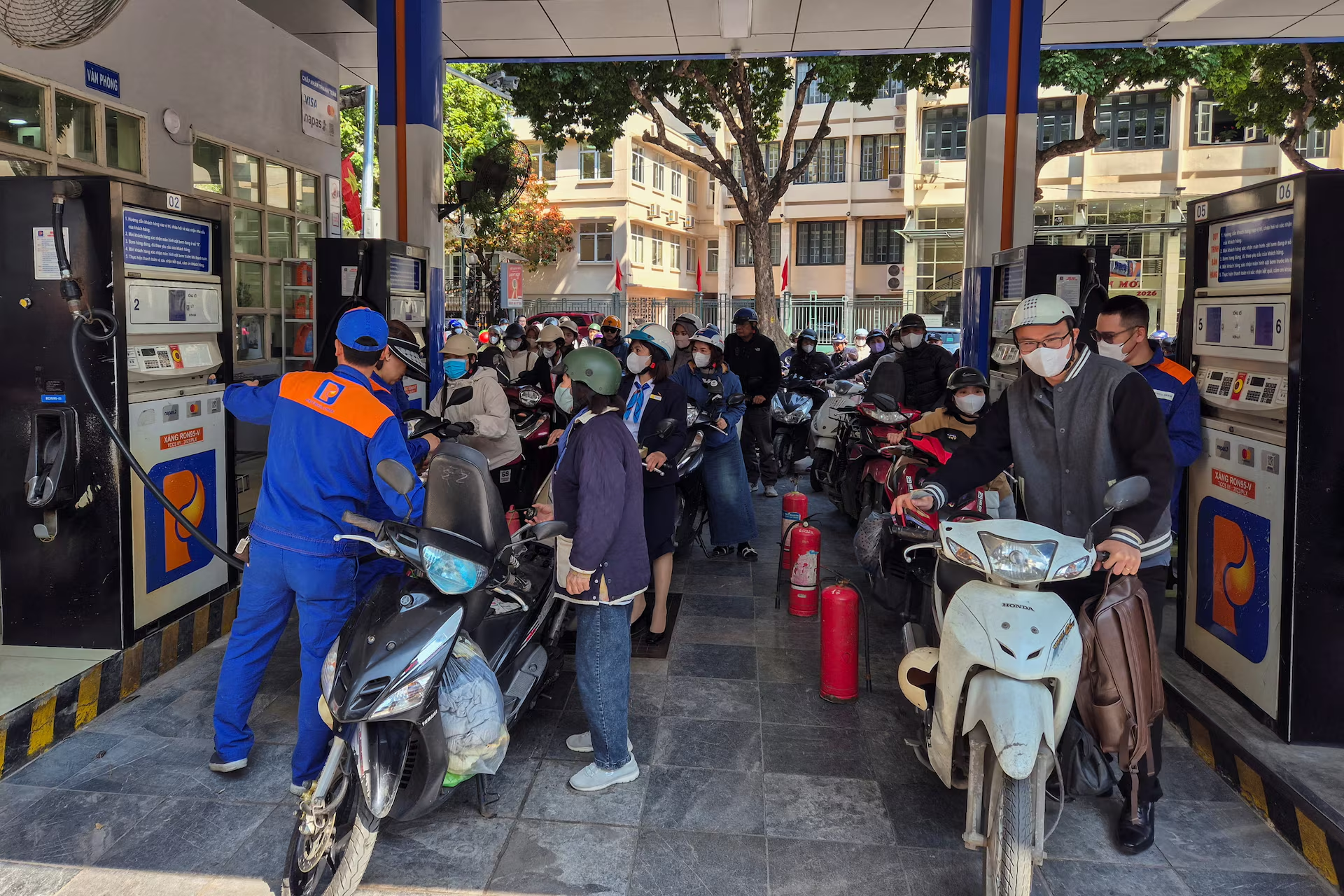
Vietnam’s recent spike in fuel prices has triggered a chain reaction across the gig economy. Workers who depend on motorbikes and cars for income are seeing a significant portion of their earnings consumed by fuel expenses.
In many cases, drivers report that fuel now accounts for more than half of their daily income, a sharp increase compared to previous years.
A ride-hailing driver in Hanoi shared:
“I used to make enough to support my family, but now fuel costs take most of what I earn. It’s becoming impossible to keep going.”
This shift is amplifying platform economy challenges, particularly for workers who lack financial safety nets.
Gig Workers Bear the Burden of Rising Costs
One of the most critical platform economy challenges is the imbalance between rising operational costs and stagnant earnings. Gig platforms often maintain fixed fare structures, meaning drivers receive the same pay per trip regardless of external cost increases.
This model leaves workers fully exposed to market volatility, forcing them to absorb financial shocks without support.
Economic observers argue that this imbalance is unsustainable and could lead to long-term disruptions in labor supply if not addressed.
Driver Exodus Signals Growing Platform Economy Challenges
As profits decline, many gig workers are choosing to reduce their working hours or leave the industry altogether. This emerging trend is a clear indicator of escalating platform economy challenges across Vietnam.
Some drivers are transitioning to traditional employment sectors, while others are seeking alternative income streams that offer greater stability.
A former delivery worker explained:
“There’s no stability in this work anymore. I had to leave because I couldn’t keep up with the rising costs.”
This shift could have lasting consequences for the availability and reliability of gig-based services.
Consumers Begin to Feel the Effects
Platform economy challenges are now extending beyond workers to impact consumers. With fewer active drivers on the road, wait times for services are increasing, and prices are beginning to rise in some areas.
Food delivery services, in particular, have experienced noticeable cost increases, affecting both customers and businesses that rely on these platforms.
Restaurants and small businesses are also facing indirect consequences, as higher delivery fees may reduce order volumes and revenue.

Policy Pressure Builds Amid Platform Economy Challenges
The growing severity of platform economy challenges is placing pressure on Vietnamese authorities to consider policy interventions. Potential measures include fuel subsidies, regulatory reforms, or incentives for platforms to adjust compensation structures.
However, implementing such policies is complex. Governments must balance economic support with fiscal responsibility while ensuring that the digital economy remains competitive.
Experts suggest that proactive measures may be necessary to prevent further deterioration of working conditions.
Digital Growth Faces Uncertainty
Vietnam’s digital economy has been one of the fastest-growing in Southeast Asia, with gig work playing a key role in its expansion. However, the current crisis highlights significant platform economy challenges that could hinder future growth.
If workers continue to exit the sector, the scalability of ride-hailing and delivery services may be compromised. This could impact investor confidence and slow the pace of innovation.
Analysts warn that addressing worker sustainability is essential for maintaining long-term economic momentum.
Workers Demand Fair Adjustments
In response to worsening conditions, gig workers are increasingly calling for reforms to address platform economy challenges. Key demands include fare adjustments, fuel-based compensation, and improved transparency in earnings.
Some workers advocate for dynamic pricing systems that reflect real-time fuel costs, while others seek direct support from platforms during periods of economic stress.
A driver emphasized:
“We are doing the work that keeps these platforms running. It’s only fair that we are protected when costs go up.”
Shift Toward Alternative Solutions
To cope with financial pressure, some workers are exploring alternative strategies. These include reducing work hours, diversifying income sources, or investing in more fuel-efficient vehicles.
Electric motorbikes are gaining attention as a potential solution, though high upfront costs remain a barrier for many workers.
These adaptations highlight the resilience of gig workers but also underscore the severity of platform economy challenges they face.
Long-Term Outlook Hinges on Reform
The ongoing platform economy challenges in Vietnam point to the need for systemic change. Without adjustments to compensation models and regulatory frameworks, the gig economy may struggle to remain viable.
Industry experts suggest that collaboration between platforms, policymakers, and workers will be critical in developing sustainable solutions.
The coming months will likely determine whether Vietnam’s gig economy can adapt to these pressures or face a period of decline.
Platform Economy Challenges Reach a Breaking Point
Platform economy challenges have become a defining issue in Vietnam’s economic landscape in 2026.
Key highlights include:
- Rising fuel prices are significantly reducing gig worker earnings
- Many drivers are reducing hours or leaving the industry
- Consumers are experiencing higher costs and longer wait times
- Government intervention is increasingly likely
- The future of the gig economy depends on structural reforms
As the crisis unfolds, the response from platforms and policymakers will shape the future of digital labor markets in Vietnam and beyond.
