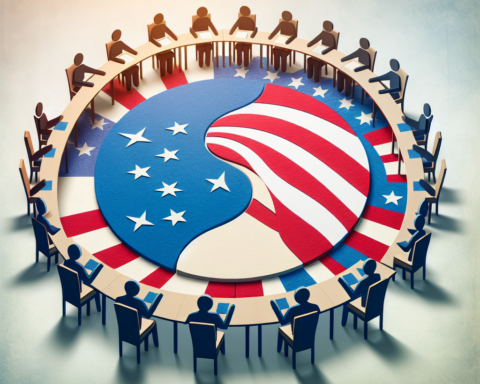

Headline: Poilievre Challenges Liberals’ Tactics in Majority Bid
In a recent press conference, Conservative Party leader Pierre Poilievre accused the Liberal government of compromising integrity in its pursuit of a parliamentary majority. This assertion comes as the Liberals celebrate their increasing influence ahead of the anticipated 2025 federal elections. Poilievre’s comments, made during a visit to Ottawa on October 5, highlight concerns over potential ethical breaches in political strategies that could undermine public trust in the political process.
The Ethics of Majority Politics
As the political landscape intensifies, the Liberals appear to be unconcerned about the methods they adopt to gain an electoral advantage. The party has recently shifted its focus from policy-making to aggressive campaigning, raising questions about whether the ends justify the means. Poilievre emphasized the importance of transparent governance, arguing that the foundation of democracy relies on the trust between elected officials and their constituents.
"Canadians deserve leaders who prioritize integrity over ambition," Poilievre stated. "The methods employed to secure power should not come at the expense of the values we hold dear."
Backlash from Conservatives
The Conservative leader’s remarks resonate with many Canadians who are growing increasingly wary of perceived political manipulation. Following the scandal-ridden tenure of previous Liberal administrations, the current government’s strategies have ignited debates about accountability and ethical governance.
In recent months, Poilievre and his party have ramped up their criticism of the Liberals, particularly focusing on spending practices and the influence of special interest groups on government policies. This strategic pivot aims to position the Conservatives as champions of integrity and fiscal responsibility.
The Liberals’ Response
In contrast, Liberal representatives have brushed off Poilievre’s allegations as mere political theatrics. During a recent town hall in Toronto, Prime Minister Justin Trudeau lauded his party’s achievements while announcing new funding initiatives aimed at addressing climate change and healthcare. The administration continues to adopt a forward-looking approach, emphasizing policy successes over the criticisms coming from the opposition.
“We are committed to making tangible progress on the issues that matter most to Canadians,” Trudeau declared. “The sky is the limit when we work together, and we won’t be deterred by outdated attacks.”
Public Opinion and Strategic Choices
As the debate over governance tactics unfolds, public opinion polls indicate a mixed response from Canadians. While many express dissatisfaction with the status quo, views on the Liberal government’s handling of key issues like healthcare and environmental policy vary significantly by demographic.
The Liberals seem to recognize this disparity and are actively courting specific voter bases, particularly younger constituents who prioritize issues like climate change and social justice. By aligning their messaging with these concerns, the party hopes to galvanize support that transcends traditional political loyalties.
Potential Implications for Elections
With the 2025 elections approaching, the implications of Poilievre’s critique could have significant electoral consequences. Political analysts suggest that if the Liberal government is seen as ethically compromised, it could lead to a shift in voter sentiment that favors the Conservatives. However, this also depends on how effectively Poilievre can present himself as a viable alternative to Trudeau’s administration.
Stacey Adams, a political analyst at the University of Ottawa, explained, “The effectiveness of Poilievre’s challenge hinges on his ability to resonate with Canadians who are disillusioned with the Liberal government but still wary of returning to Conservative governance. He needs to offer a compelling vision that instills confidence.”
The Role of Media and Communication
Media plays a critical role in shaping public perception around these issues. The Liberals’ well-crafted communication strategy aims to drown out criticisms with positive narratives about their achievements. Social media campaigns have been instrumental in disseminating these messages, while consistently targeting specific vulnerabilities within the Conservative narrative.
In a digital era where misinformation can spread rapidly, the need for clear, truthful communication has never been more essential. Both parties are vying for the trust of an electorate inundated with information, making transparency key to winning over undecided voters.
Conclusion
As Pierre Poilievre continues to challenge the Liberal government’s integrity amidst an evolving electoral landscape, the debate around political ethics is far from over. With the stakes rising as the 2025 elections draw near, both the Conservatives and the Liberals must navigate a complex terrain of public opinion, ethical governance, and effective communication.
Only time will reveal whether Canadians will favor the Liberals’ ambitious political strategy or embrace Poilievre’s call for accountability and transparency. As the political arena heats up, staying informed on these crucial developments will be essential for engaged citizens looking to shape their government’s future.