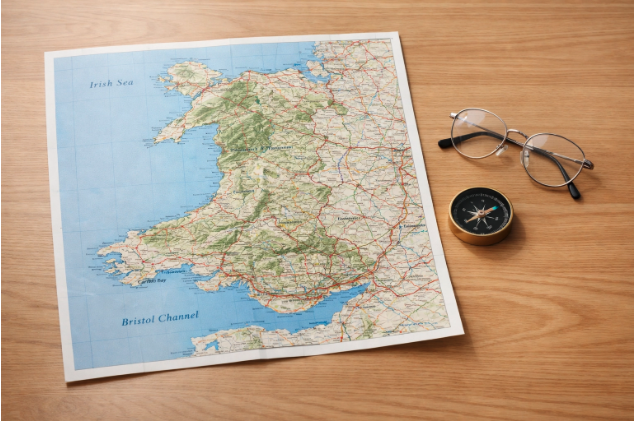
For decades, the political map of Wales has been painted a deep, immovable shade of red. Since birth of the Labour Party and the birth of the Senedd in 1999, Labour has not just been a political party in Wales; it has been the establishment, the default, and the very fabric of the nation’s governance.
But this dominance looks to be facing a catastrophic end. A major new study reported by the Telegraph, based on exhaustive YouGov MRP polling, suggests that the “Red Wall” of the West isn’t just cracking: it is being completely demolished by a political earthquake that could leave Labour as a minor player in its own heartland.
The scale of the collapse revealed in the Telegraph’s is difficult to overstate. According to the data, if a Senedd election were held today, Labour’s vote share would plummet, and they would lose control. To put that in perspective, this is a party that has grown accustomed to walking into Cardiff Bay with the keys already in their pocket. Instead, they are projected to return just 17 seats, potentially falling to third place behind Nigel Farage’s Reform Party on 29.
The primary beneficiary of this seismic shift appears to be Plaid Cymru. The Welsh nationalists are currently on track to become the largest party by a significant margin, with projections suggesting they could secure around 33 seats.
The question, is does this represent a mid-term wobble/protest vote or does it represents a fundamental realignment of Welsh identity and political loyalty?
For decades, “Welsh Labour” successfully navigated the line between British Labour and a distinct regional brand. The current First Minister, Eluned Morgan, finds herself at the centre of a storm she may not survive. The polling indicates that Morgan is at serious risk of losing her own seat, a symbolic decapitation that would leave the party leaderless and adrift just as the nation moves toward a new era.
What is perhaps even more shocking to the Westminster bubble than the rise of Plaid Cymru is the meteoric surge of Reform UK. Nigel Farage’s party is projected to be a massive force in the next Senedd, with the YouGov MRP data suggesting they will become the official opposition. This surge is largely coming at the expense of Labour’s traditional working-class base in the deindustrialised areas that once felt Labour’s grip was unbreakable.
The reasons for this decline might well be multifaceted, but the unpopularity of Sir Keir Starmer and his Westminster Government is compounding an already challenging and difficult situation.
The rise of a Plaid Cymru-led government in Cardiff could create a constitutional headache for the Prime Minister with demands from Cardiff for more powers and control of Wales.
But the poll for the Telegraph suggests the earthquake will not be limited to Wales, with predictions that Labour faces a punishing night across the UK. In England, the poll suggests that Labour could lose half of the Councils they currently control, with Reform picking up seats across a swathe of “Red Wall” areas, like Sunderland and Barnsley.
The poll is not good news for Kemi Badenoch either, with Reform predicted to make gains in places like Essex, Suffolk and Norfolk.
For those who want to see how these dramatic shifts might play out on their own doorstep, The Telegraph has released an interactive “area checker” and map alongside their report. This tool allows readers to plug in their own postcodes and see the projected results for their specific elections based on the YouGov MRP data. Do you agree with their results?
It is a fascinating, if somewhat sobering, look at how the political geography could be rewritten if the polling is correct when voters go to the ballot box next month.
If the poll proves correct and delivers the predicted results, there will be renewed speculation about how long Sir Keir Starmer can cling on to power, with some commentators predicting that he will not be Prime Minister by the end of the year.
Whatever happens, there will be a lot of nervous people in Downing Street on election night, while others no doubt will be viewing the results and deciding whether a change at the top is needed and when to launch a leadership bid.
A Welsh earthquake and catastrophic election results predicted for Labour