
On Tuesday 21 April 2026, in Scotland 776 women were advertised on Vivastreet and 816 on AdultWork.
That is not a statistic I am prepared to accept. It is a reminder that, in 2026, the buying and selling of women’s bodies continues on our streets and increasingly online through pimping websites. These online platforms are not incidental to that reality; they are built around it, increasing the exploitation of women’s bodies to drive up profit.
Behind every number is a woman, often facing poverty, coercion or trauma. The suggestion that this is simply a matter of “choice” does not reflect the lived experience of many involved. When we examine the pathways into prostitution, what emerges is not empowerment, but inequality.
The move online has changed how prostitution is organised, but not its fundamental nature. If anything, it has created distance, escalating the violence and exploitation suffered by women while making it less visible, and therefore easier to ignore. What was once on street corners is fast moving behind screens with disastrous consequences for women trapped.
That is why we must be honest about the role of the platforms involved. Websites such as Vivastreet and AdultWork are not neutral hosts of content. On these websites, men are able to filter hundreds of adverts based on location and whether a woman will travel to them. They then also advise women to fill out key details as part of a standard advert format, which includes the “rates” they charge, enabling the filters to work effectively.
In turn, these websites are facilitating and profiting from the advertising of women for sexual purchase, operating within a system that depends on vulnerability and demand.
In Scotland, we have taken important steps in legislating against human trafficking. But legislation must be matched by implementation. However, the growth of online platforms facilitating prostitution raises important questions about whether existing criminal legislation is being applied effectively in a digital context.
Under the Human Trafficking and Exploitation (Scotland) Act 2015, a person commits an offence if they recruit, transport, transfer, harbour or receive another person and do so with a view to that person being exploited. By knowingly facilitating prostitution and enabling the travel of individuals for that purpose, for example, through categorising adverts based on so-called ‘outcalls’, where a woman travels to a sex buyer, these platforms may themselves be engaging in activity that meets the threshold of trafficking.
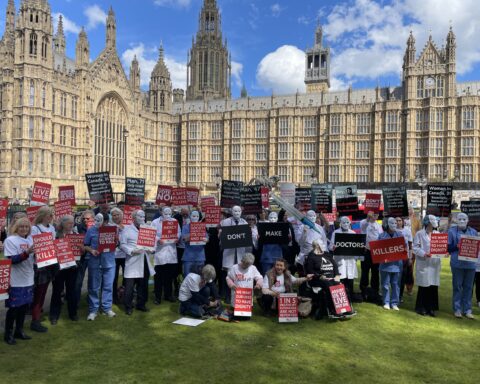
I recently led a Westminster Hall debate to outline how websites such as Vivastreet and AdultWork are falling foul of the 2015 Act and calling for an urgent criminal investigation. I have written to the Chief Constable of Police Scotland further making this case.
If we are serious about tackling exploitation, that imbalance must be addressed. It is not enough to acknowledge the issue; we must be willing to confront the structures that facilitate it, including pimping websites.
We should not accept a situation where exploitation is normalised because it is online or overlooked. In Scotland, the law contains a clear offence that criminalises this exploitation. Alongside several Members of Parliament, I will continue to push for pimping websites to ban across the UK. It is only by banning these websites that we can protect women and girls from the exploitation they suffer on them.
Hundreds of Women Are Being Sold Online: Why Aren’t We Investigating the Websites?

4 mins read


Latest from UK Parliament
The reintroduction of the Terminally Ill Adults (End of Life) Bill has sparked a profound and

In the year 2000, just over 2% of young people (14-24) across the UK presented to

When people think about higher education, they often picture leafy campuses, freshers’ weeks and teenagers heading

18 years ago, I was diagnosed with breast cancer. My diagnosis was delayed after I was

A landmark study, part of a PHD, exposes a “systemic underestimation” of the importance of marriage