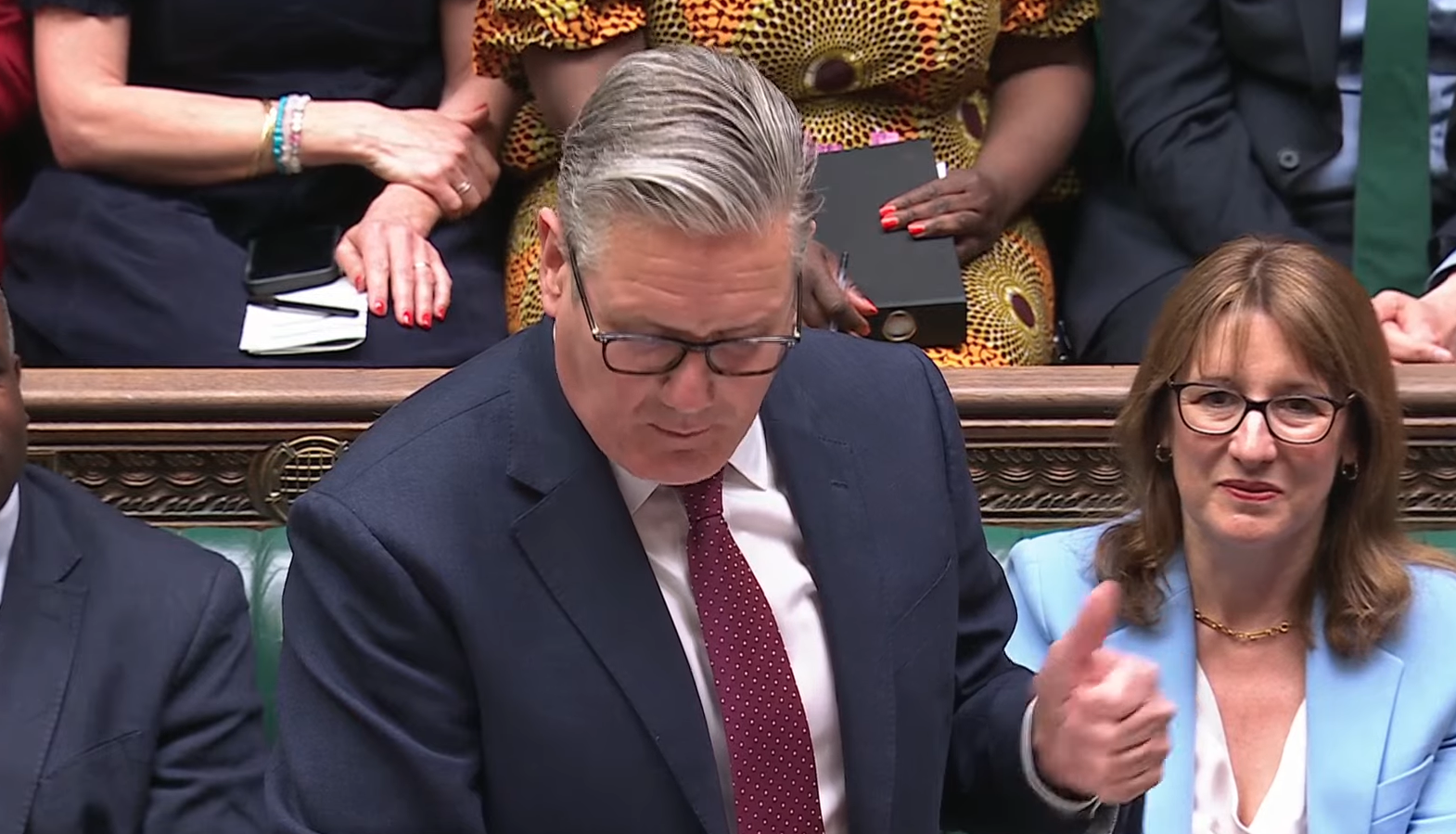
The division bell that rang through the corridors of the Palace of Westminster yesterday afternoon carried with it the weight of a government fighting to preserve its moral authority. While the tally eventually fell in favour of the Prime Minister, with 335 votes to 223 rejecting a formal Privileges Committee inquiry into Keir Starmer’s conduct, the numerical safety of a House of Commons majority did little to mask the growing scent of scandal.
For No 10, the victory is a defensive one, shielding the Prime Minister from the same investigative machinery that ultimately dismantled Boris Johnson, the majority might well have been less had Labour made the issue a three line whip.
The core of the dispute lies in the appointment of Lord Mandelson as the UK’s Ambassador to the United States and the vetting process that preceded it.
Conservative leader Kemi Badenoch stood at the dispatch box with a clear objective: to illustrate that Keir Starmer had knowingly misled Parliament when he previously asserted that “full due process” had been followed without “any pressure” from political aides. The opposition’s case had been bolstered by the recent testimony of the former Foreign Office chiefs Sir Philip Barton and Sir Olly Robbins, who provided a different account to the process than No 10.
They painted a picture of a civil service under pressure to rush the completion of the vetting process and get the disgraced Labour peer Peter Mandelson into the post of the UK’s Ambassador in Washington.
Sir Philip Barton’s appearance before MPs, just hours before the vote, was nothing short of a manual on how political expediency can collide with national security protocols. He told the committee that he was explicitly instructed to get on with the Mandelson appointment despite his own profound “worry” regarding the Peer’s historical links to Jeffrey Epstein.
In a particularly damning assessment, Barton described the Cabinet Office’s claims that Mandelson would not require standard vetting as “odd and insufficient.” He confirmed that the “normal order” of business, vetting before public announcement, was discarded in a rush to secure the role for the Labour titan. Perhaps most telling was Barton’s admission that a full-blown “crisis” would have erupted had Mandelson failed the vetting process after his name had already been splashed across the headlines. When pressed on whether “full due process” had truly been followed, the former diplomat notably dodged the question, a silence that spoke volumes.
The internal fallout for the Labour Party suggests that the “integrity and service” mantra of the Starmer campaign is beginning to fray at the edges. 15 Labour MPs broke ranks to vote with the opposition, a rebellion that includes figures like Emma Lewell, who warned that the government was inadvertently feeding a “cover-up” narrative. For these dissenters, the refusal to allow the Privileges Committee to examine whether the Prime Minister misled the House is a dangerous precedent.
The government’s defence has largely rested on the idea that the motion was a “desperate political stunt” orchestrated by the Conservatives ahead of the local elections on May 7. Downing Street aides have dismissed the Barton testimony and the subsequent calls for an inquiry as ” obsession, arguing that voters are more concerned with the economy and public services than the granular details of diplomatic appointments.
However, the optics of using a whipped majority to block an inquiry into the Prime Minister’s own honesty are difficult to shake, especially for a party that spent years decrying the “culture of entitlement” they associated with the previous administration.
As the country moves toward the local elections, the “Mandelson vetting scandal” might become a proxy for a much larger debate about the integrity of the Government. The contrast with the Boris Johnson era is also unavoidable, then, Labour insisted that no Prime Minister was above the scrutiny of the Privileges Committee, a point raised by Lib Dem Leader Sir Ed Davy.
The Prime Minister may have protected his majority for now, but many questions remain and with more documents relating to the scandal due to be released imminently, the danger for the Government is far from over.