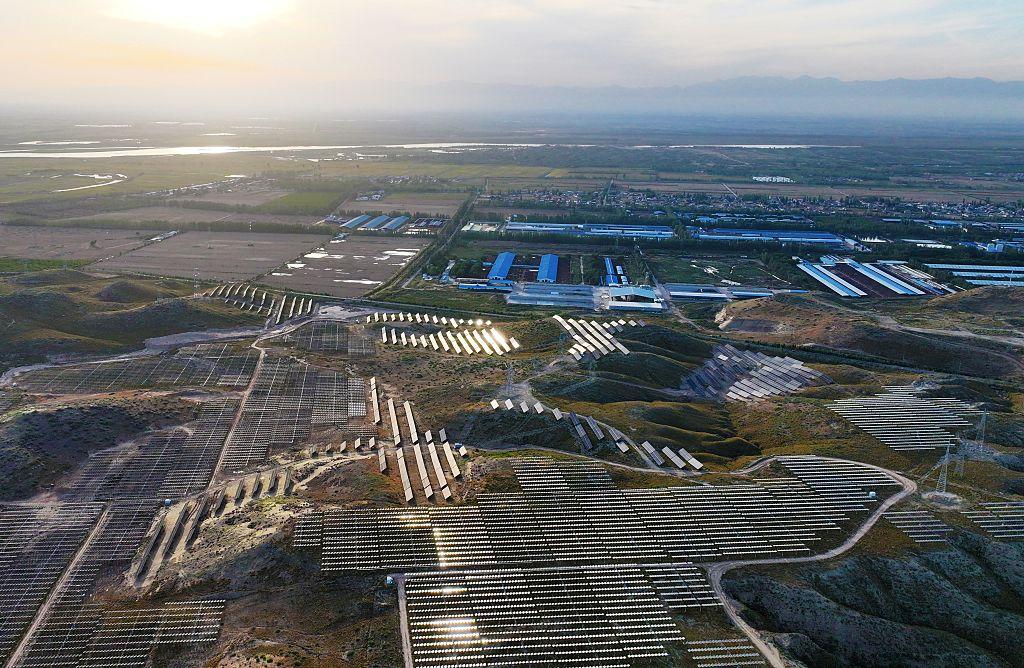
HSBC announced a $4 billion lending initiative to support China’s clean energy companies expanding globally in 2026.
The investment highlights accelerating renewable technology growth across solar, EV batteries, and energy storage sectors.
Analysts believe rising global energy demand could strengthen renewable infrastructure markets for years ahead.
Hong Kong, China (Parliament Politics Magazine) renewable technology growth became a major focus of global financial markets after HSBC confirmed plans to lend approximately $4 billion to help Chinese clean energy companies expand internationally. The financing package signals rising confidence in renewable infrastructure, electric vehicle supply chains, and sustainable industrial investment as governments and corporations continue transitioning toward lower-carbon energy systems.
The announcement comes during a period of increasing global competition in clean energy manufacturing. Chinese firms currently dominate several sectors including solar panel production, battery technology, and rare earth mineral processing. HSBC’s move reflects expectations that global demand for renewable infrastructure will continue expanding rapidly throughout the decade.
Financial analysts say the investment could strengthen overseas expansion opportunities for Chinese manufacturers seeking to build factories, secure supply contracts, and increase market share in Europe, Southeast Asia, Latin America, and the Middle East.
Renewable Technology Growth 2026
| Category | Key Data |
|---|---|
| HSBC Financing Plan | $4 Billion |
| Primary Focus | Clean Energy Expansion |
| Key Industries | Solar, EV Batteries, Energy Storage |
| Major Growth Markets | Europe, Asia, Latin America |
| Announcement Year | 2026 |
| Headquarters Involved | Hong Kong |
Global Banking Sector Increases Green Investment Exposure
Major international banks are aggressively increasing investments connected to environmental infrastructure projects. The HSBC lending initiative highlights how financial institutions are adapting to rising demand for sustainable development financing.
Analysts say renewable technology growth is reshaping long-term banking strategies because energy markets worldwide are changing rapidly. Renewable power generation projects, battery storage systems, and electric transportation infrastructure continue attracting billions in public and private investment.
Governments across multiple continents are implementing policies designed to reduce dependence on fossil fuels while increasing domestic renewable capacity. These policies include tax incentives, industrial subsidies, and clean energy investment programs.
A senior renewable market strategist said:
“The next decade will likely determine which countries dominate future energy infrastructure markets.”
That competition is increasing pressure on governments and corporations to secure supply chains connected to renewable industries.
China Expands Influence Across Renewable Industries
China remains one of the world’s largest manufacturing centers for clean energy technologies. Chinese companies currently produce substantial portions of global solar panels, lithium-ion batteries, and renewable power equipment.
The HSBC financing initiative could accelerate international expansion for companies involved in:
- Solar energy manufacturing
- Battery production
- Electric vehicle components
- Smart energy systems
- Renewable infrastructure development
- Energy storage technology
Industry economists believe renewable technology growth will remain closely tied to China’s manufacturing scale because many countries still rely heavily on affordable Chinese renewable products.
At the same time, several Western nations are attempting to increase domestic production capacity to reduce dependence on foreign supply chains.

Renewable Infrastructure Demand Continues Rising
Global energy demand continues increasing due to industrial expansion, population growth, and rising electricity consumption linked to artificial intelligence, data centers, and electric transportation systems.
Many governments now view renewable infrastructure as critical for long-term energy security.
Analysts say renewable technology growth could accelerate further as nations seek stable energy alternatives that reduce exposure to oil price volatility and geopolitical disruptions.
A clean energy economist based in Singapore stated:
“Renewable infrastructure is no longer viewed as optional. It is increasingly considered essential economic infrastructure.”
That shift has contributed to stronger investment activity across global financial markets.
Historical Cycles of Renewable Energy Investment
The renewable energy sector has experienced several major investment cycles over the past two decades. While early renewable industries struggled with high costs and limited adoption, technological improvements and larger manufacturing capacity significantly reduced prices.
Historical Cycles Table
| Period | Industry Trend | Global Impact |
|---|---|---|
| 2005–2010 | Early Solar Expansion | Government subsidies increase |
| 2011–2015 | Manufacturing Scale Growth | Solar costs decline sharply |
| 2016–2020 | EV Market Acceleration | Battery demand surges |
| 2021–2024 | Global Energy Transition | ESG investments rise |
| 2025–2026 | Infrastructure Expansion Phase | Large-scale financing increases |
Experts believe the current phase of renewable technology growth differs from earlier cycles because renewable systems are becoming central to national economic planning rather than niche environmental projects.
Trade Tensions Could Challenge Expansion Plans
Despite strong investment momentum, geopolitical tensions continue creating uncertainty for international clean technology markets.
Several countries have imposed tariffs or restrictions targeting Chinese electric vehicles, solar products, and advanced manufacturing technologies. Policymakers argue domestic industries require protection against lower-cost imports.
However, many renewable developers still depend heavily on Chinese manufacturing capacity because replacing existing supply chains could increase costs significantly.
Market analysts say renewable technology growth may continue despite trade disputes because global demand for affordable energy infrastructure remains strong.
An international trade consultant said:
“Countries want energy independence, but they also need affordable systems that can scale quickly.”
That economic reality continues shaping renewable investment strategies worldwide.
Electric Vehicle Expansion Supports Energy Markets
Electric vehicle adoption remains one of the largest drivers behind renewable investment activity. Global EV sales continue increasing as automakers expand production and governments tighten emissions standards.
Battery production facilities now represent a major strategic industry due to growing transportation electrification.
Financial experts say renewable technology growth is closely connected to battery supply chain expansion because energy storage systems are critical for both electric vehicles and renewable power grids.
Many Chinese battery manufacturers are actively expanding internationally to secure long-term partnerships with automakers and infrastructure developers.
Financial Markets Watching Green Energy Closely
Institutional investors continue monitoring renewable energy industries as environmental investment strategies remain a major market theme.
Large asset managers increasingly allocate capital toward companies involved in:
- Renewable electricity generation
- Sustainable manufacturing
- Energy storage technology
- EV infrastructure
- Smart power systems
Some analysts believe renewable technology growth may become one of the defining investment themes of the decade due to rising global infrastructure spending.
Financial markets are also responding to increasing pressure from governments and shareholders demanding stronger environmental investment commitments.

Renewable Industries Could Reshape Global Competition
The expansion of renewable infrastructure may eventually reshape global economic influence.
Countries controlling battery technology, solar manufacturing, energy storage systems, and critical minerals could gain major strategic advantages in future energy markets.
Industry leaders believe renewable technology growth may redefine international trade relationships as nations compete for dominance in emerging energy industries.
The HSBC financing initiative demonstrates how major financial institutions are positioning themselves around these long-term structural changes.