ROSYTH, Scotland, June 25 (Parliament Politics Magazine) – The Royal Navy’s Type 31 frigate program currently serves as a central test case for the United Kingdom’s ability to balance domestic cost controls against long-term global export ambitions.
While the project was designed to deliver affordable, adaptable warships to replace the aging Type 23 fleet, the combination of fixed-price constraints and macroeconomic challenges has created significant financial strain.
The Type 31 initiative was originally conceived with a strict, low-cost target of approximately £250 million per vessel. However, prime contractor Babcock International has encountered substantial financial difficulties as it navigates the realities of modern shipbuilding. In May 2026, the company reported a further £140 million charge linked to the program, bringing total cumulative provisions on the contract to roughly £330 million.
These losses are primarily attributed to limited escalation clauses in the original 2019 contract, which left the shipbuilder exposed to high inflation, material cost spikes, and domestic labor shortages. Operational challenges have compounded these issues, with recent financial hits resulting from late-stage design revisions, out-of-sequence building, and productivity reworks during the outfitting phases of the initial two hulls.
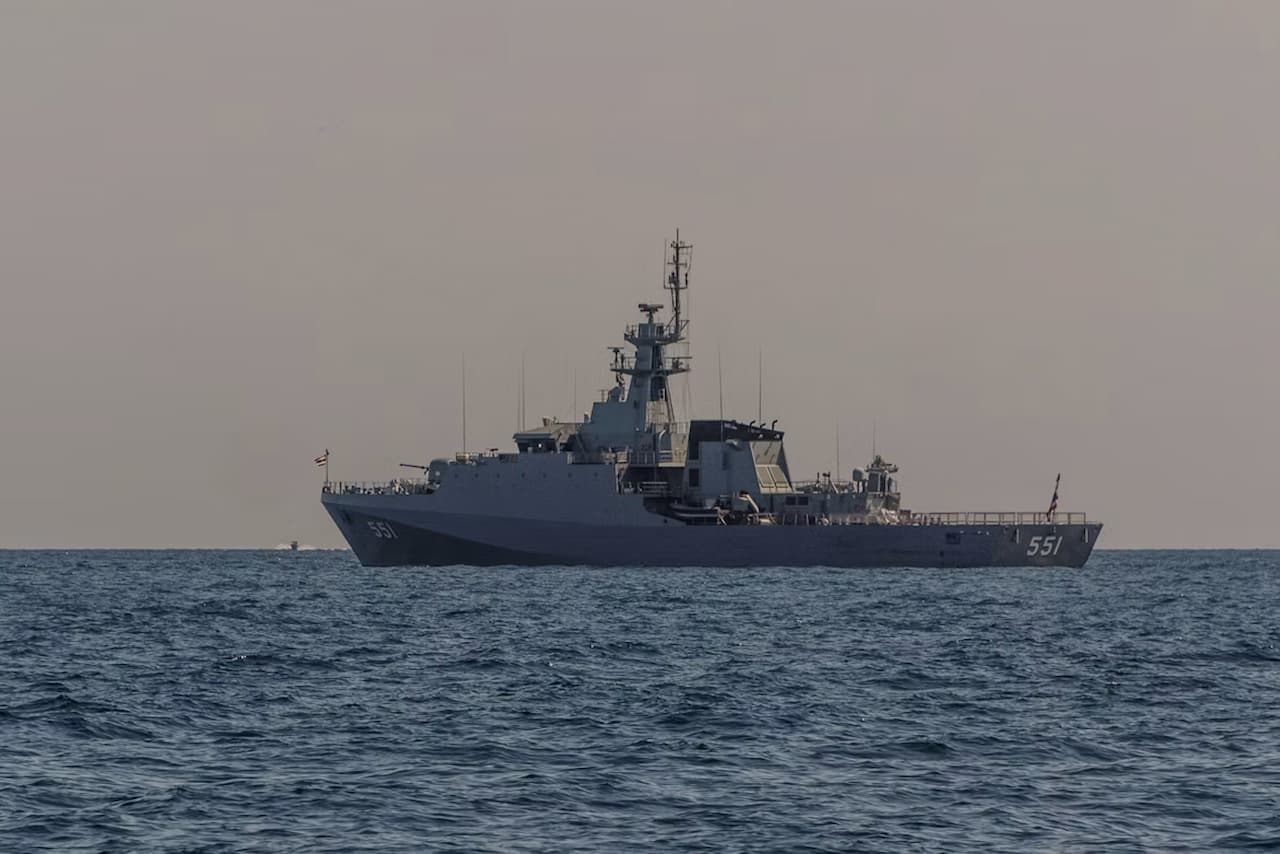
Despite the financial headwinds, the Rosyth shipyard has maintained steady industrial momentum by utilizing a matured modular construction framework. The first vessel, HMS Venturer, is nearing structural completion and is currently undergoing extensive outfitting and commissioning. Following its formal rollout in February 2026, the second hull, HMS Active, successfully floated off in late March 2026.
Production lines are also moving forward on the remaining vessels in the class. HMS Formidable is currently under assembly following its keel-laying milestone, and the fourth ship, HMS Bulldog, formally commenced production with its first steel cut in February 2026. Beyond the core construction, the Royal Navy is also investing in enhanced capability. Under a separate £65 million contract, the service is adding advanced armaments, including Mk 41 Vertical Launch Systems, to ensure the ships maintain high-end lethality beyond the original baseline.
Babcock’s long-term strategy relies on the Arrowhead 140 design generating international revenue to offset the tight margins of the domestic contract. The company is actively pursuing a target known as 31 by 31, which aims to secure 31 Arrowhead 140-derived frigates built or on order worldwide by 2031. This design has already gained significant traction in the international market, with Poland ordering three frigates under its own Miecznik program.
Indonesia has also selected the design for its Merah Putih frigate program, recently expanding its long-term framework to four vessels. Meanwhile, negotiations are underway to secure a potential £1 billion deal with Denmark for up to three Type 31 variants.
“The design’s large, modular hull and adaptability have driven significant traction in the international naval market, providing a pathway to leverage global support networks,” according to recent industry reports.
While the UK suffered a setback in Sweden when the FDI design was selected for the Luleå-class program, the ongoing activity in Poland, Indonesia, and Denmark provides a strong foundation for the program’s global industrial credibility. By maintaining an active production line at Rosyth, the UK aims to prove the maturity of its modern modular building techniques while refining the platform for future international customers.