

Shanghai, China, February 2, 2026 — Parliament News notes, that The global semiconductor industry is entering a decisive phase as AI chip demand accelerates across markets, reshaping production priorities, trade flows, and corporate strategy at a pace few anticipated even a year ago. From advanced manufacturing hubs in Asia to data-center corridors in North America and Europe, the rapid expansion of artificial intelligence workloads is altering how chips are designed, priced, and distributed, creating ripple effects that extend well beyond the technology sector.
Industry analysts say the surge marks a structural shift rather than a temporary cycle. Artificial intelligence is no longer confined to research labs or niche enterprise tools; it has become a core layer of economic infrastructure, influencing everything from cloud services and consumer electronics to logistics, healthcare, and industrial automation.
Semiconductor Markets Enter a Structural Transition
For decades, semiconductor markets moved in predictable cycles driven by consumer electronics demand. Smartphones, personal computers, and gaming consoles set the tempo, with periods of oversupply often followed by sharp corrections. That rhythm has now been disrupted.
The rise of AI chip demand has introduced a new dynamic, one anchored in long-term infrastructure investment rather than short product refresh cycles. Cloud providers, governments, and multinational corporations are committing capital on a scale that suggests sustained consumption rather than short-lived spikes.
This transition has forced manufacturers to rethink capacity planning. Instead of balancing output across diverse customer segments, many producers are now prioritizing advanced processors tailored for artificial intelligence workloads, reshaping allocation models across the industry.
Data Centers Become the Center of Gravity
At the heart of the shift are hyperscale data centers. The expansion of generative artificial intelligence, real-time analytics, and automated decision systems has driven unprecedented build-outs of computing infrastructure.
These facilities rely on highly specialized chips capable of parallel processing and high memory bandwidth. As a result, AI chip demand has become the dominant factor influencing fabrication schedules at advanced nodes, often eclipsing traditional consumer electronics orders.
Executives say data-center operators are increasingly willing to commit to multi-year supply agreements, locking in capacity and pricing in exchange for delivery certainty. This behavior has reduced flexibility elsewhere in the market, tightening availability for other sectors.
Manufacturing Constraints Limit Rapid Expansion
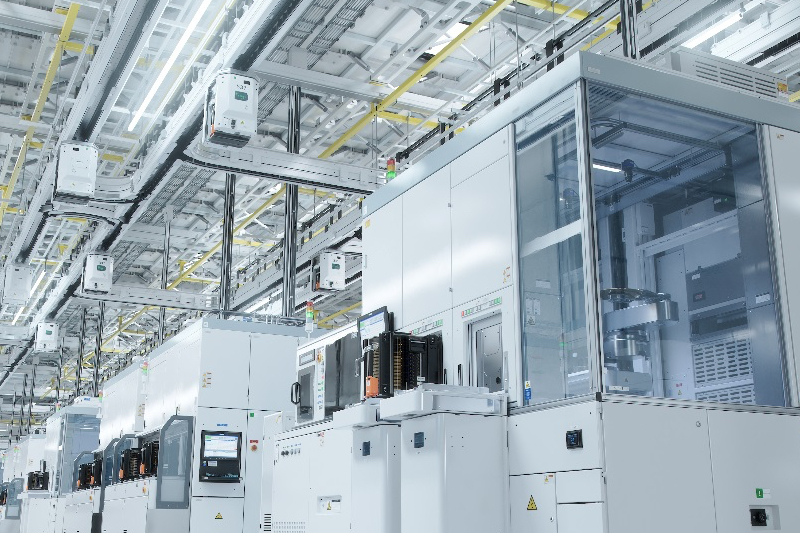
Despite record investment announcements, semiconductor manufacturing remains constrained by physics, complexity, and time. Advanced fabrication plants require years to construct and qualify, while the tools needed to operate them are produced by a small number of suppliers facing their own bottlenecks.
These realities mean that rising AI chip demand cannot be met quickly, even with aggressive capital spending. Industry experts warn that supply constraints are likely to persist well into the future, particularly for the most advanced process technologies.
The result is a prolonged period of tight supply, where incremental increases in demand translate into outsized pressure on pricing and allocation.
Pricing Power Returns to the Supply Side
After years of margin compression, chipmakers are regaining leverage. Contract negotiations increasingly favor suppliers, especially for advanced processors and high-performance memory used in artificial intelligence systems.
Procurement executives report that pricing discussions now factor in long-term strategic value rather than short-term volume alone. The influence of AI chip demand has shifted the balance of power, allowing manufacturers to prioritize customers aligned with future growth.
This shift has financial implications across the technology ecosystem, as rising component costs work their way through supply chains.
Memory and Supporting Components Feel the Strain
The impact is not limited to processors. High-bandwidth memory, networking chips, and power management components have all experienced tightening availability as production resources are redirected.
Memory makers, in particular, have benefited from the renewed strength of AI chip demand, reversing losses from previous downturns. Output discipline combined with resurging consumption has restored pricing stability in segments that once faced chronic oversupply.
For downstream manufacturers, these shifts complicate planning and inventory management, increasing the importance of long-term sourcing strategies.
Government Policy Enters the Spotlight
Governments worldwide are treating semiconductors as strategic assets, offering incentives to localize production and reduce exposure to external shocks. These policies reflect growing concern that shortages could undermine economic competitiveness and national security.
However, even the most ambitious industrial policies cannot immediately offset pressures driven by AI chip demand. Fabrication capacity, talent development, and equipment supply all require sustained investment over many years.
Policy makers now face the challenge of aligning long-term industrial goals with short-term market realities shaped by accelerating artificial intelligence adoption.
Corporate Strategy Shifts Across the Industry
Technology companies are responding in different ways. Some are investing directly in semiconductor design, seeking greater control over supply. Others are forming strategic partnerships with manufacturers to secure preferential access to advanced nodes.
These moves underscore how central AI chip demand has become to competitive positioning. Companies unable to secure reliable supply risk falling behind in product performance and innovation.
At the same time, firms are reevaluating product roadmaps, delaying or redesigning offerings to align with component availability.
Financial Markets Reflect a New Consensus
Investor behavior mirrors the industry shift. Semiconductor firms tied to artificial intelligence workloads have outperformed broader indices, while companies dependent on slower-growing segments have lagged.
Analysts increasingly view AI chip demand as a long-term earnings driver rather than a cyclical boost. This perspective has influenced capital flows, valuations, and merger activity across the technology sector.
The divergence highlights how deeply artificial intelligence has reshaped expectations for future growth.
A Single Industry Viewpoint
One senior semiconductor strategist said,
“Artificial intelligence has transformed chips from a cyclical input into essential infrastructure.”
The statement captures a widely held view that AI chip demand represents a fundamental change in how the industry operates.
Downstream Industries Adjust to New Realities
Automotive manufacturers, industrial equipment makers, and consumer electronics firms are all adapting to the new environment. While many applications do not require the most advanced processors, competition for manufacturing capacity can still disrupt supply.
Companies are responding by diversifying suppliers, redesigning systems, and increasing buffer inventories. These adjustments reflect the indirect influence of AI chip demand across sectors far removed from data centers.
Historical Evolution of Artificial Intelligence Semiconductors
The semiconductor industry’s relationship with artificial intelligence has evolved over decades. Early AI research relied on general-purpose processors ill-suited to large-scale computation. Progress was slow, constrained by hardware limitations.
The introduction of graphics processing units marked a turning point, enabling parallel processing at scale. Over time, rising AI chip demand drove the development of specialized accelerators designed explicitly for machine learning tasks, reshaping design priorities and investment patterns across the industry.
Supply Chains Grow More Complex
Modern semiconductor supply chains span continents, involving raw material providers, equipment manufacturers, foundries, and assembly operations. Coordinating these networks has become increasingly challenging.
As AI chip demand concentrates production at advanced nodes, interdependencies deepen, increasing vulnerability to disruptions ranging from geopolitical tensions to natural disasters.
Managing this complexity has become a strategic priority for both companies and governments.
Trade and Geopolitics Add Uncertainty
Export controls, trade restrictions, and national security concerns continue to influence semiconductor flows. These measures can alter market dynamics quickly, complicating long-term planning.
Companies navigating rising AI chip demand must now account for regulatory risk alongside technical and financial considerations, adding another layer of uncertainty to investment decisions.
Innovation Accelerates Amid Pressure
Paradoxically, constraint has accelerated innovation. Manufacturers are exploring new architectures, packaging techniques, and materials to improve performance without relying solely on smaller process nodes.
These efforts are driven in part by the need to satisfy AI chip demand despite physical limits on scaling. The result is a wave of experimentation that could redefine chip design in the years ahead.
Workforce and Talent Challenges
The expansion of advanced manufacturing has intensified competition for skilled labor. Engineers, technicians, and researchers with semiconductor expertise are in high demand globally.
Training pipelines struggle to keep pace with AI chip demand, raising concerns about long-term capacity constraints not just in equipment, but in human capital.
Governments and companies alike are investing in education and workforce development to address the gap.
Outlook for the Remainder of 2026
Analysts expect incremental capacity additions to ease pressure toward the end of the year, though relief will be uneven. Advanced nodes are likely to remain constrained longer than mature technologies.
Most forecasts suggest AI chip demand will continue to outstrip supply growth, reinforcing its role as the defining force in the semiconductor market throughout 2026.
Strategic Lessons for the Global Economy
The current phase offers lessons beyond technology. It highlights the risks of concentrated supply chains, the importance of long-term investment, and the challenges of balancing efficiency with resilience.
As AI chip demand reshapes industrial priorities, policymakers and executives are rethinking assumptions about globalization, innovation, and economic security.
A Redefined Semiconductor Era
The semiconductor industry is no longer defined solely by consumer electronics cycles. Artificial intelligence has introduced a new axis of demand, one tied to infrastructure, productivity, and long-term transformation.
With AI chip demand anchoring investment and innovation, the sector is entering an era where strategic planning outweighs short-term optimization. The consequences will shape technology, trade, and economic power for years to come.