

Washington (Parliament Politics Magazine) – A global study warns that Candida auris is becoming increasingly infectious, spreading across continents, and challenging current antifungal treatments.
As reported by Vishwam Sankaran of The Independent, a new study shows Candida auris, a drug-resistant fungus, is growing more virulent and spreading across the globe.
How is drug-resistant Candida auris spreading across continents?
Approximately 6.5 million people face fungal infections each year, with more than half dying despite antifungal therapy.
Candida auris is an invasive yeast that can lead to life-threatening infections in vulnerable patients. It was initially discovered in 2009 in a patient’s ear in Japan and quickly spread to multiple countries, including India, where it became a serious public health concern by 2014.
According to recent studies, the fungus possesses distinctive characteristics that help it spread rapidly. It is now found in over 60 nations across the globe.
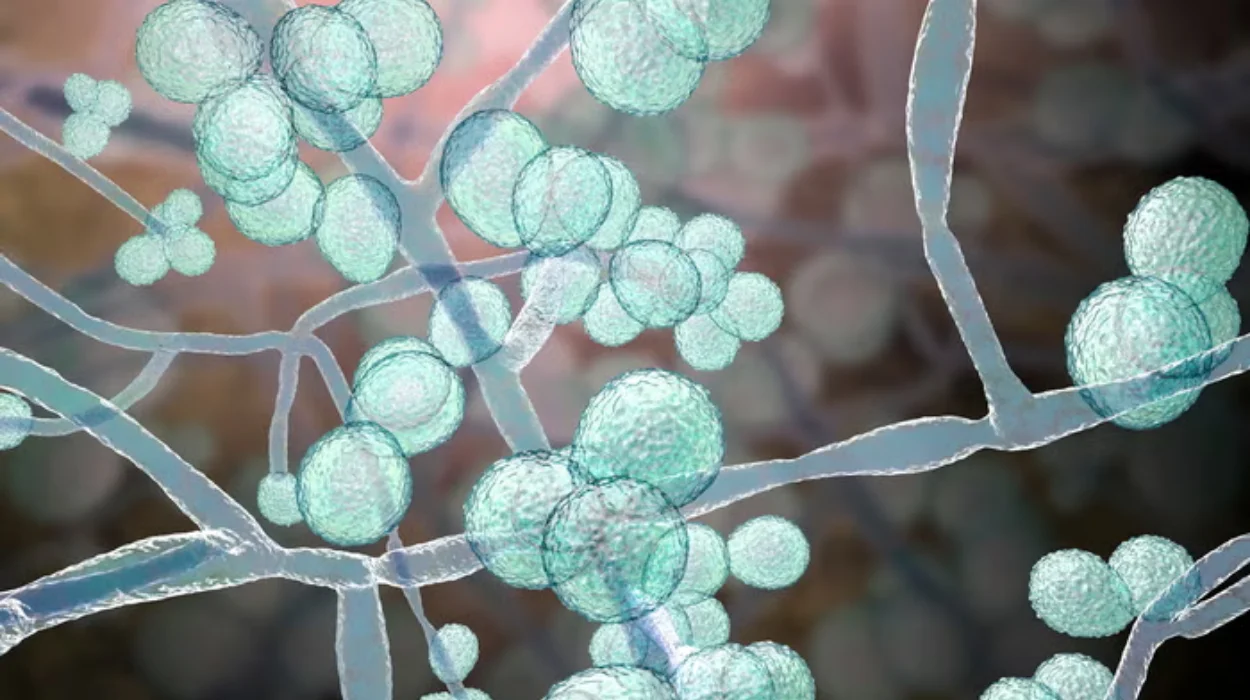
The study shows that the fungus is rapidly developing resistance to medication, mainly because it can switch from a yeast-like form to a filamentous growth that spreads more easily.
Researchers also note that its cell wall proteins allow it to stick firmly to human skin, enabling it to colonize effortlessly.
The review, published in the Microbiology and Molecular Biology Reviews, says,
“Skin colonisation by C auris is a significant medical concern because colonised patients may facilitate inter- and intra-hospital transmission of C auris to other patients.”
Scientists say the fungus has “efflux pumps” on its cell membrane that can actively remove antifungal drugs before they have a chance to kill it. It also clusters to form slimy biofilm layers on surfaces, making it difficult for medications to reach and eliminate it.
The study points out that it remains uncertain whether the fungus has additional ways to resist antifungal medications.
The research highlights,
“The diagnosis of C auris infections is often hampered by misidentification, leading to delays in starting appropriate antifungal therapy.”
It adds,
“Taken together, these data underscore the need to develop novel antifungal agents with broad-spectrum activity against human fungal pathogens, to improve diagnostic tests, and to develop immune- and vaccine-based adjunct modalities for the treatment of high-risk patients.”
The review calls for stronger measures to raise awareness of the fungal disease through enhanced surveillance, especially in countries with limited resources.
Researchers highlight that three new drugs, currently in clinical trials, are likely to provide new treatment options for the fungal infection in the near future.
Last year, a study showed that fungal infections are becoming a growing threat, contributing to nearly 4 million deaths annually, almost double the number estimated ten years ago.
Research shows that around one-third of patients hospitalized with C. auris die from the infection, while the mortality rate for bloodstream cases can reach nearly 50%.
Neeraj Chauhan, a professor at the Center for Discovery and Innovation at Hackensack Meridian Health in New Jersey, said,
“My laboratory investigates how fungal pathogens interact with the host to drive infection, with the goal of uncovering the molecular mechanisms that enable these organisms to cause disease.”
He added,
“The long-term goal of research is to guide the development of new strategies for diagnosing, preventing, and treating drug-resistant fungal infections.”
What are the symptoms of Candida auris?
Patients with Candida auris may experience persistent fever and chills that do not improve after taking antibiotics for a suspected bacterial infection. This is the most common symptom of the infection.
C. auris infections often lead to sepsis, a dangerous bloodstream condition that affects the entire body and can be fatal if untreated.
Those infected might notice slow-healing wounds or unusual discharge, and the fungus can target multiple body sites beyond skin and ears.
