

London (Parliament Politics Magazine) – Zipcar’s UK departure has sparked interest from rival car-sharing companies, with several assessing London’s growth potential despite regulatory challenges.
As reported by The Guardian, many car-sharing companies are considering moves into or across London, following news that Zipcar’s UK exit will create a significant market gap in one of Europe’s largest cities.
Which car-sharing companies are considering expansion in London?
Free2Move, part of carmaker Stellantis, confirmed it is “closely following developments in the London market” and “actively evaluating” potential options for its services, already running fleets in cities such as Berlin, Paris, Rome, and Washington, DC.
The car-sharing firm indicated that its interest in London is not yet fully developed, though it could explore opportunities there. Its fleet of floating vehicles is managed through its app.
Free2Move said,
“London is among Europe’s most advanced cities when it comes to readiness for autonomous mobility, which makes it a particularly compelling market for us.”
“Free2move is taking a long-term view, focused on autonomous and fully digital mobility solutions, and we are actively assessing how our experience in car sharing and fleet operations could evolve to support a city like London in the future,”
it added.
Introducing a new fleet for a car club demands significant investment in vehicles and would likely take time for Free2Move or any competitors.
Free2Move’s potential launch in London could face complications if Stellantis, the owner of Peugeot, Vauxhall, and Fiat, decides to sell the company, Bloomberg reported in October.
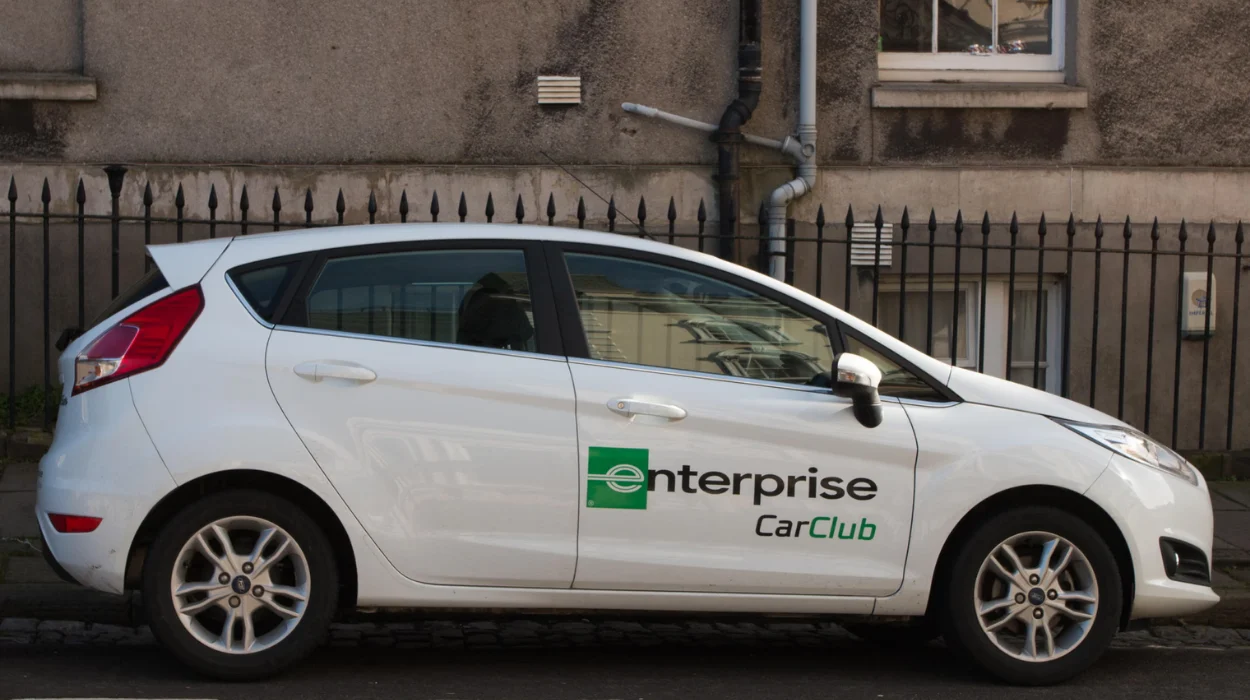
Enterprise Car Club, which has an existing fleet in London, said it
“will continue to seek out opportunities to expand our network and provide people with alternative transport options by the hour or day.”
Co Wheels, which runs services across the UK and maintains a limited number of cars in the capital, said it has been “actively discussing” expansion opportunities with several London boroughs in recent days.
Unlike traditional car clubs, peer-to-peer firms spend less, connecting existing vehicle owners with renters without heavy investment in fleets. Hiyacar and Turo, already operating in London, said they plan to expand and encourage more owners to join their platforms.
The Hiyacar chief executive, Don Iro, said:
“Our vision is to now take on the market. We’re in a unique position to scale.”
According to him, the firm was
“always planning to do this regardless of Zipcar,” though its departure “gives us the ammunition to expand.”
Richard Dilks, chief executive of shared transport charity CoMoUK, said he has engaged in talks with Transport for London and several London boroughs on steps required to attract more providers, such as standardizing processes and reducing charges.
“Almost certainly there’s going to be a big cliff-edge gap. I can see some signs of progress, but hypothetical at the moment. It’s going to be a long haul, this,”
he added.
According to experts, inconsistent licensing and parking fees across London’s 33 local authorities have posed a major challenge for car clubs. Zipcar’s floating vehicles, which lack fixed parking spots, were barred from parking in central boroughs such as Camden and the City of London.
Why is Zipcar closing its UK operation?
On December 1, the world’s leading car-sharing company, Zipcar, announced it will exit the UK market, ending access to its shared fleet in London by year’s end.
The US rental group Avis Budget, which owns Zipcar, said it will halt new bookings via its app after 31 December, while a consultation over possible redundancies takes place. Its UK operation employed 71 staff last year, according to the latest filings.
James Taylor, Zipcar UK’s general manager, wrote in an email to customers,
“We are proposing to cease the UK operations of Zipcar and have today started formal consultation with our UK employees.”
The car-sharing firm Zipcar was established in 2000 in Cambridge, Massachusetts, before being acquired by Avis Budget in 2013 for $491m (£371m). It continues to operate in 25 US states and three Canadian cities, while the planned UK closure follows a reported £11.7m loss for 2024.
The exit of Zipcar in the UK coincides with London’s congestion charge increase and its extension to electric cars from January. The firm would have faced up to £18 daily for vehicles entering the zone, apart from a small number permanently based inside, and then needed to determine the cost to consumers.
The congestion charge revisions are estimated to raise car club costs by £1m each year, largely affecting Zipcar. The company was believed to operate almost 3,000 vehicles, including cars and vans, representing the majority of the 5,300 shared vehicles across the UK.
How does Sadiq Khan plan to encourage car clubs in London?
According to a spokesperson for Sadiq Khan, the mayor of London responsible for Transport for London,
“The mayor’s transport strategy is clear on the important role car clubs can play to reduce the need for private car ownership. This is why the mayor recently announced that electric car clubs with a dedicated parking bay in the congestion charge zone will receive a 100% discount on the congestion charge from January.”
Which are the major car-sharing firms in the UK?
- Enterprise Car Club – It was established in 2000 and operates as Enterprise CarShare for businesses and universities.
- Co Wheels – It was founded in 2008 and is a national car club operating a round-trip model from dedicated bays.
- Hiyacar – It was created in 2012 and is a peer-to-peer service connecting private car owners with renters.
- Turo – It was established in 2010 and is a major peer-to-peer car-sharing platform.
- Free2Move – It was founded in 2016 and operates fleets in multiple cities, accessible via its app.