
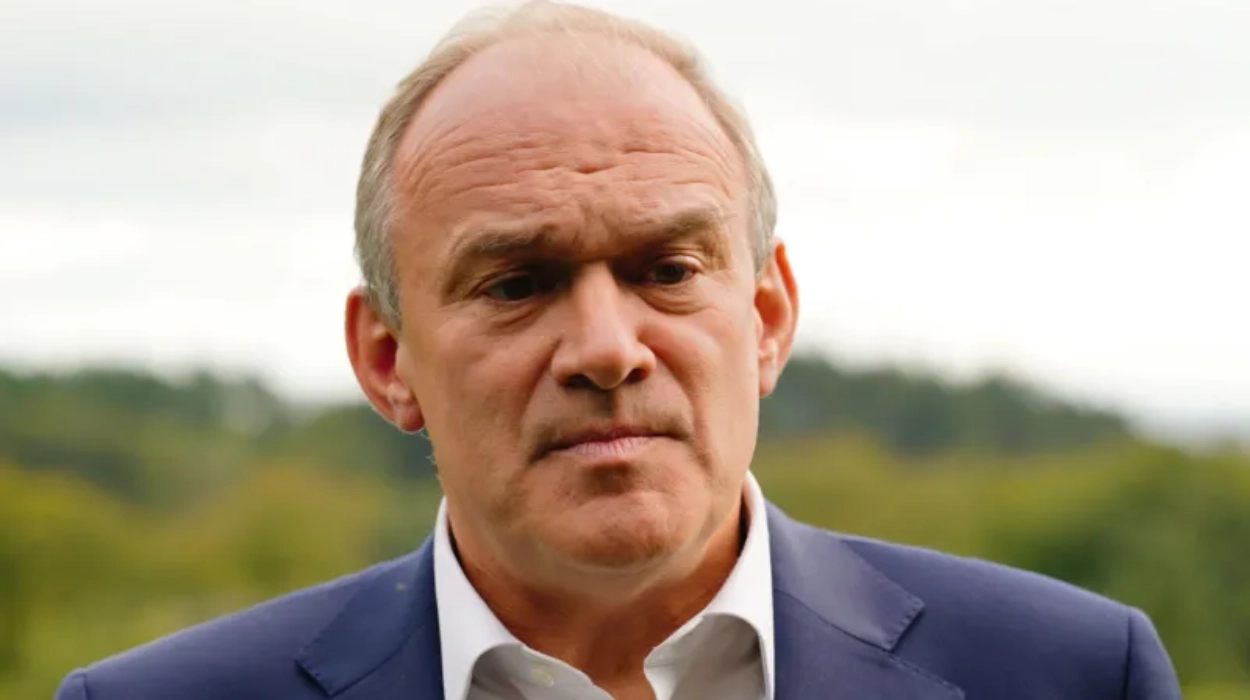
UK (Parliament Politics Magazine) – Liberal Democrat leader Sir Ed Davey has warned that proposed delays to local elections in England could strip nearly 10 million people of their vote.
In a letter, Sir Ed asked the Equalities and Human Rights Commission to look into what he described as “the government’s cavalier approach to our elections”.
Zia Yusuf of Reform UK informed the BBC that his party would attempt to hold a parliamentary vote in protest of the “extremely dangerous” delays.
The administration indicated last week that it might permit postponements if councils worried about their ability to hold elections while enacting significant local government reforms requested them.
Additionally, some municipalities have expressed discomfort about funding elections for council seats that will soon be eliminated as part of the reform.
Downing Street stated that
“any delay would be temporary, lawful and subject to clear statutory safeguards”
stating: “
Councils must demonstrate exceptional reasons and ministers will scrutinise every case carefully.”
The largest reorganization of local government in England in fifty years was outlined by the government last year.
A mayor for each region was promised, and by 2028, places with two levels of local government will be combined.
In order to prepare for the restructure, the administration said in February that nine areas could move their 2025 elections to 2026.
Ministers then asked each of the 63 councils impacted by the reorganization if they needed a postponement of the May 2026 elections.
Local Government Minister Alison McGovern said “multiple councils” have asked for a postponement in a statement issued on Thursday, the final day before the legislative Christmas break.
Hastings and East and West Sussex councils have indicated that they have requested a delay thus far.
Other councils have informed the BBC that they will think over the matter in the upcoming year and decide before the government’s deadline of January 15.
Writing to the Equalities and Human Rights Commission, Sir Ed said:
“Article 3 of the first protocol of the Human Rights Act spells out in black and white the right to free elections.
Removing elections altogether, entirely unnecessarily, is in clear breach of this principle – can you therefore confirm your plans to investigate the government’s cavalier approach to our elections?”
It is
“hard to see how this is as anything other than an attempt to stitch things up by people who don’t think they’re going to do a lot of winning in May,”
Lib Dem home affairs spokesman Lisa Smart said on Monday on BBC Radio Four’s Today program.
She claimed to be “not aware” of any calls for a delay, although she had not spoken to the Liberal Democrat leaders of the impacted municipalities.
The outcomes of the elections, which are scheduled to take place in May, are anticipated to play a significant role in determining whether Prime Minister Sir Keir Starmer or Conservative leader Kemi Badenoch will face leadership challenges.
In order to compel the government to call elections in May, Reform UK has announced that it will present a Private Members’ Bill. It is quite doubtful that the bill will become law.
The bill’s goal, according to Zia Yusuf, the party’s head of policy, is to persuade lawmakers “to stand up and say it is totally inappropriate and extremely dangerous to allow the Labour Party and the Tory Party to basically collude to rob millions of people in this country of their vote for the second year running.”
Speaking to the World at One, he said:
“There are going to be thousands of Tory councillors who, as far as we’re concerned, are illegitimately squatting in their posts – not giving voters the right to vote them out.”
Of the 63 councils that have been questioned about a possible delay, Labour has a majority in 18, the Conservatives in nine, and the Liberal Democrats in seven.
Nonetheless, with 610 seats more than a quarter of those up for reelection in May, the Conservatives are defending the greatest number of seats.
Badenoch said she would not prevent Tory-led councils from asking for a postponement, despite the Conservatives’ accusations that the government is “scared of the voters”.
The ruling gave “Labour-run councils an opportunity to avoid meltdown at the polls,” according to Green Party peer Baroness Jenny Jones.
Concern has also been voiced by the Electoral Commission, which is in charge of UK elections.
“A clear conflict of interest in asking existing councils to decide how long it will be before they are answerable to voters”
was said by Vijay Rangarajan, chief executive of the watchdog.
The government responded to the Electoral Commission’s statement by stating that authorities were
” in the stylish position to judge the impact of detainments on their area”
and that it was espousing a” locally- led approach” to possible detainments.
“These are exceptional circumstances where councils have told us they’re struggling to prepare for resource-intensive elections to councils that will shortly be abolished, while also reorganising into more efficient authorities that can better serve local residents,”
a spokesperson added.
How would postponing affect voter turnout and representation?
Delaying choices can suppress namer turnout by fostering apathy, disenfranchising choosers facing walls like relocation or enrollment deadlines, and eroding trust in popular processes.
Detainments frequently lead to lower participation, as seen in COVID- 19 cases where tallied pates saw 5- 15 drops due to fatigue or contending events; early voting mitigates this but not completely.
Extended terms without fresh authorizations distort representation, potentially over-empowering incumbents and under- representing shifting demographics, while legal challenges may arise over prolonged authority.
