

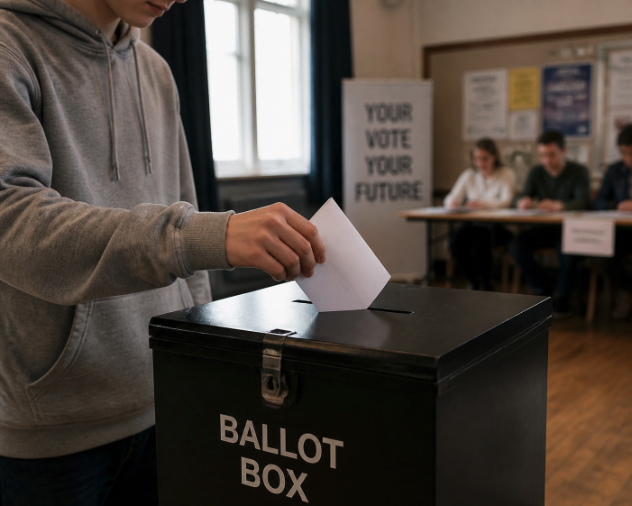
Today, Thursday, May 7, 2026, marks a pivotal moment in the democratic calendar of the United Kingdom. Across England, Scotland, and Wales, millions of citizens are heading to the polls to determine the future of their local communities and national parliaments.
Whether you are voting for your local councillor in England, choosing a new representative for the Scottish Parliament, or participating in the expanded Senedd elections in Wales, your voice is your most powerful tool for change.
In this guide, we break down everything you need to know to ensure your vote is counted today. From the mandatory ID requirements in England to the unique voting age rules in Scotland and Wales, here is your Election Day 2026 briefing.
The Landscape: What is at Stake Today?
For those who have registered to vote, the 2026 elections are particularly significant due to the sheer scale of the seats being contested. Unlike smaller “by-election” cycles, today involves wide-reaching shifts in local and national governance.
Local Elections in England
In England, the focus is on local government. Thousands of council seats are up for grabs across various metropolitan and district councils. These are the individuals responsible for your libraries, waste collection, local roads, and social services. Additionally, several key mayoral races are being decided today, shaping the leadership of England’s largest city regions.
The Scottish Parliament
North of the border, the stakes couldn’t be higher. All 129 seats in the Scottish Parliament (MSPs) are being contested, (MSPs) – 73 constituency MSPs and 56 regional MSPs. Voters will be using the Additional Member System, which involves two votes: one for a constituency candidate and one for a regional party list. This determines the makeup of the government at Holyrood for the next term.
The Welsh Parliament (Senedd)
This year is a landmark for Welsh democracy. Following recent reforms, the Senedd has expanded from 60 to 96 seats. This change is designed to ensure the parliament has the capacity to properly scrutinise the increasing powers devolved to Wales. If you are voting in Wales today, you are part of a historic expansion of the nation’s legislative body.
Voting in England: The Mandatory Photo ID Rule
The most critical thing for voters in England to remember today is the requirement for Voter ID. Following the introduction of the Elections Act, you cannot be issued a ballot paper at a polling station for local elections unless you present an accepted form of photographic identification.
Accepted Forms of ID
You do not need a brand-new ID specifically for the election. Most common forms of government-issued photo identification are accepted, including:
• Passports: Issued by the UK, any of the Channel Islands, the Isle of Man, a British Overseas Territory, an EEA state, or a Commonwealth country.
• Driving Licences: Full or provisional licences issued by the UK, Northern Ireland, the Channel Islands, the Isle of Man, or an EEA state.
• Blue Badges: For those with disabilities.
• Older Person’s Bus Pass: Or an Oyster 60+ Card.
• Voter Authority Certificate (VAC): If you applied for one specifically for this election because you lacked other ID.
Many places, such as Portsmouth and Plymouth (those with military establishments) will also accept a Ministry of Defence Form 90 (MoD ID Card), or Ministry of Defence Form 100 (HM Armed Forces Veterans Card).
Your ID can be out of date (expired), provided the photo still bears a “close likeness” to you. If you arrive at the polling station without ID, you will be asked to return with it before you can vote.
Voting in Scotland and Wales: Different Rules Apply
One of the most common points of confusion on Election Day is the difference in rules between the nations. If you are voting in the Scottish Parliamentary or Senedd elections today, the rules regarding ID and age are different from those in England.
No ID Required
In Scotland and Wales, you do not need to show photo ID to vote in these parliamentary elections. You can simply turn up at your designated polling station, confirm your name and address, and receive your ballot paper.
16 and 17-Year-Olds Can Vote
Scotland and Wales continue to lead the way in youth engagement. While the voting age remains 18 for all elections in England, young people aged 16 and 17 are eligible to vote in today’s Scottish and Welsh elections. This is a fantastic opportunity for the younger generation to have a direct say in the policies that will shape their future.
Where and When to Vote
The mechanics of voting are designed to be as accessible as possible, but it pays to be prepared.
Polling Station Hours
Across the entire UK, polling stations opened at 7:00 am this morning and will remain open until 10:00 pm tonight.
If there is a queue at your polling station at 10:00 pm, stay in line. As long as you are in the queue by the 10:00 pm deadline, you are legally entitled to cast your vote. Don’t let a late-evening rush discourage you from participating.
Finding Your Polling Station
Your designated polling station is listed on your poll card, which should have arrived by post a few weeks ago. You do not need to bring the poll card with you to vote, but it helps the staff find your name on the register more quickly.
If you have misplaced your poll card, you can find your station by entering your postcode into the Electoral Commission’s postcode tool on their official website. Remember, you must vote at the specific station assigned to your address; you cannot simply drop into any polling station you pass on your commute.
Quick Election Day Checklist
Before you head out the door, take thirty seconds to run through this checklist:
1. Check your location: Are you sure where your polling station is? (It might have changed since the last election!)
2. Check your ID (England only): Do you have your passport, driving licence, or other accepted photo ID in your pocket or bag?
3. Check the time: Can you get there before 10:00 pm?
4. Read the ballot: When you get your paper, read the instructions carefully. In some elections today, you might be asked to mark an ‘X’, while in others (like certain mayoral or regional lists), the process might differ.
Why Your Vote Matters
It is easy to feel that a single vote among millions doesn’t carry much weight. However, local and devolved elections are often decided by incredibly thin margins: sometimes just a handful of votes. These are the elections that most directly affect your daily life: the quality of your local schools, the frequency of your bus services, and the environmental policies of your national parliament.
Your participation today ensures that the representatives making these decisions are truly accountable to the people they serve.
Conclusion
The polls are open, and the decision is in your hands. Whether you are a first-time voter in Edinburgh or Cardiff, or a seasoned participant in London or Hampshire, we encourage you to take the time to participate in this essential civic duty. Your vote can really make a difference.
Happy Voting, Britain!