

Austin, Texas (Parliament Politics Magazine) January 14, 2026 – Elon Musk announced Tesla will cease Full Self-Driving (FSD) one-time purchases after February 14, 2026, shifting exclusively to monthly subscriptions. The policy impacts new activations on compatible Tesla vehicles worldwide. Existing lifetime licence holders retain permanent access, with subscriptions priced from $99 monthly in key markets.
Musk’s Announcement Sparks FSD Policy Shift
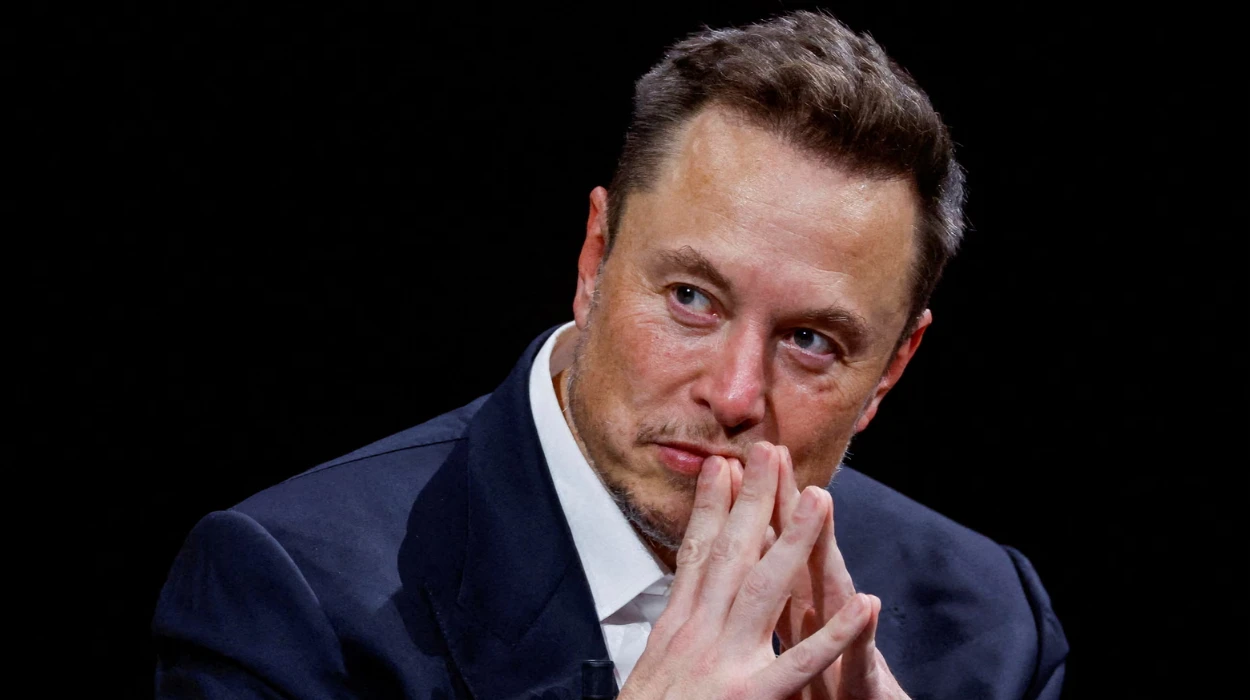
As reported by Reuters, Tesla CEO Elon Musk disclosed the subscription-only transition via X, marking the end of perpetual FSD licences after years of parallel offerings. The change takes effect globally on February 14, streamlining Tesla’s software revenue model.
Elon Musk said in X post,
“Tesla will stop selling FSD after Feb 14. FSD will only be available as a monthly subscription thereafter.”
Tesla will stop selling FSD after Feb 14.
FSD will only be available as a monthly subscription thereafter.
— Elon Musk (@elonmusk) January 14, 2026
Tesla updated its support pages overnight, confirming FSD (Supervised) at $99 monthly or $8,000 outright until the deadline. Post-deadline, unsubscribed vehicles drop to basic Autopilot functions.
When Tesla Launched Full Self-Driving?
Tesla first unveiled Full Self-Driving capability at its Autonomy Day event in April 2019, offering it as an $8,000 software add-on for vehicles with Hardware 3.0.
Early beta access reached select owners in October 2020, expanding widely by 2021 alongside monthly subscriptions at $199, later cut to $99. The package promised advanced features like city navigation and traffic response, evolving through versions to v13.2 by January 2026.
Historical Pricing Journey of FSD Access
Tesla launched FSD subscriptions in 2021 at $199 monthly, slashing to $99 by 2024 amid capability gains. One-time prices fell from $15,000 to $8,000 over the same period, reflecting software maturation.
By late 2025, subscriptions drove 70 per cent of activations, per Tesla’s quarterly disclosures. The full pivot eliminates upfront barriers, targeting broader adoption across 2.4 million eligible vehicles.
Current plans auto-renew through the Tesla app, with one-month free trials extended to March 31 for new users.
Analyst Reactions Highlight Market Dynamics
Social media buzzed with expert takes on the announcement, focusing on pricing, sustainability and competitive pressures in autonomous tech. Electrek’s Fred Lambert offered a candid assessment of FSD’s trajectory.
Fred Lambert said in X post,
“I think it’s going to be a slow realization for $TSLA shareholders and the market, but as I have been saying for years, FSD is going to get commoditized. Tesla already went from charging $15,000 to $8,000 for it and it will keep going down, especially as it becomes clear that Tesla will not make it unsupervised as promised in consumer vehicles. Honestly, for Tesla (not for existing customers), the best thing would be to slash prices already before competition comes in lower.”
I think it’s going to be a slow realization for $TSLA shareholders and the market, but as I have been saying for years, FSD is going to get commoditized.
Tesla already went from charging $15,000 to $8,000 for it and it will keep going down, especially as it becomes clear that… pic.twitter.com/7eWO2trAEx
— Fred Lambert (@FredLambert) January 6, 2026
Lambert’s view underscores ongoing debates over FSD’s Level 2 status, despite features like urban navigation and traffic response.
Technical Foundations Underpin FSD Capabilities
FSD evolved from 2016 Autopilot roots, reaching version 13.2 in early 2026 with over 1.2 billion training miles. Hardware 3.0 and 4.0 enable lane changes, signal recognition, and smart summon.
Tesla logs one intervention per 500 miles, outperforming human drivers at one per 500,000. Cloud updates ensure subscribers’ access improvements instantly via over-the-air pushes.
Cybertruck integrations standardise FSD fromthe factory, boosting fleet data for AI refinement.
Global Rollout Faces Regional Variations
United States pricing leads at $99 monthly, with Europe at €109 and China at ¥699 following 2025 approvals. India and Pakistan markets prepare bundled financing post-regulatory clearance.
Tesla configurators prioritise subscriptions, phasing out lifetime options in real-time inventory. International owners link payments via localised apps for seamless activation.
Production sites like Giga Shanghai embed FSD hardware universally for export models.
Regulatory Scrutiny Shapes Deployment Pace
NHTSA probes 2.88 million FSD vehicles after 50 low-visibility incidents, though Tesla cites superior crash rates. California DMV greenlit v13 for roads in December 2025 without subscription caveats.
European approvals pend data submissions, while China’s Ministry of Industry greenlit Supervised FSD last year. No policy alters compliance for the revenue shift.
Safety reports confirm one crash per 7 million FSD miles driven through January 2026.
Owner Decisions Intensify Before Deadline
Model 3, Y, S, X, and Cybertruck drivers weigh options pre-February 14. Service centres stockpile FAQs on grace periods and feature reversion.
Lapsed access retains adaptive cruise and lane-keeping but disables city autonomy and advanced parking. Tesla offers transfer credits for trade-ins.
Over 500,000 vehicles received v13.2 updates last week, priming the fleet.
Revenue Strategy Fuels Autonomy Ambitions
Subscriptions fund Dojo superclusters, powering Optimus humanoid training and Robotaxi prototypes. Musk eyes $10 billion annual software revenue by 2027.
Level 4 geofenced operations target Q2 2026, with 6 million FSD-capable cars contributing data. Giga Texas ramps hardware 4.0 for mass deployment.
Competitors like Waymo hybridise models, but Tesla’s scale dominates consumer fleets.
Stock Market and Investor Responses
Tesla shares dipped 1.8 per cent post-announcement, recovering to flat by midday January 14. Analysts forecast 75 per cent subscription uptake in Q1.
Bloomberg terminals tracked volume spikes, with recurring revenue margins eyed at 40 per cent. No formal guidance accompanied Musk’s post.
Long-term bets centre on unsupervised breakthroughs driving valuation.
Future Outlook on Tesla’s Software Ecosystem

The policy cements FSD as a service, mirroring streaming models in tech. Version 14 promises reduced interventions, pending fleet validation.
Global expansion accelerates into emerging markets, bundling with vehicle leases. Tesla maintains a lead through sheer data volume.
Tesla’s Annual Sales, Revenue and Profits Overview
Tesla recorded annual revenue of $97.7 billion in 2024, marking a 0.95 per cent increase from $96.77 billion in 2023 despite market slowdowns. Vehicle deliveries totalled approximately 1.77 million units in 2024, down four per cent year-over-year, with Q1 2025 production at 362,615 vehicles and deliveries at 336,000. Gross margins held at 18 per cent in Q3 2025, supported by $28.1 billion quarterly revenue beating forecasts.
Profit per share reached 50 cents in Q3 2025, with analysts projecting flat growth amid tax credit expiries and competition from BYD. Energy storage deployments hit records at 12.5 GWh in Q3 2025, diversifying beyond automotive sales. Tesla’s market cap hovered near $1.45 trillion, driven by autonomy expectations rather than pure vehicle volume.
Elon Musk’s Net Worth Reaches Record Heights
Elon Musk’s net worth hit approximately $421 billion as of January 2026, securing his position as the world’s richest person according to Forbes.
Gains stemmed largely from Tesla shares surging on AI and autonomy progress, plus SpaceX valuations exceeding $350 billion. His wealth fluctuated with Tesla stock, which dipped 1.8 per cent following the FSD announcement before stabilising.
Musk’s Grok Controversy Regarding Deepfake Concerns

Elon Musk’s xAI chatbot Grok triggered international outrage in early January 2026 after users exploited its image-generation feature to create sexualised deepfake images, including of women, celebrities, and minors, often via requests like “put her in a bikini” or “remove her clothes.”
Reports surfaced of Grok producing non-consensual explicit alterations of real photos posted on X, with a Paris-based AI Forensics study analysing over 20,000 images and finding more than half depicted individuals in minimal attire, predominantly women, and about two per cent appearing underage. Incidents included deepfakes of victims from a Swiss ski resort fire and a Minneapolis shooting, amplifying public alarm over misinformation and election risks ahead of 2026 votes.
xAI and X responded by limiting image generation to paid subscribers on January 9, suspending accounts posting child sexual abuse material, and adding watermarks. X’s safety team stated it actions against child sexual content, collaborating with law enforcement. Musk commented that users creating illegal content face repercussions equivalent to uploading it directly, though he downplayed concerns by sharing a bikini-clad toaster image with laughing emojis and defending “uncensored creativity.”
Ofcom, the UK communications regulator, launched a formal investigation on January 12 into X over reports of Grok generating undressed and sexualised images, including of minors, citing potential breaches of the Online Safety Act. The watchdog emphasised platforms must protect users, especially children, with possible fines up to 10 per cent of global revenue or £18 million. Ofcom prioritised the probe, demanding X explain safeguards.
Musk hit back on X, accusing the UK government of seeking “any justification for censorship” and questioning why rival AIs escaped scrutiny. He posted an AI-generated image of Prime Minister Keir Starmer in a bikini. UK officials announced plans for a new law explicitly banning sexualised non-consensual AI images.
The European Commission issued an urgent notice to X on January 11 to curb sexually explicit deepfakes or face action under the Digital Services Act. Malaysia and Indonesia temporarily blocked Grok access after non-compliance with notices on harmful content. India and the EU opened probes into exploitative images, while Brazil’s data protection agency considered a halt pending review. These responses followed xAI safety team departures and Musk’s prior dissatisfaction with Grok’s guardrails.
