

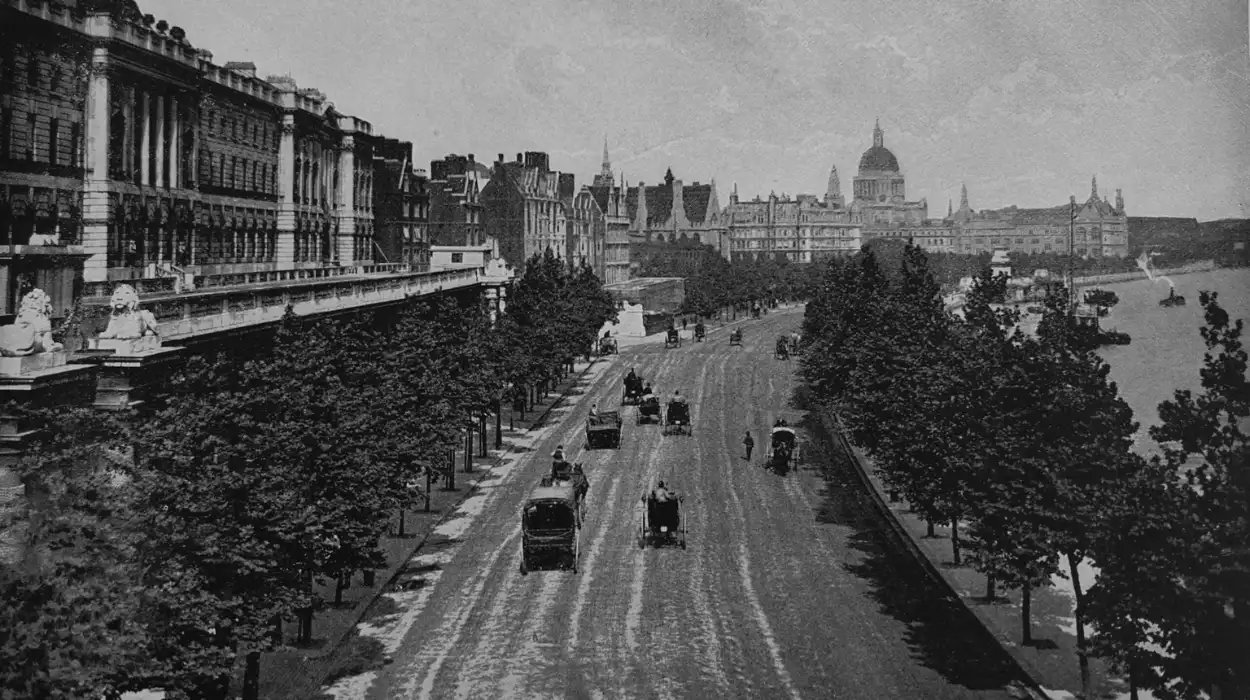
When we consider what London looked like in the 19th century, we enter a time of enormous change. The city grew rapidly as a result of the Industrial Revolution, social reform, and cultural change. London came to be at the epicenter of the British Empire, amidst wealth and poverty, innovation and struggle. To truly think about London in the 19th century, we have to consider the streets, the people, and the daily life of that time.
London’s Growth in the 19th Century
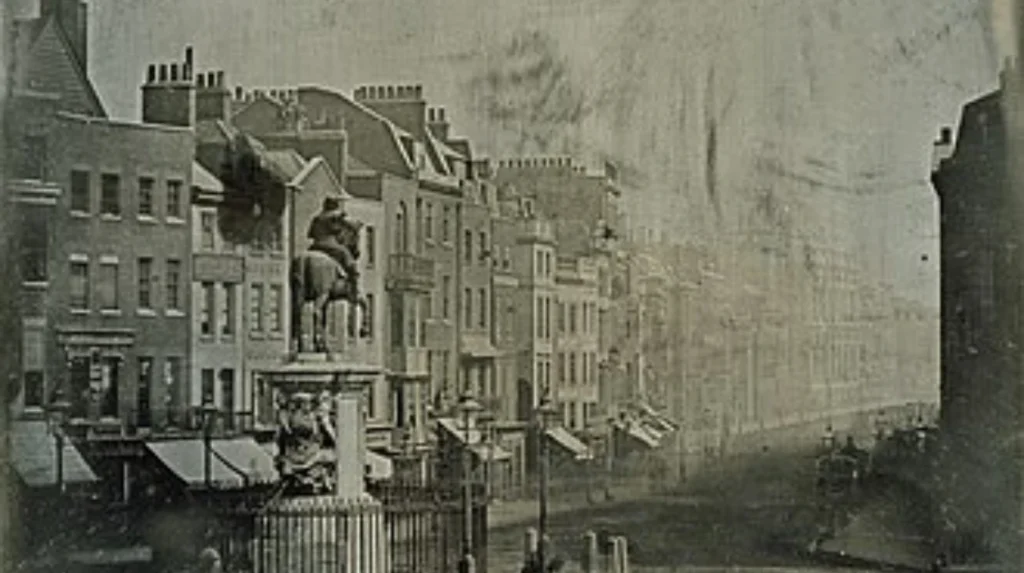
In the 1800s, London transformed from a comparatively small city into one of the largest urban areas in the world. The population exploded to over six million by the end of the century, emphasizing the extent of the change.
Migration has contributed to the city’s size. Many rural areas moved to London. The urban environment was rapidly expanding outward and creating new neighborhoods. Large projects such as bridges, train stations, and public buildings were changing the shape of the city.
What did London look like in the 19th century? It begins with a story of expansion and unstoppable growth.
The Streets of Victorian London
The streets of London presented the sharp contrasts of the era in the 19th century.
Busy Main Roads
The main roads were alive with horses pulling carriages, vendors selling their goods, and people filling the sidewalks. Streetlamps illuminated the roads with gaslights, and the roads took on a new element after dark life.
Narrow Streets
In poorer areas, narrow streets revealed a different character. They were crowded, dirty, and filled with small houses or lodging rooms. There were easy conditions for the transmission of disease and tricky situations for the daily conditions of the lower classes. The streets reflected the more positive evolutions and the challenges and problems of London in this time period.
Housing Representations and Living Conditions
When we inquire about what London looked like in the 19th century, housing offers us significant clues.
Attainment for Wealthy Homes
The wealthy lived in sophisticated townhouses and large villas. Multi-room houses filled with fine furniture, and they had residential quarters for their servants. Neighborhoods like Mayfair and Kensington demonstrated this wealth.
Working-Class Housing
Families occupied cramped homes. Many were positioned in single rooms. Sanitation was precarious given cholera and typhoid outbreaks were common. London’s rich and poor disparity was one of the most powerful characteristics and displays of 19th-century housing.
Work and Industry in London

The Industrial Revolution changed not only the appearance of London but also how it operated. When factories began to emerge, producing goods at an industrial scale, and Docklands along the River Thames became bustling centers of trade, thousands of people were quickly employed, but they were also working long hours in horrific conditions.
Hope came from the new jobs; the railways were working, printing houses were plentiful, and the offices in the city were providing jobs for thousands of workers. London may have seemed like an overgrown city of hard labor, but it also represented opportunity.
Transport and Travel
Transport directly shaped the answer to what London was like in the 19th century.
Horse-Drawn Carriages
Carriages were undoubtedly the most popular method of transportation for the affluent people, but the hackney coaches also allowed ordinary people to hire a carriage to be transported across town.
Railways and Trains
The arrival of the railway was a transformational event. Major stations that connected London to every corner of Britain, e.g., King’s Cross, Paddington, and Euston. London started to develop differently. Tracks were cutting through neighborhoods.
River Thames
Alongside land transport, the River Thames was the highway for goods and people. Steamboats were transporting passengers, and barges were transporting coal, grains, and supplies. Because of transport, London was both an exceptionally noisy place, but it was also alive and thriving with movement.
Markets and Shopping
Markets were central to daily life.
Street Markets
In the 19th century, open-air markets were common among poorer Londoners. Stalls sold fresh vegetables, fish, second-hand clothes, and other goods. The sights and sounds of the market and selling atmosphere provided an entirely distinctive experience.
By the middle of the 19th century, a new style of shop, the department store, appeared in London (for example, Harrods) that developed specifically for London’s middle classes, alternately expanding into the upper class. Most department stores sold luxury items, especially fashion clothing.
There were markets and shops that covered the full range of life in London, dying, good or bad; the truth is, they provided variety.
Schools and Social Life
When we are interested in what London looked like in the 19th century, we can attend schools and social spaces.
The rich people educated their children through private schools or tutors. The poor were too often destined for work, not school. However, slowly there was reform with the introduction of free elementary schools. Places of social entertainment included social clubs, theaters, and music halls. There was a social life in London depending on their wealth.
Crime and Policing
London in the 19th century was not without crime.With London home to varying districts, particularly in poorer districts (especially those in a state of poverty and gangs), people could be victims of pickpockets, theft, and robbery, often very effortlessly, where people organized by police and location were crowded.
Health and Sanitation
Health issues were some of the biggest challenges of the century. Overcrowded housing resulted in frequent outbreaks of disease. The government’s response to the “Great Stink” in 1858, which was due to sewage in the Thames, was to improve sanitation.
Gradually, drains and new systems for water began to find their way to London to improve the health of the city. In the 19th century, what London looked like depended on whether you lived in a clean or dirty area.
Culture and Literature
London was not only a place of work and hardship but also a cultural center. The city attracted writers like Charles Dickens, who described the poor districts of London and the ongoing struggles of the social underclass.
The city was home to theaters that produced popular plays and musicals, art galleries and museums were growing, and people could now engage with culture. Culture led the way to London being a city with character during the 19th century.
Everyday Life in Victorian London
To understand what London looked like in the 19th century, we must look at daily life.
The rich enjoyed carriages, eating well, and nights at the theater. The poor worked long hours and ate what they could afford to survive. On Sundays, people could go to church or enjoy the parks. Londoners’ experience of daily life emphasized the differences in the city and the diversity.
