London (Parliament Politics Magazine) January 19, 2026 – Gold prices reached a record $4,689.39 per ounce and silver hit $94.08 per ounce on Monday following US President Donald Trump’s announcement of 10% tariffs on goods from eight European countries opposing his proposed takeover of Greenland. Stock markets across Asia and Europe declined, with Japan’s Nikkei down 0.6-0.8%, Germany’s Dax falling 1.4%, and London’s FTSE 100 opening down 0.1-0.4%. The tariffs, set to begin on 1 February and potentially rise to 25%, target Denmark, Norway, Sweden, France, Germany, the UK, the Netherlands, and Finland until a Greenland deal is reached, prompting reports of EU retaliation including a €93bn package.
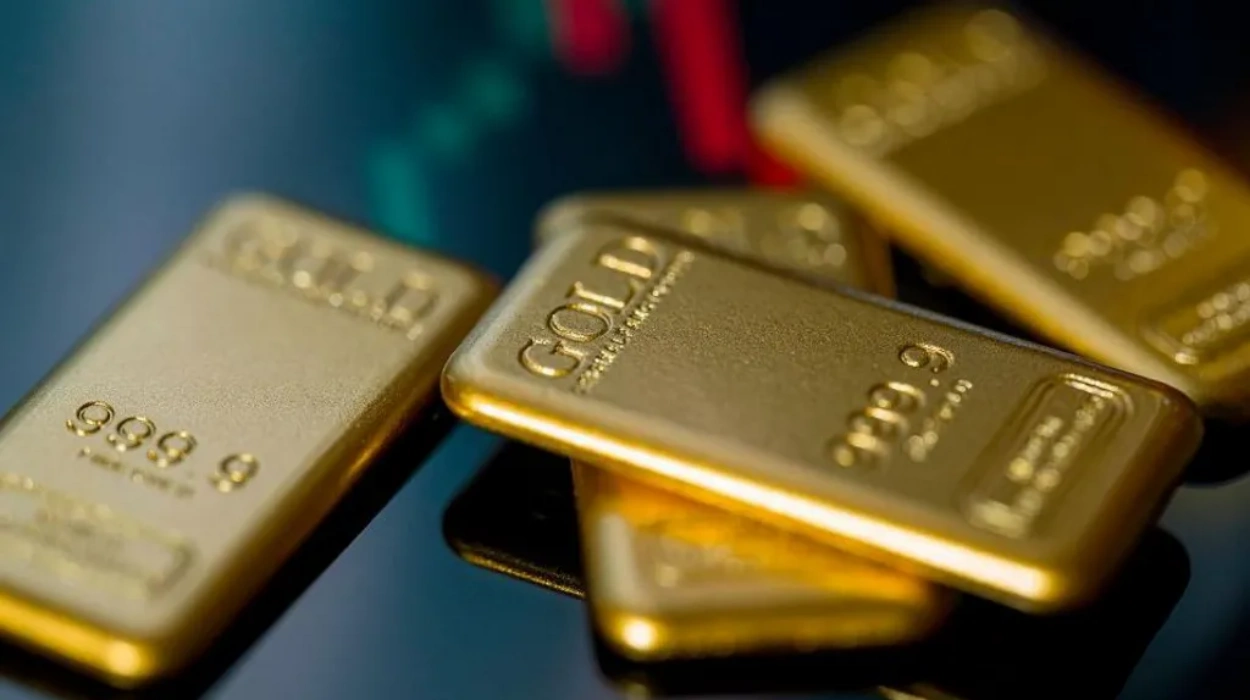
Gold and silver prices surged to unprecedented levels on Monday as investors sought safe-haven assets amid escalating transatlantic trade tensions triggered by the Greenland dispute. US President Donald Trump announced on Saturday that he would impose 10% tariffs on imports from eight European nations—Denmark, Norway, Sweden, France, Germany, the UK, the Netherlands, and Finland—with the levies potentially increasing to 25% from 1 June if no agreement is reached on the US acquisition of Greenland.
As reported by Nick Edser of BBC News, the price of gold touched $4,689.39 (£3,499) per ounce, while silver rose to a peak of $94.08 per ounce. These metals are viewed as safe assets during periods of uncertainty, and both have risen sharply over the past year, with gold increasing by more than 60% in 2025 to a prior record above $4,549.
Market commentator David Buik highlighted the risk-off sentiment in an early assessment of the fallout. David Buik (@truemagic68) said in X post,
“Now that President Trump has threatened to park his uninvited tanks on Greenland, markets will ruminate and consider Europe’s possible political retaliation. Gold up. Opening calls suggest investors will head for the hills – risk off pro-tem. FTSE -60 at 10175 DJIA -387 at 48974.”
Now that President Trump has threatened to park his uninvited tanks on Greenland, markets will ruminate and consider Europe’s possible political retaliation. Gold up. Opening calls suggest investors will head for the hills – risk off pro-tem. FTSE -60 at 10175 DJIA -387 at 48974
European Stock Markets Decline Sharply on Tariff News
European equity indices opened lower as markets fully absorbed Trump’s tariff announcement and its implications for trade relations. In London, the FTSE 100 index fell 0.1% at open according to BBC reports, but later declined by 0.4% to 10,194.18, with the FTSE 250 dropping 0.7% to 23,143.52, as detailed by Chris Price and Chanel Zagon of The Telegraph. Buik’s prediction aligned closely, noting an early FTSE drop to around 10,175.
Germany’s Dax index dropped 1.4% to 24,931.40, while France’s Cac 40 slid 1.5-1.7% to 8,120.80. The Europe-wide Stoxx 600 was down 1.6%, with European carmakers hit hardest: BMW fell 3.4%, Volkswagen dropped 3%, and Mercedes-Benz sank 2.7%, per The Telegraph updates.
London’s FTSE 100 received some uplift from gold miners and defence stocks amid the volatility. Endeavour Mining rose 2.9%, BAE Systems gained 1.5%, and Babcock increased 1.4%, as investors positioned for rising gold prices and heightened geopolitical risks, according to Chris Price and Chanel Zagon of The Telegraph.
US markets remained closed on Monday for a public holiday, but premarket futures signalled pressure: S&P 500 futures down 0.9%, Dow Jones Industrial Average futures off 0.8%, and Nasdaq 100 futures lower by 1.2%, as reported in The Telegraph’s live coverage. Buik’s X post echoed this, forecasting the DJIA at 48,974, down 387 points.
Asian Markets Register Modest to Significant Declines
Asian stock markets posted losses in early trading, setting the tone for global risk aversion. Japan’s Nikkei index closed down 0.6% per BBC, with later Telegraph reports confirming a 0.7-0.8% drop to 53,523.92. Hong Kong’s Hang Seng fell more than 1% to 26,614.76, and MSCI’s broadest index of Asia-Pacific shares outside Japan dipped 0.4%.
In mixed signals, China’s Shanghai Composite gained 0.3% to 4,113.86 after data showed 5% annual economic growth in 2025, despite a slowing final quarter. South Korea’s Kospi bucked the trend, rising 1.4% to 4,906.58 driven by tech stocks, with SK Hynix up 1.9%. Taiwan’s Taiex added 0.7%, while India’s Sensex declined 0.6%, as covered by Chris Price and Chanel Zagon of The Telegraph.
Japanese Prime Minister Sanae Takaichi scheduled a news conference for later Monday ahead of plans to dissolve parliament for a snap election next month.
Details of Trump’s Tariff Plan and Greenland Stance
Credit: Getty Images
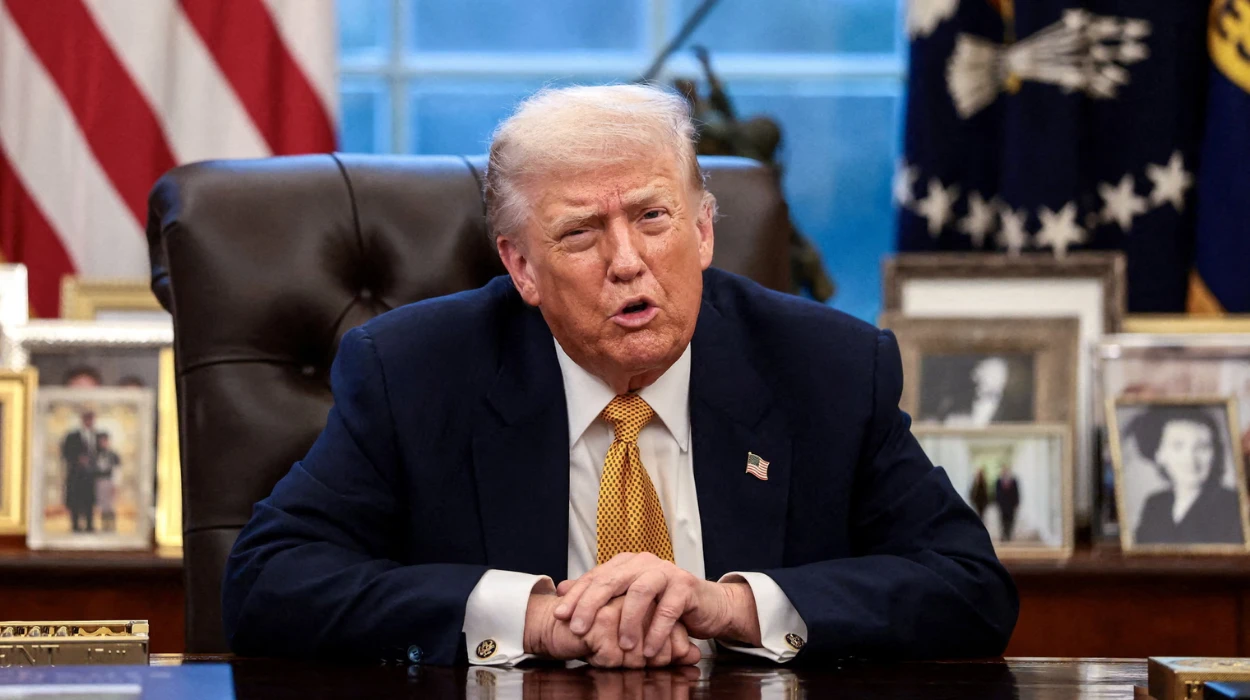
President Trump specified the 10% tariffs would take effect on 1 February, escalating to 25% on 1 June absent a Greenland resolution. As reported by Nick Edser of BBC News, Trump announced the measures on Saturday, stating they would persist until a deal on Greenland was reached.
The Telegraph quoted Trump declaring on Greenland: “It will be done,” while criticising Denmark for failing to address the “Russian threat” there. Greenland, a semi-autonomous Danish territory, has become a flashpoint, with European leaders labelling the tariff threats as blackmail. France has proposed novel economic countermeasures in response.
Independent analyst Shanaka Anslem Perera provided context on the stakes, distinguishing this from past disputes. Shanaka Anslem Perera ⚡ (@shanaka86) said in X post,
“Wall Street thinks this is 2019 posturing. It’s not. Greenland is different. In 2019, Trump backed down on EU steel tariffs because there was nothing strategic at stake. Greenland has Arctic military bases the Pentagon has wanted for 20 years.
This isn’t trade negotiation. This is territorial acquisition with tariffs as leverage. The EU knows it. They’re preparing a €93 billion retaliation package using the Anti-Coercion Instrument they’ve never activated before.
That instrument can block US firms from: European public tenders Investment authorizations Services market access Apple does €85bn annually in Europe. Microsoft does €52bn. Google does €44bn. The 10% tariff on Feb 1 escalates to 25% on June 1.
The EU summit is Jan 22. If they approve the package, this becomes the first transatlantic trade war since Smoot-Hawley. Futures tonight: S&P: -0.7% Nasdaq: -1% Gold: +1% Silver: +3% The market is pricing a bluff. The Arctic isn’t a bluff. Bookmark this. We’ll revisit after the Jan 22 summit.”
Wall Street thinks this is 2019 posturing.
It’s not. Greenland is different.
In 2019, Trump backed down on EU steel tariffs because there was nothing strategic at stake.
Greenland has Arctic military bases the Pentagon has wanted for 20 years.
Perera’s post aligns with reports of an EU summit on 22 January, where the €93bn package—leveraging the unused Anti-Coercion Instrument—could target US firms’ access to European tenders, investments, and services.
UK Leaders Prepare National Response
Credit: PA Wire
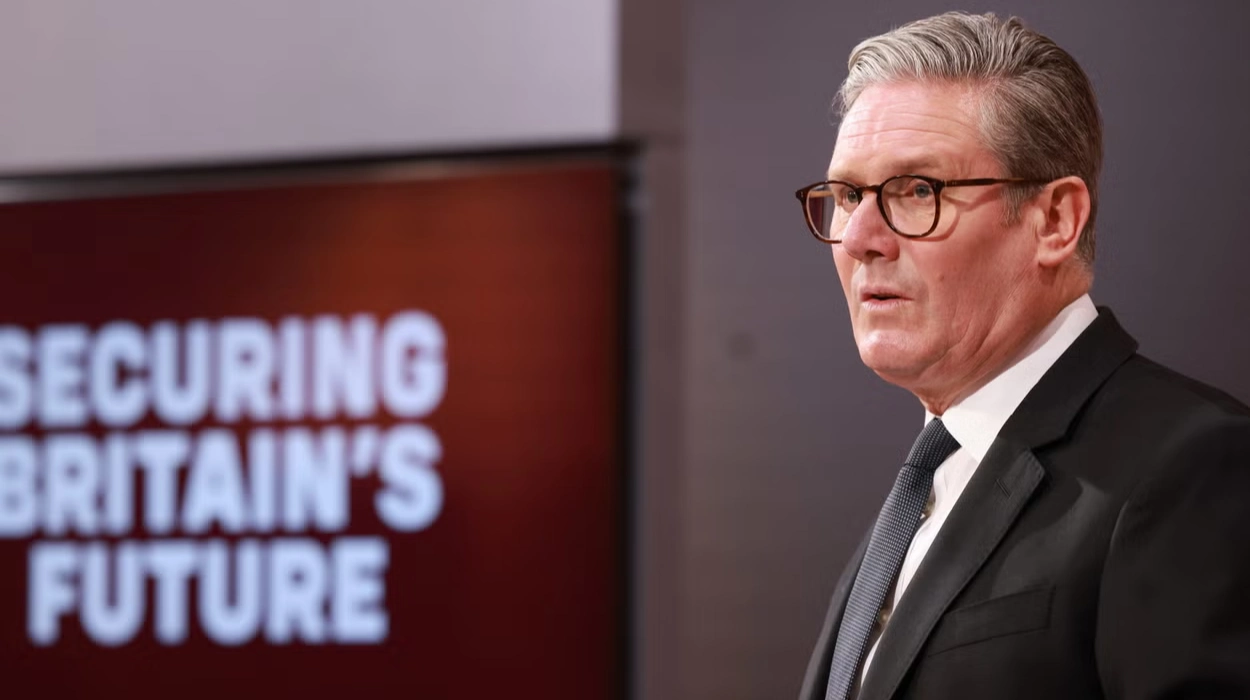
Prime Minister Sir Keir Starmer plans to address the nation from Downing Street on Monday morning. A government source informed The Telegraph that Starmer told Trump the tariffs on the UK and allies are “wrong,” and he will detail the UK’s allied approach, guided by values while safeguarding security, living standards, and prosperity.
Chancellor Rachel Reeves will join Starmer at a subsequent press conference, having cancelled an appearance at the London Stock Exchange Group to mark a “new golden age” for the City, per Chris Price and Chanel Zagon of The Telegraph.
EU Retaliation Plans Gain Momentum
The EU is weighing a €93bn (£80bn) tariff package on US imports, as first noted by BBC and expanded in The Telegraph. Diplomatic sources confirmed threats of a full trade war. France decried the tactics as blackmail, proposing countermeasures.
Italy’s Prime Minister Giorgia Meloni suggested Europe’s recent military buildup in Greenland aimed to ease US Arctic concerns, not provoke. Capital Economics’ Neil Shearing told The Telegraph that the UK and Germany risk the most, with 10% tariffs shaving 0.1% off UK GDP (£2.88bn) and 25% tariffs up to 0.3% (£8.64bn). US inflation could rise 0.1-0.2%.
Peel Hunt’s Kallum Pickering described it to The Telegraph as a “dangerous evolution” of trade wars, noting Trump’s potential corner and market dependence on the World Economic Forum’s tone.
Currency Shifts and Expert Commentary
Credit: REUTERS/Dado Ruvic/Illustration
The US dollar fell against peers. The pound strengthened 0.2% to nearly $1.34, the euro up 0.3% to $1.163 after initial dips, per The Telegraph. ANZ’s Khoon Goh explained: “Typically you would think tariffs being threatened would lead to a weaker euro. But… the impact… has been more towards dollar weakness every time there is heightened policy uncertainty emanating from the United States.”
SPI Asset Management’s Stephen Innes added: “In a world where geopolitical cohesion… is no longer taken for granted, the willingness to recycle capital indefinitely into US assets becomes less automatic.”
Precious Metals Rally Builds on 2025 Gains
The surge extends 2025’s trends, with gold up over 60% and silver topping $60 per ounce in December, per BBC. StoneX’s Matt Simpson told Nick Edser of BBC News: “Geopolitical tensions have given gold bulls yet another reason to push the yellow metal to new highs.”
Economists flagged broader hits: UK faces £9bn losses per Capital Economics. Shearing noted political damage to NATO exceeds economics, as sovereignty requires Greenlanders’ consent, though concessions remain possible.
The FTSE 100 had recently breached 10,000 for the first time, but Monday’s reaction underscored fragility amid the Greenland row.