

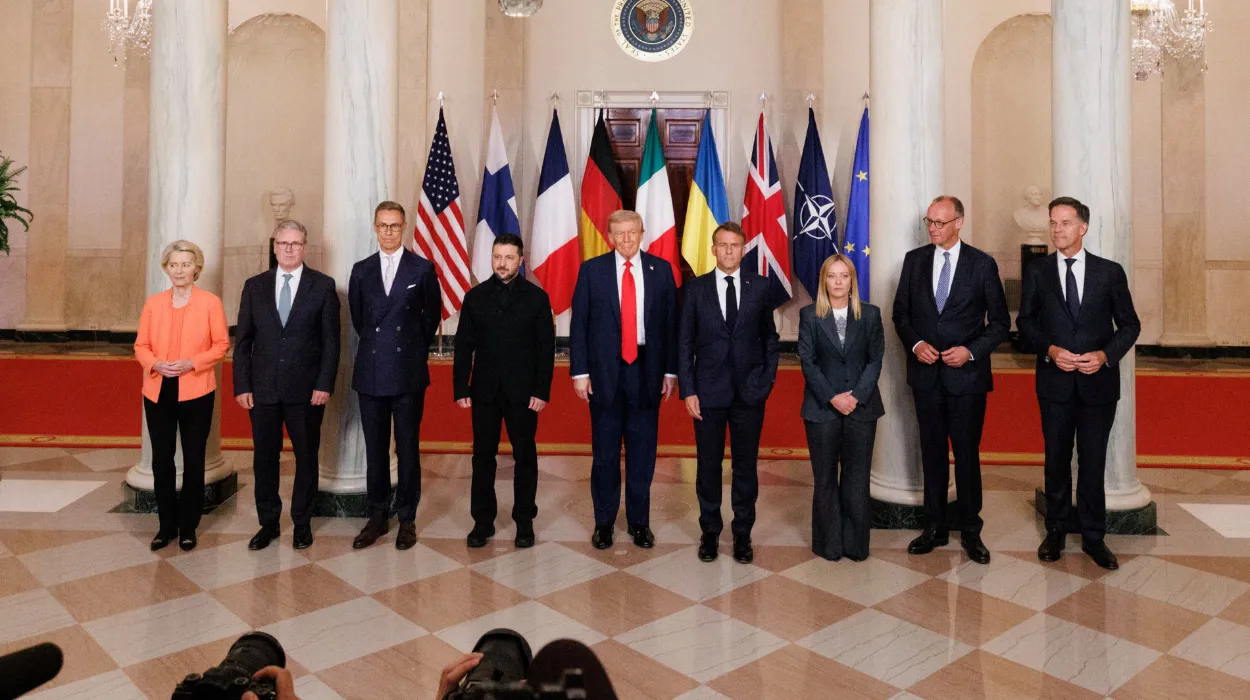
Berlin (Parliament Politics Magazine) – German Chancellor Friedrich Merz calls parts of the US’s new security plan “unacceptable,” saying Europe must protect its own democracy. As reported by The Guardian, Friedrich Merz said parts of the new US National Security Strategy announced last week are
“unacceptable from a European perspective.”
What did Friedrich Merz say about the US national security strategy and Europe’s independence?
During a visit to Rhineland-Palatinate, German Chancellor Merz said he was not surprised by the US strategy, noting it largely reflects US Vice President JD Vance’s Munich speech earlier this year. He stated,
“Some of it is understandable, some of it is comprehensible, some of it is unacceptable to us from a European perspective.”
Mr Merz added,
“I see no need for the Americans to now try to save democracy in Europe. If it needed saving, we would be able to handle that on our own.”
He told reporters that Washington’s strategic shift highlights Europe’s and Germany’s need for greater autonomy in security matters. The German Chancellor added,
“America first’ is fine, but ‘America alone’ cannot be in your interest. You need partners in the world, and one of those partners can be Europe. And if you cannot make use of Europe, then at least make Germany your partner.”
Mr Merz stressed that Europe and the U.S. share a clear objective: protecting the continent’s freedom, security, and long-term peace. He continued,
“And I hope that the Americans will follow us on this path, and that they consider it right and necessary in their own interest. If that should not be the case, then we should at least be mentally — and one day also practically — prepared for that.”
What did António Costa say about the US National Security Strategy?
European Council President António Costa warned US President Donald Trump’s administration against meddling in Europe, as analysts called the new White House security strategy a seismic shift in transatlantic relations.He labelled Washington’s support for Europe’s far right as unacceptable, saying the new strategy goes “beyond past differences,” including on climate. Mr Costa added,
“Allies do not threaten to interfere in the domestic political choices of their allies. The US cannot replace Europe in what its vision is of free expression … Europe must be sovereign.”
What did the US National Security Strategy signal for Europe and transatlantic relations?
The White House National Security Strategy warns Europe faces “civilisational erasure” without migration controls. It says several European countries could be
“unrecognisable in 20 years or less”
if current trends continue.
The 29-page document outlining President Trump’s priorities claims the continent’s migration policies are
“creating strife, censoring free speech, and suppressing political opposition.”
It says that Europe’s “cratering birthrates” are causing a
“loss of national identity and self-confidence.”
The strategy raises doubts that European nations with high migration can meet NATO obligations or support US alliances.The White House’s National Security Strategy suggests European countries are obstructing peace efforts in Ukraine. It states,
“The Trump administration finds itself at odds with European officials who hold unrealistic expectations for the war perched in unstable minority governments, many of which trample on basic principles of democracy to suppress opposition.”
The strategy adds that,
“A large European majority wants peace, yet that desire is not translated into policy, in large measure because of those governments’ subversion of democratic processes.”
The US security plan seeks to prevent NATO expansion, raising potential tensions with European leaders over Moldova.
“America is, understandably, sentimentally attached to the European continent—and, of course, to Britain and Ireland. The character of these countries is also strategically important because we count upon creative, capable, confident, democratic allies to establish conditions of stability and security. We want to work with aligned countries that want to restore their former greatness,”
it states.
The strategy mentions China but places it behind Europe and South America, noting that Washington cannot stay fully engaged with every region or global challenge.
