

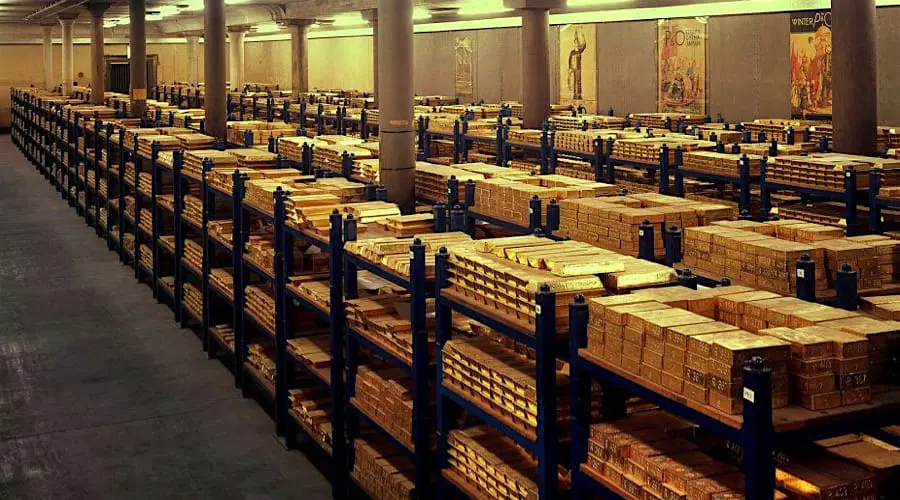
New York, United States — January, 2026 — Financial markets worldwide are responding to a historic turning point as the Gold price record 2026 is reshaping investor behavior, monetary strategy, and global economic confidence. Gold surged beyond all previous highs, reflecting deep structural changes rather than a short-lived market rally.
A Record That Signals More Than Price Momentum
The current surge in gold is not merely a technical breakout. Market analysts emphasize that gold’s rise represents a re-calibration of value in a system strained by debt accumulation, trade fragmentation, and uneven economic recovery.
The Gold price record 2026 stands apart from past rallies due to the breadth of participation. Central banks, institutional investors, and retail buyers are all contributing to demand, creating a rare alignment across market segments.

Currency Pressures Redefine Investor Priorities
One of the most significant drivers behind gold’s rise has been sustained pressure on major currencies. The US dollar, euro, and yen have all faced depreciation concerns as governments balance growth support with inflation control.
As purchasing power erodes, gold has regained prominence as a neutral asset free from political or monetary manipulation. This shift has reinforced confidence in physical assets, supporting the Gold price record 2026 across global exchanges.
Central Banks Accelerate Strategic Gold Accumulation
Central bank buying has played a decisive role in sustaining gold’s ascent. Over the past two years, reserve managers have expanded gold holdings to diversify away from currency exposure.
Emerging economies, in particular, have prioritized gold as a hedge against sanctions risk and financial volatility. This steady accumulation has tightened supply and anchored demand, reinforcing the Gold price record 2026 as a structurally supported milestone.
Inflation Persistence Strengthens Gold’s Role
Despite policy tightening cycles in recent years, inflation remains stubbornly elevated across multiple regions. Rising food, energy, and housing costs have pressured household budgets and eroded savings.
Gold’s appeal lies in its ability to preserve value when real returns on cash and bonds turn negative. As inflation expectations remain elevated, demand for gold continues to rise, further legitimizing the Gold price record 2026 as an inflation-driven phenomenon.
Market Volatility Pushes Capital Toward Stability
Equity markets have struggled with valuation uncertainty, while bond markets face challenges from rising issuance and fiscal stress. In this environment, investors have increasingly prioritized capital preservation over yield.
Gold’s liquidity and historical resilience during crises have made it a preferred destination. Portfolio reallocations toward defensive assets have helped cement the Gold price record 2026 as part of a broader risk-off shift.
Supply Constraints Amplify Price Pressure
On the supply side, gold production growth has remained limited. Mining projects face rising costs, regulatory delays, and environmental scrutiny, constraining output expansion.
Recycled gold supply has also failed to offset demand growth, as long-term holders remain reluctant to sell. These constraints have created a tighter physical market, reinforcing the durability of the Gold price record 2026.

The Role of Geopolitical Uncertainty
Geopolitical tensions continue to influence investor sentiment. Trade disputes, regional conflicts, and strategic competition between major powers have elevated global risk premiums.
Gold’s universal acceptance and political neutrality make it uniquely resilient in such an environment. As uncertainty persists, its role as a non-aligned store of value strengthens, contributing to the conditions behind the Gold price record 2026.
Impact on Related Financial Markets
Gold’s surge has had ripple effects across financial markets. Precious metals such as silver and platinum have benefited from spillover demand, while mining equities have outperformed broader indices.
Currency markets have also reacted, with gold-linked currencies strengthening amid declining confidence in traditional reserve units. These cross-market dynamics highlight the systemic importance of the Gold price record 2026.
Institutional Strategy Shifts Toward Tangible Assets
Large asset managers have adjusted long-term allocation strategies in response to changing macroeconomic conditions. Gold has re-emerged as a strategic component rather than a tactical hedge.
Pension funds and sovereign wealth funds are increasingly viewing gold as a stabilizing anchor within diversified portfolios. This institutional endorsement has added credibility to the Gold price record 2026 as a sustainable benchmark.
Expert Insight on the Market Transformation
One senior global commodities analyst observed,
“Gold’s rise reflects a loss of faith in conventional safeguards rather than speculative excess.”
The comment captures the prevailing view that gold’s strength is rooted in fundamentals, not momentum trading.
This perspective reinforces the argument that the Gold price record 2026 represents a redefinition of financial security rather than a temporary anomaly.
Historical Context Puts the Record in Perspective
Gold has experienced significant rallies in past decades, often during periods of crisis or transition. However, previous surges were typically driven by isolated factors such as inflation spikes or currency devaluation.
The current environment is distinct due to the simultaneous presence of multiple risks. Inflation, debt, geopolitical instability, and technological disruption are converging, elevating gold’s relevance and validating the Gold price record 2026 as historically significant.
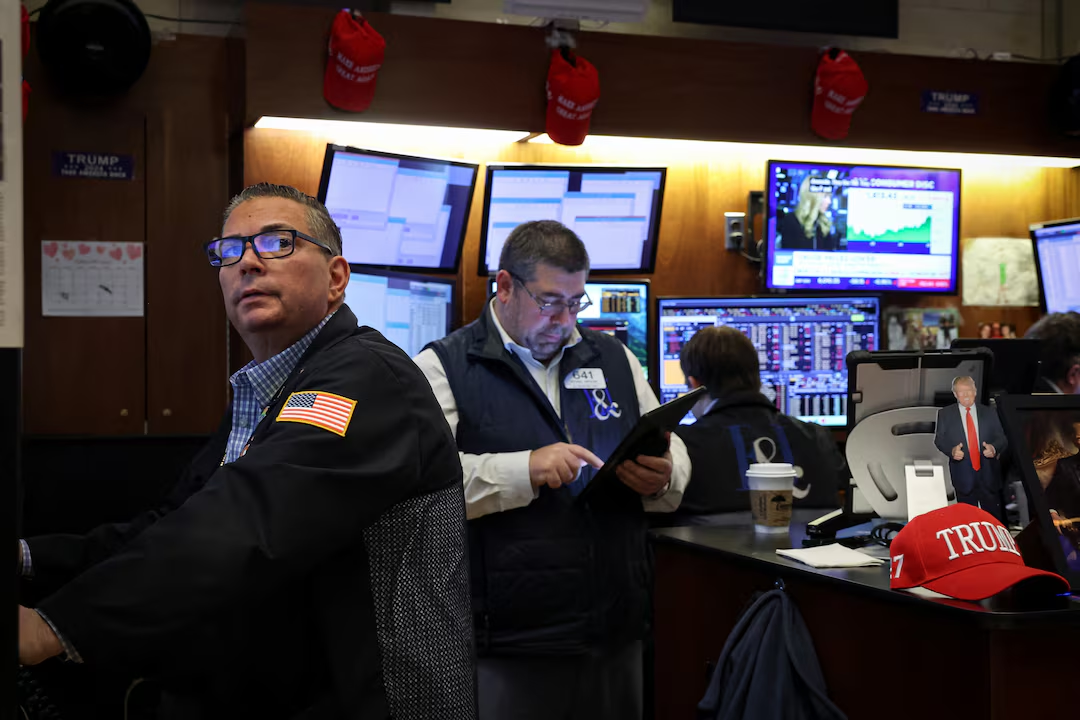
What the Record Means for Monetary Policy
Gold’s ascent sends a clear signal to policymakers. It reflects market skepticism about long-term monetary stability and the effectiveness of traditional policy tools.
While central banks maintain confidence in inflation control, gold prices suggest lingering doubt among investors. The Gold price record 2026 thus serves as an informal barometer of trust in the global monetary system.
Outlook for Gold Through the Remainder of the Year
Looking ahead, analysts anticipate periods of consolidation as markets digest recent gains. Short-term volatility remains possible, particularly if economic data surprises on the upside.
However, the structural forces supporting gold show little sign of reversal. Central bank demand, inflation risk, and geopolitical uncertainty are expected to persist, suggesting that the Gold price record 2026 may represent a new equilibrium rather than a peak.
Beyond Price Charts A Shift in Global Confidence
Beyond numerical records, gold’s resurgence reflects deeper changes in how value is perceived and preserved. Investors are increasingly prioritizing resilience over growth in an unpredictable world.
Gold’s ability to transcend political systems and economic cycles reinforces its enduring relevance. This broader context gives lasting meaning to the Gold price record 2026 beyond its immediate market impact.
A Defining Moment for Global Finance
As financial systems adapt to a more fragmented and uncertain landscape, gold has reasserted itself as a foundational asset. Its rise challenges assumptions about currency dominance and portfolio construction.
The current milestone will likely influence policy debates, investment strategies, and academic analysis for years to come, with the Gold price record 2026 serving as a reference point in financial history.
When Markets Redefine Safety
Gold’s latest achievement is not simply about reaching a higher number. It represents a collective reassessment of risk, trust, and value in a changing world.
In an era defined by uncertainty, gold’s stability has once again taken center stage, marking a moment that may reshape global finance for a generation.