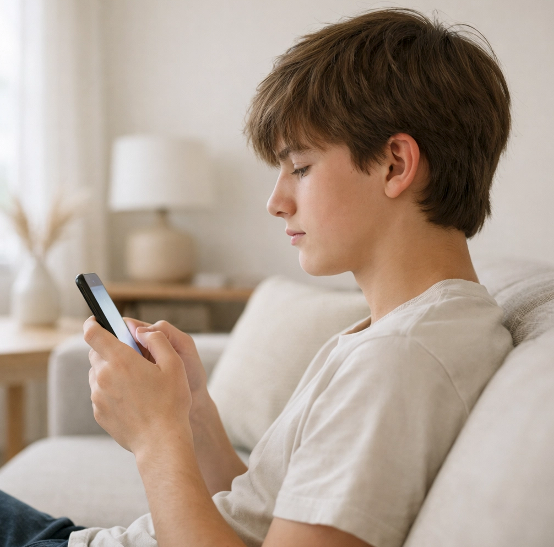
Yesterday in Parliament, hidden beneath the noise of the Mandelson scandal, or “vetting-gate” as one MP referred to it to me, was an important debate on whether to ban social media for children under the age of 16.
Once again, ministers in the Commons resisted a straightforward prohibition from the House of Lords, voting against Lord Nash’s amendment 260 to 161, instead arguing for a softer and incremental approach to regulation while they gather more evidence.
Supporters of a ban say the evidence of harm is already extensive, pointing to anxiety, self-harm, addictive design and the pressure created by an online world built around endless comparison and validation. For them, there is little left to study.
Opponents of an outright ban, or at least those wary of moving too fast, argue that the Online Safety Act has only just begun to take effect and that the state should first use the powers it already has before reaching for a blanket restriction. Ministers insist they are not refusing to act, only refusing to pre-empt the outcome of their own review.
That line was set out by Education Minister Olivia Bailey, who argued that the government’s consultation was necessary because it needed to cover a wider range of services and harms than a single narrowly drawn amendment would allow. Her point, in essence, was that ministers should not lock themselves into one model before testing what can actually be enforced and what will best protect children in practice. It is a defensible position on paper, but politically it has come to sound like another version of “wait a bit longer” in an area where patience is running out.
This legislative caution is becoming a recognisable feature of how ministers handle socially charged questions involving technology, child safety and civil liberties. In the digital sphere, the government is effectively asking for time to see whether tighter regulation, backed by Ofcom and the threat of penalties for the platforms, can produce meaningful change without the upheaval of a full legal ban.
However, there is a suspicion that Minister also have one eye on the impact of a ban on their attempt to get the Tech Giant to invest in the UK.
Opposition MPs expressed frustration with this cautious approach, Shadow Education Secretary Laura Trott, accused ministers of presiding over a “continued delay” when the dangers are already well understood. Her criticism goes to the heart of the political problem for the government. Each promise of future action risks sounding less like prudence and more like hesitation.
Trott’s case is that if ministers accept the scale of the harm, they should stop talking about what they may eventually do and put clearer protections into law now. It is a simple line, but an effective one, because it taps into a wider public suspicion that Westminster often mistakes process for action.
There is, however, a genuine complication beneath the politics. Any serious under-16 ban would depend on robust age verification, raising obvious questions about privacy, surveillance and the volume of personal data handed over to tech companies. Ministers know that a policy sold as child protection could easily become controversial on civil liberties grounds.
That difficulty also explains why some MPs have been careful about how restrictions are framed. Education Committee chairwoman Helen Hayes has argued that any school phone ban or related curbs need sensible exceptions, particularly for young carers and disabled children, for whom access to a phone may not be a distraction but a practical necessity.
It is a useful reminder that this debate is not only about whether ministers should be tougher, but also about whether they can be tougher without creating new problems or sweeping up children whose circumstances are more complicated than the slogans allow.
For now, the government is still trying to occupy the narrow strip between urgency and overreach. It wants to look serious about reining in the platforms, while avoiding the technical and political fallout of a total ban that may prove difficult to enforce and easy to circumvent. The trouble is that each fresh vote and each fresh consultation makes the same basic question harder to avoid. If ministers believe social media is causing real harm to children, at what point does a flexible approach stop looking sensible and start looking like a refusal to decide?
Government rejects under-16 social media ban…again