


The House of Stuart is one of the most interesting royal families in British and European history. For centuries, it controlled the politics, religion, and culture of Scotland, England, and Great Britain. Nowadays, people wonder if the House of Stuart actually continues to exist. The answer to that question is complicated, but the stories of this royal family are important and entertaining.
The Origin of the House of Stuart
The “House of Stuart” began life in the 14th century in Scotland. The name “Stuart” (originally Stewart) came from the term “High Steward of Scotland.” The title was given to Walter FitzAlan in the 12th century, and the family grew in power and linkages with the Scottish royal family via marriage.
The turning point for the House of Stuart came in 1371, when Robert II, grandson of Robert the Bruce and a Stewart on his mother’s line, became King of Scotland. At that point the House of Stuart began its royal history.
The Stuarts and the English Crown
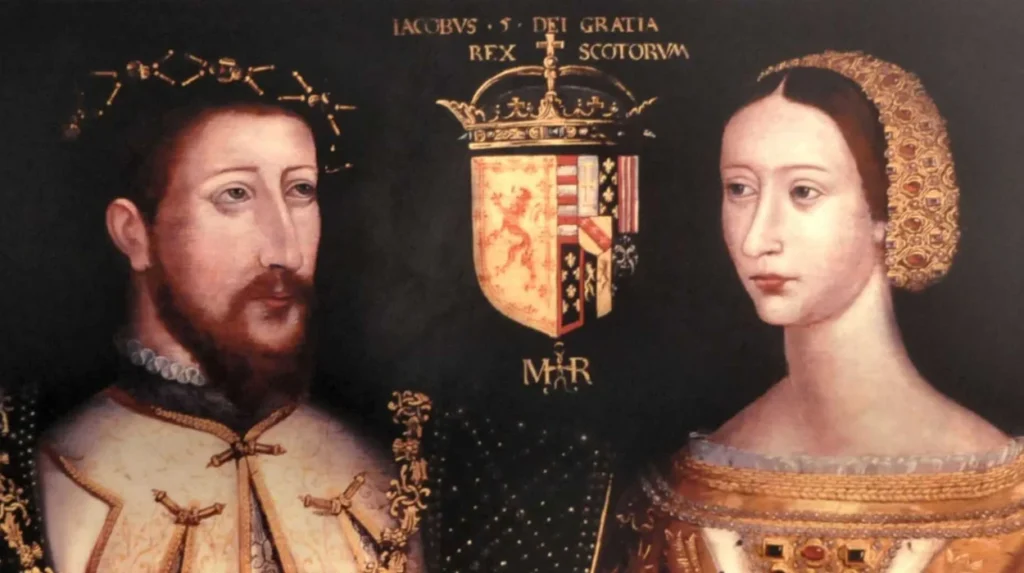
The importance of the Stuarts greatly increased in 1603 when Elizabeth I of England died without children. Her closest relative was James VI of Scotland, a Stuart king. He became James I of England, uniting the crowns of England and Scotland for the first time.
This is a significant moment in British history, as it allowed for closer ties between the two realms. This also introduced challenges, including political conflict, religious conflict, and questions about the power of the monarchy.
A Time of Turbulence for the Stuarts
The Stuart dynasty that ruled England and Scotland from 1603 to 1714 is referred to as a “Time of Turbulence,” in light of the major fights over religion and the balance of executive and legislative power. In little over a hundred years, Britain experienced a civil war, the execution of a king, a republican hiatus, and two revolutions! The Stuart kings and queens ruled during some of the most dramatic periods in Britain:
1. The English Civil War
Stuart King Charles I struggled with Parliament over money, power, and religion. His reign saw the English Civil War erupt in the 1640s. Charles was publicly executed in 1649, and Cromwell’s testy republic replaced him temporarily in England.
2. The Restoration
The son of Charles I, Charles II, returned to the throne in 1660. This is coined the Restoration. The son was popular, but political and religious tensions remained.
3. The Glorious Revolution
In 1688, the last true Stuart, King James II, was removed from power through the Glorious Revolution, bringing in William of Orange and his wife Mary, James’s Protestant daughter. This ceased their direct control over Britain; the Stuart family still claimed the throne.
The Jacobite Movement

After the loss of the crown, the Stuarts continued to pursue the crown through a series of attempts. The supporters of the Stuart family were called Jacobites and attempted a multitude of efforts to restore the family to the crown.
- James II’s (1685–1688) son, James Francis Edward Stuart (1688–1766), the “Old Pretender,” claimed to be the rightful king.
- The Old Pretender’s son, Charles Edward Stuart (1720–1788), commonly known by the title “Bonnie Prince Charlie” or the “Young Pretender,” led the Jacobite Rising of 1745.
- The rebellion ended in defeat with the Battle of Culloden in 1746.
Following the battle, the Jacobite cause started to fade, and the Stuarts faded into history.
Does a House of Stuart Still Exist?
For many years, historians and the public were preoccupied with this question. The royal line of the Stuarts officially ended in 1807 with the death of Henry Benedict Stuart (1725–1807), Bonnie Prince Charlie’s brother, who was also a cardinal of the Catholic Church with no children.
This does not mean the Stuart bloodline disappeared completely. The Stuart bloodlines did continue on through marriages and continued from other royal families in Europe.
For example:
- The Stuarts intermarried with foreign families in France and Italy.
- Many modern royals of the Houses of Savoy, Bavaria, and Habsburg can trace some line back to the Stuarts.
While the formally established royal House of Stuart is no longer active, the bloodline exists in Europe.
How the Stuarts Are Remembered Today
The Stuart family is remembered in various ways all across the United Kingdom and beyond:
- Significant Historical Sites: The Stuart family is linked to historical castles and palaces, e.g., Holyrood Palace in Edinburgh and Stirling Castle in Scotland, which are both still open to the public.
- Tourism: The story of Bonnie Prince Charlie and the Jacobite risings lures many tourists to the Highland areas of Scotland.
- Popular Culture: Events in the lives of the Stuarts are still narrated through books, television series, and films, making the Stuart story well-known to generations of younger people.
Modern-Day Links to the Stuarts
The current British ruling family is the House of Windsor; there are still symbolic links to the Stuart bloodline. For example, aspects of the crown jewels of Scotland, as well as elements of royal traditions, have direct ties to the history of the House of Stuart.
Additionally, many historians and genealogists continue to research the descendants of the Stuarts among noble houses of Europe. Their descendants may not claim a right to the throne; they remind us of the close ties that exist among royal families across Europe.
The End and Legacy of the House of Stuart
The House of Stuart is no longer a royal dynasty, but its legacy is not lost. From its origins in medieval Scotland to becoming the heir to the English throne, to losing the throne in the Glorious Revolution, to the last attempts at restoration with the Jacobite cause, the Stuarts impacted Britain in many significant and lasting ways.
So, does the House of Stuart still exist today? Officially, no. As a dynastic family, the House of Stuart ceased to exist in the early 19th century. However, through bloodlines, history, and culture, the Stuarts still exist as Stewarts or Stratfords. Their story still lives on in the imagination and shows us how royal families can rise, fall, and impact the world.
