

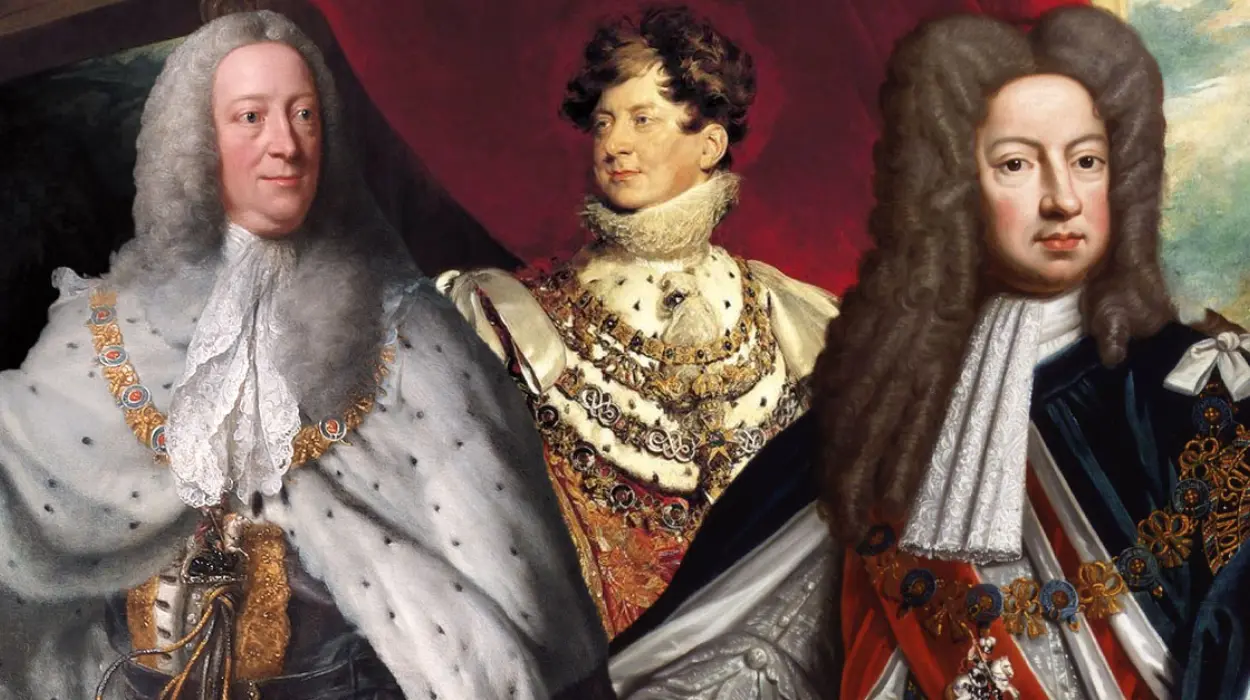
The stories behind Britain’s royal families are full of fascinating twists, crises, and political decisions that shaped the history of the nation. When we think of royal families, we think of dynasties. The House of Hanover is uniquely tied to how it gained the British crown in the early 18th century.
The rise of this German family to the British throne was not a sudden event. It had very much to do with religion, politics, and the ongoing need for stability in the kingdom.
This article examines how the House of Hanover became rulers of Britain, under which circumstances, and what importance it still has today to the monarchy of the United Kingdom.
Why the Throne Needed a New Heir
In House of the Dragon, a new heir to the Iron Throne was needed when King Viserys I’s first wife gave birth to a son, who subsequently died, leaving the king with a daughter only. Heirs create a succession crisis as Westeros had no example to follow concerning ruling queens and powerful claimants seeking the throne.

The Act of Settlement 1701
In the early 1700s, the Stuart line was reaching an end. After William III and Mary II’s reign, Queen Anne would be the next monarch. Queen Anne had many pregnancies, and none of her children survived to adulthood.
This raised a major question: Who would be the heir after Queen Anne? To deal with this, Parliament passed the Act of Settlement 1701, declaring only Protestants could inherit the English throne. This legislation excluded hundreds of Catholic claimants, many of whom were closer in blood to Anne, but the act specified to look to more distant Protestant relatives.
Sophia of Hanover as Heir
The Act of Settlement named the heir Sophia of Hanover, a granddaughter of James I of England, if Anne did not have a survivor. This act instituted the path for the royal house of Hanover, of Germany, to receive the British crown.
The House of Hanover Takes the Throne
When Anne died in 1714 without a successor, the throne passed to the son of Sophia of Hanover, George I. Sophia of Hanover died weeks earlier than Anne. George I received the crown as the first Hanover king of Great Britain.
George I was crowned in 1714. He was not a known person in Britain, he did not speak much English, and he spent most of his life in Hanover, Germany. George I’s ascension marked the beginning of a new chapter in British history. George I came to the throne peacefully but confronted the challenge of many of their subjects being diehard supporters of the Catholic Stuarts.
Challenges to Hanover’s Rule
The supporters of the Stuart family were known as Jacobites, and they struggled to bring about the restoration of the Stuart family rule. The most serious uprisings were in 1715 and 1745. Both were ultimately defeated, but the fact that they existed demonstrated that Hanoverian rule was not readily accepted initially.
George I and his successors had to work to win the confidence of Parliament and the people. As George I was concentrating on Hanoverian affairs, most of the decision-making was left to his ministers, resulting in a modern-day government (with respect to sovereignty in Parliament) where Parliament and the Prime Minister gained stature.
The Legacy of the Hanoverians
The legacy of the Hanoverian dynasty includes political stability, the development of Britain’s constitutional monarchy and the position of prime minister, and enormous expansion of the British Empire, which peaked in the Victorian period.
The end of the Hanoverian period also marks three of the largest revolutions in industrial and agricultural revolutions, cultural improvements, and scientific advancements, as well as the cultural high point of Georgian and Victorian art.
1. Shaping constitutional monarchy
Next to the development of the constitutional monarchy, one of the greatest legacies of the Hanoverians was the limitation of the monarch’s powers while increasing the power of elected representatives.
2. Stability and expansion
Despite early struggles, it did bring stability to the throne in Britain, and under the House of Hanover, the British Empire expanded globally, trade was developed, and one of the most powerful nations in the world was developed
3. The lineage of Hanoverian Monarchs
Following George I, the House of Hanover produced
- George II (1727-1760)
- George III (1760 1820)
- George IV (1820-1830)
- William IV (1830 1837)
- Queen Victoria (1837–1901)
Queen Victoria was one of the most recognized leaders of the House of Hanover, and her period of reign will always be known as the Victorian Era, a time of innovation and empire expansion.
Why the House of Hanover’s Rise Was Unique
The story of how the House of Hanover gained authority is unique because it was not a military invasion or violent overthrow but a matter of laws, religious preferences, and Parliament supporting stability.
The House of Hanover did not conquer the throne like many European dynasties. Like the British monarchy was moving toward an arrangement that would privilege law and Parliament over royal power.
The House of Hanover and the Modern Monarchy
The Hanoverians were the ruling family of Britain until 1901, when Queen Victoria passed. After her, the throne fell to her son Edward VII, who was from the House of Saxe-Coburg and Gotha because of his father. Later during the First World War, this dynasty was renamed the House of Windsor, which is the family we have today. The legacy of the Hanoverians lived on in the monarchy into the current era.
The Rise of the House of Hanover
Through the Act of Settlement, the death of Queen Anne without a successor, and the selection of a Protestant succession, the Hanoverian dynasty succeeded to the English throne. The Hanoverians originated in Germany but became central in British history as a brand of monarchy that led the monarchy through significant change.

The House of Hanover’s accession illustrates the interplay of faith, law, and politics in determining a nation’s future. From George I to Queen Victoria, the Hanoverians of England left a lasting legacy that continued to shape the modern British monarchy. The House of Hanover reminds us that royal succession is not simply about blood, but also about law, religion, and the necessity of national unity.
