

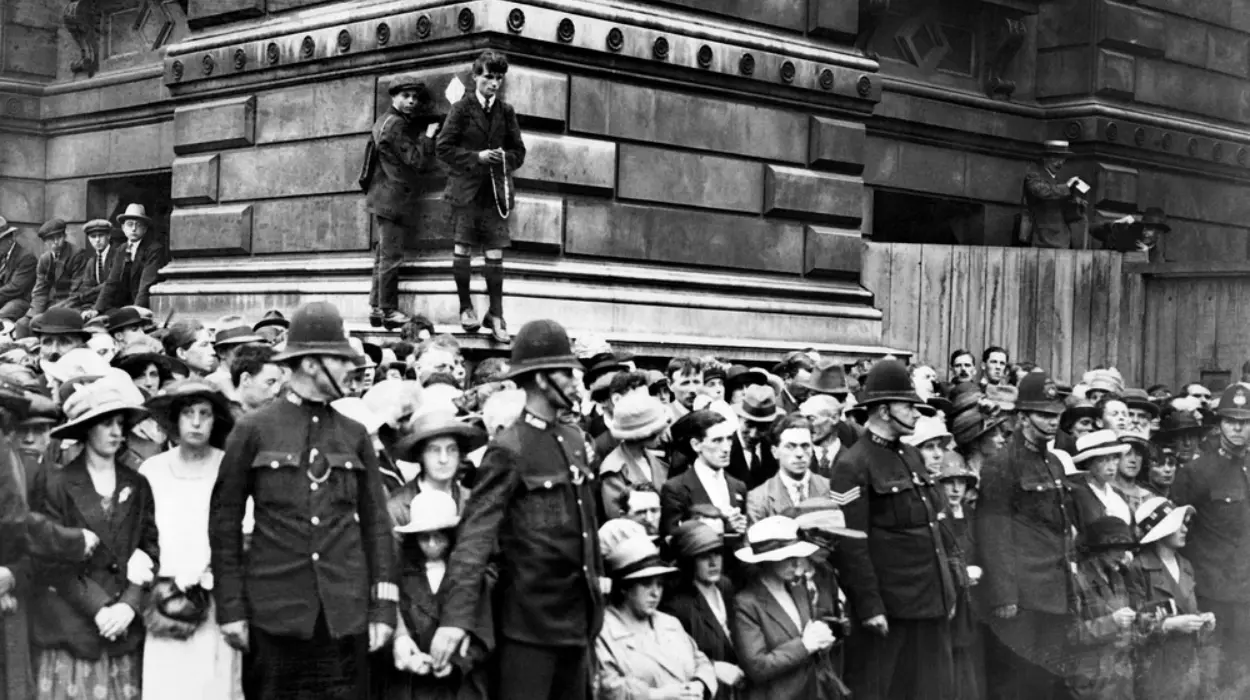
The history of Ireland turned a sharp corner in the early 20th century. After hundreds of years of British dominance, Ireland was effectively granted a new political status in 1922, called the Irish Free State. In this article, we will explore how the Irish Free State was created and how it has shaped Ireland today. It is important to understand these events; they are important to today’s Irish nation. The journey to independence was complicated and filled with difficulty, compromise, and resolve.
The Path to Independence
Ireland lived under British rule for hundreds of years. Irish culture, politics, and religion clashed with the British, and the people wished for autonomy and felt helpless to steer the ship of their own land and future. These tensions eventually grew and fueled Irish independence movements.
The Easter Rising of 1916
One of the catalysts for the Irish Free State was the Easter Rising in 1916. Irish nationalists staged an armed rebellion in the middle of Dublin. Though the Rising was crushed after only a week, it struck a chord in many of the Irish people and demonstrated that there was a strong will to shed British shackles.
The Rise of Sinn Féin
In the aftermath of the Rising, a political party known as Sinn Féin gained massive support. When the 1918 general election occurred, Sinn Féin won the majority of the Irish seats in Parliament. Rather than going to London, they established their own parliament in Dublin – the Dáil Éireann. This was a rejection of British rule.
The Irish War of Independence.
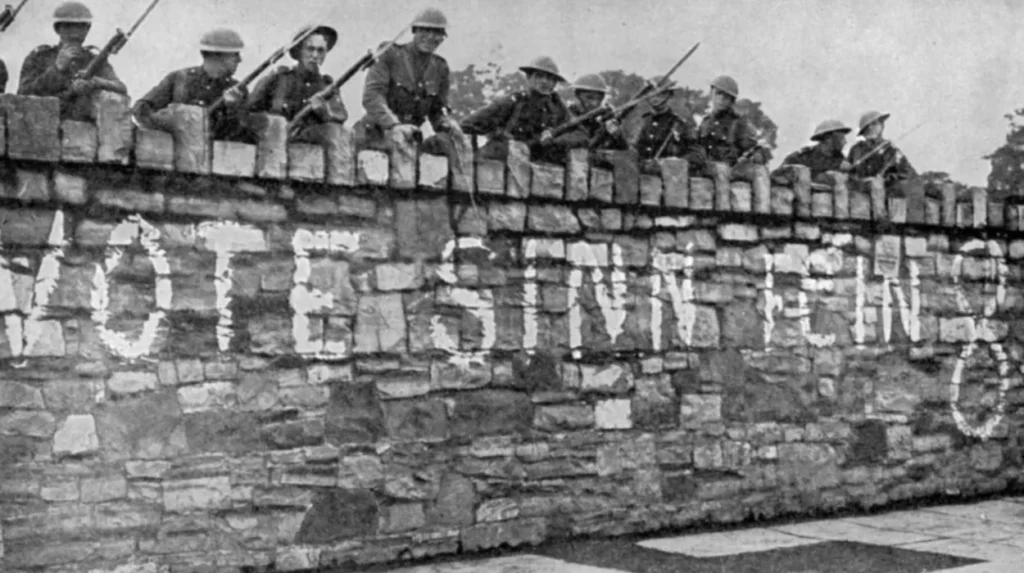
From 1919 to 1921, the Irish Republican Army (IRA) was fighting a guerrilla war against British forces, which was to become known as the Irish War of Independence. Small-scale attacks, ambushes, raids, etc., were now common. The conflict had severe losses but showed that Ireland could not be controlled easily.
British Reaction
British troops have been sent to Ireland, including Black and Tans, who quickly became associated with brutality. Violence escalated all over Ireland. This conflict and both sides suffered terribly, and it caused leaders to seek a political solution.
The Anglo-Irish Treaty of 1921
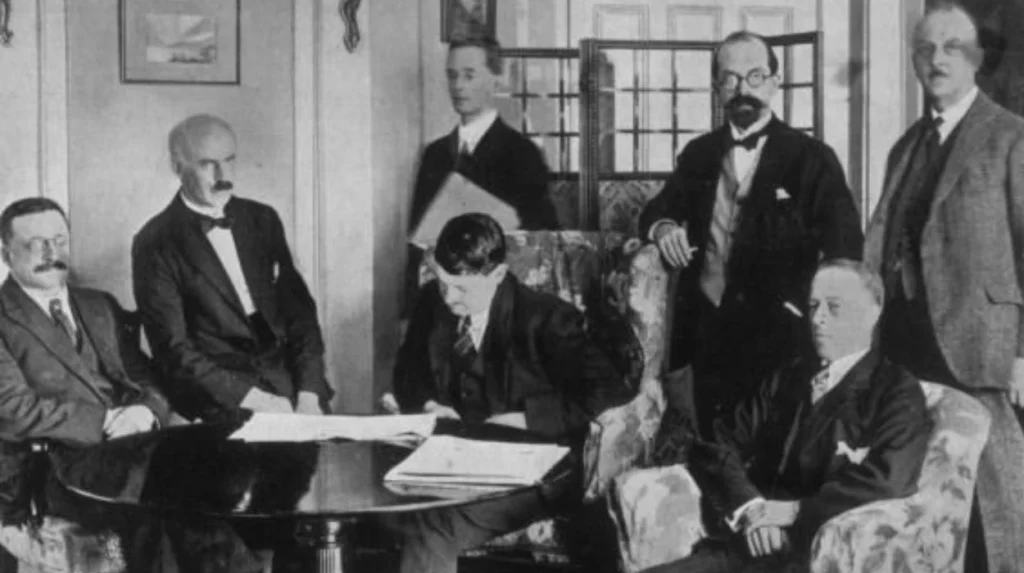
By 1921 both British and Irish sides were weary of conflict. Leaders from Sinn Féin and the British government were meeting in London to negotiate an end to the conflict; these meetings ultimately resulted in the Anglo-Irish Treaty signed in December of 1921.
Terms of the Treaty
The Anglo-Irish Treaty created the Irish Free State, which was a self-governing dominion in the British Empire, just as Canada and Australia were dominions. Ireland would have its own parliament, but the British king would remain the head of state. Members of the new government have to take an oath of loyalty to the crown.
Division over the Treaty
The treaty caused huge division in Ireland. Some viewed it as a victory and a step toward full independence. Others viewed it as a betrayal because Ireland was not fully free. This division would result in a civil war.
Irish Civil War (1922–1923)
After the treaty, Ireland was divided into two sides. The pro-treaty forces supported the Irish Free State and saw it as a practical way. The anti-treaty forces were opposed to it and unwilling to accept anything less than their notion of full independence.
Brutal conflict
The civil war was ultimately violent and devastating; former comrades in the War of Independence now found themselves fighting one another. The pro-treaty forces won the war, but there were permanent scars to carry for Irish society.
How was the Irish Free State Established?
The Irish Free State was formally established on 6 December 1922. This was the first instance of Ireland having her own government after centuries of British rule. The Free State had a parliament located in Dublin and could manage most of its own affairs.
Northern Ireland’s Situation
One of the notable aspects of the treaty was that Northern Ireland had the option of remaining part of the United Kingdom. The leaders in Northern Ireland took that option, and at that point the partition of Ireland was achieved. While the separate administrations were important, this expedient option led to a plethora of differences between the two regions. Partition created long-standing political and socio-economic dilemmas, which are still in effect today.
The Free State and the Legacy of Modern Ireland
The establishment of the Free State provided the construct for the Irish Government we see today. The Free State introduced a constitution and a parliamentary government and began the process of independence in various legal areas, providing the means for Ireland to make decisions for its people.
Economic Growth
In the initial years of the Free State, it was not without economic issues. It could pursue its own policies; Ireland was slowly able to build an independent economy. Agriculture always dominated for generations; industry expanded as well.
Cultural Revival
The establishment of an Irish Free State also worked in part to promote a revival of Irish culture. The language, literature, and traditions were encouraged to greater strength with British rule and influenced the sense of cultural pride that emerged in modern Ireland.
Steps Toward Full Independence
The Free State was not completely independent; it assuredly was a step forward. Over a period of time, Ireland was able to decrease its connections to Britain. By 1949, Ireland declared that it was a republic, and it had fully severed ties to the British crown.
The Legacy of the Irish Free State
Political
The Irish Free State was the starting point for political life in modern Ireland. The political parties that emerged out of the debates during the ratification of the treaty, especially Fianna Fáil and Fine Gael, continue to shape political life in Ireland.
Social
The Free State changed a lot of social life as well. Education, rural development, and national pride emerged as major priorities. There were bumps along the road; the Irish people had a great sense of ownership over their own destinies.
Influence on Northern Ireland
The Free State also had long-lasting effects on Northern Ireland, too. The partition caused severe division, leading to years of conflict referred to as the Troubles. These events are still an important part of Irish history.
