

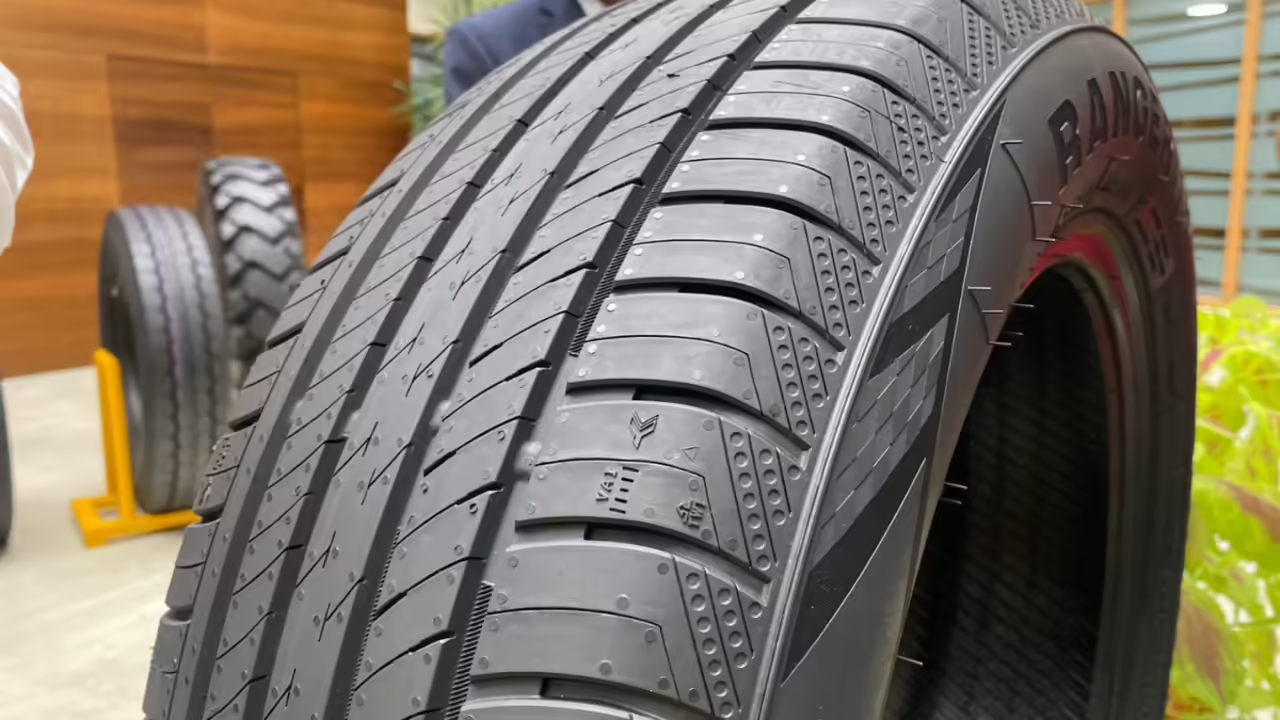
Mumbai, February 6, 2026, According to Parliament News, that The automotive supply chain in India is undergoing a period of steady transformation as manufacturers adjust to changing mobility patterns, infrastructure expansion, and evolving consumer behavior. At the center of this adjustment is the India tyre industry, which has emerged as a key barometer of broader economic activity tied to transport, logistics, and manufacturing. Recent performance across the sector reflects a combination of cyclical recovery and longer-term structural changes that are reshaping demand dynamics.
Tyres remain an essential input for personal vehicles, commercial transport, agriculture, and industrial machinery. As such, trends within the sector offer insight into how goods and people are moving across the country. Industry participants say current conditions are defined less by rapid expansion and more by disciplined growth, cost management, and operational resilience.
Vehicle Usage Patterns Support Steady Demand
Rising vehicle usage has been a central driver of tyre consumption. Increased freight movement, higher personal mobility, and growing road connectivity have all contributed to sustained replacement demand. Analysts note that the India tyre industry benefits from this pattern because replacement cycles are less volatile than new vehicle sales.
Fleet operators, in particular, have reported higher mileage accumulation, accelerating wear and tear. This has translated into consistent orders from transport companies and logistics providers, even during periods when new vehicle purchases fluctuate.
Replacement Segment Provides Stability
The replacement market continues to act as a stabilizing force. Unlike original equipment demand, which depends on automobile production volumes, replacement sales are driven by usage intensity. For the India tyre industry, this segment provides predictable cash flow and helps smooth revenue cycles.
Retailers across urban and semi-urban markets report that consumers are prioritizing maintenance and safety, opting to replace tyres rather than delay purchases. This behavior has supported volumes even when pricing pressures exist.
Raw Material Costs Shape Margin Strategies
Input costs remain a critical factor influencing profitability. Natural rubber, synthetic rubber, and crude-linked derivatives account for a substantial portion of production expenses. Recent moderation in raw material volatility has allowed companies in the India tyre industry to plan pricing strategies more effectively.
Manufacturers have adopted a cautious approach, passing on cost changes gradually rather than through abrupt price revisions. This has helped maintain demand while protecting margins.
Manufacturing Efficiency Gains Importance
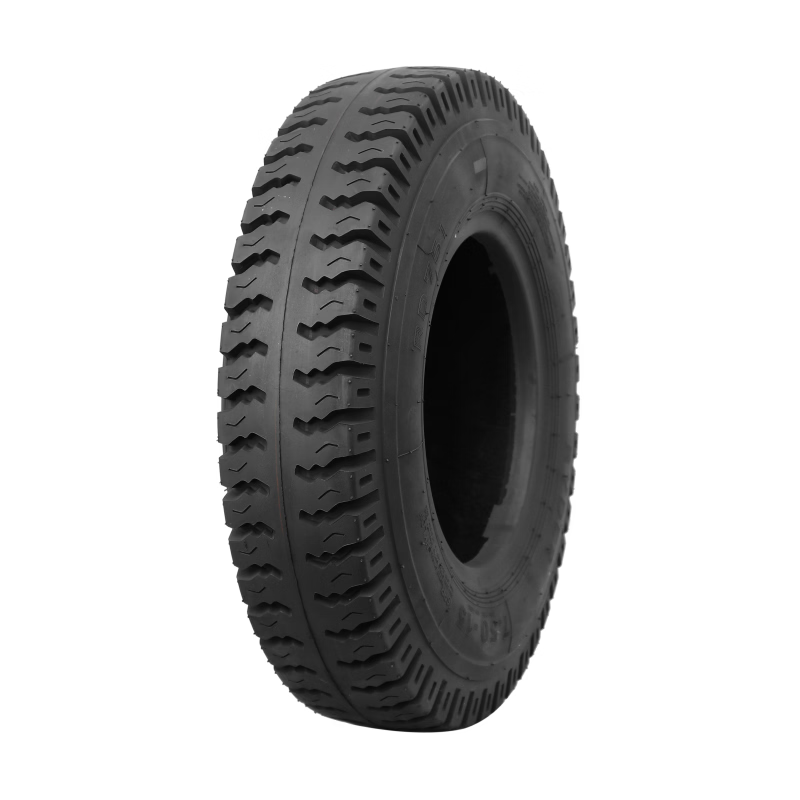
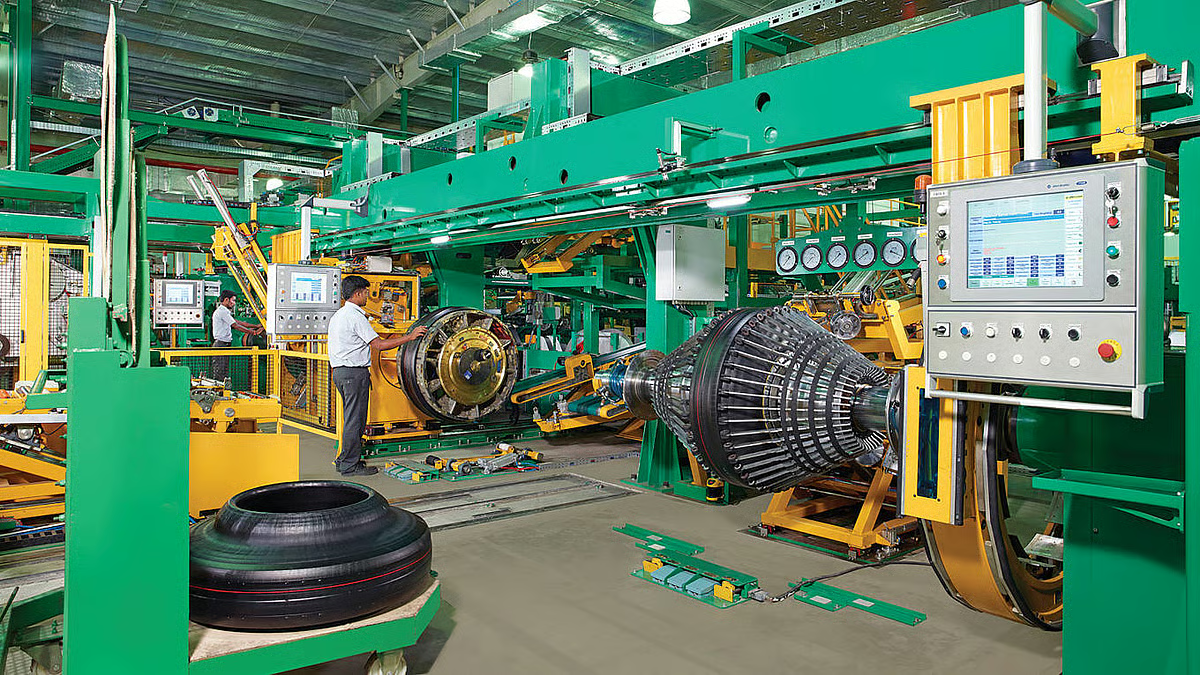
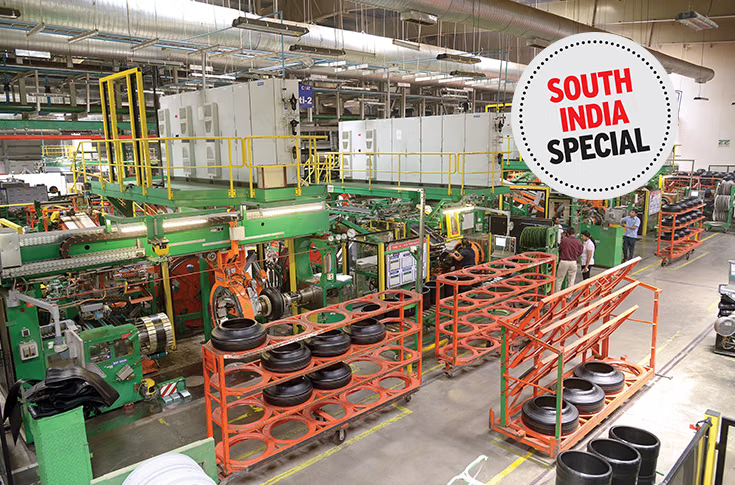
Operational efficiency has become a defining theme. Investments in automation, energy management, and process optimization are helping manufacturers reduce waste and improve yield. These efforts are particularly important for the India tyre industry, where competition is intense and margins can be sensitive to small cost changes.
Several producers have focused on upgrading existing facilities rather than aggressively expanding capacity, reflecting a preference for efficiency over scale alone.
Infrastructure Development Supports Commercial Demand
Government-led infrastructure projects have provided indirect support to tyre demand. Highway construction, urban transport upgrades, and industrial corridor development have increased the use of heavy vehicles. This trend has strengthened the commercial segment of the India tyre industry, which benefits from higher replacement frequency in trucks and buses.
Analysts say infrastructure spending creates a multiplier effect, boosting tyre demand across multiple vehicle categories.
One Industry View
“The sector’s performance today is closely tied to how efficiently companies manage costs while responding to steady, usage-driven demand,”
said a senior automotive analyst, adding that operational discipline has become as important as volume growth.
Export Markets Add Diversification
Exports have become an increasingly meaningful revenue stream. Indian manufacturers supply tyres to markets in Africa, the Middle East, and parts of Asia, where demand for cost-competitive products remains strong. This diversification has helped the India tyre industry reduce reliance on domestic cycles alone.
Export growth has also encouraged manufacturers to meet higher quality and certification standards, strengthening long-term competitiveness.
Competitive Landscape Remains Intense
Competition within the sector remains strong, with domestic producers and global brands competing across price points. Scale, distribution reach, and brand recognition play critical roles in determining market share. For the India tyre industry, maintaining competitiveness requires continuous investment in dealer networks and after-sales support.
Smaller players face pressure to differentiate through niche products or regional focus.
Technology and Product Innovation Advance
Product innovation has gained prominence as consumers seek better durability, fuel efficiency, and safety. Research into tread design, rubber compounds, and rolling resistance is shaping new offerings. These developments are positioning the India tyre industry to align with evolving vehicle technologies, including electric mobility.
Manufacturers are also exploring digital tools to enhance supply chain visibility and demand forecasting.
Regulatory and Environmental Considerations
Environmental standards and compliance requirements are becoming more stringent. Waste management, recycling, and emission controls are influencing production processes. The India tyre industry has responded by investing in sustainable practices, including higher use of recycled materials and energy-efficient manufacturing.
Regulatory compliance is increasingly viewed as a strategic necessity rather than a cost burden.
Workforce and Skill Development
As manufacturing processes become more sophisticated, skill requirements are evolving. Companies are investing in training programs to upskill workers in automation and quality control. For the India tyre industry, workforce capability is a key determinant of operational consistency and safety.
Industry bodies are also collaborating with educational institutions to build a pipeline of technical talent.
Historical Context of Sector Evolution
The tyre manufacturing sector in India has evolved alongside the country’s broader industrialization. Early growth was driven by basic transportation needs, while later phases saw expansion linked to automobile production and infrastructure development. Over time, the India tyre industry moved from import dependence toward self-sufficiency, supported by domestic raw material sourcing and manufacturing capability.
Past cycles of demand fluctuation have reinforced the importance of adaptability, shaping how companies approach capacity planning and investment today.
Financial Discipline Shapes Expansion Plans
Capital allocation decisions are increasingly conservative. Rather than pursuing aggressive expansion, firms are focusing on return on investment and balance sheet strength. This approach reflects lessons learned during previous downturns within the India tyre industry.
Analysts say disciplined capital management has improved resilience and reduced vulnerability to external shocks.
Consumer Preferences Influence Product Mix
Changing consumer expectations are influencing product portfolios. Demand for longer-lasting tyres and improved ride quality has grown, particularly in the passenger vehicle segment. These preferences are guiding design and marketing strategies across the India tyre industry.
Brand trust and after-sales service are becoming as important as price in purchasing decisions.
Logistics and Distribution Remain Critical
Efficient distribution networks are essential for reaching diverse markets. Manufacturers are investing in warehousing, digital ordering systems, and dealer integration. For the India tyre industry, logistics efficiency directly affects service levels and inventory management.
Rural penetration has also become a priority as vehicle ownership expands beyond major cities.
Outlook Balances Optimism and Caution
Looking ahead, demand is expected to remain steady rather than explosive. Infrastructure activity, replacement demand, and export growth provide support, while raw material volatility and global uncertainty remain risks. Overall, the India tyre industry appears positioned for measured growth grounded in operational discipline.
Analysts emphasize the importance of flexibility as market conditions continue to evolve.
Where Roads, Rubber, and Resilience Intersect
The tyre sector sits at the intersection of mobility, industry, and everyday economic activity. Its performance reflects how goods move, how people travel, and how efficiently manufacturing systems operate. As mobility patterns change and infrastructure expands, the sector’s ability to adapt will determine its long-term trajectory.