

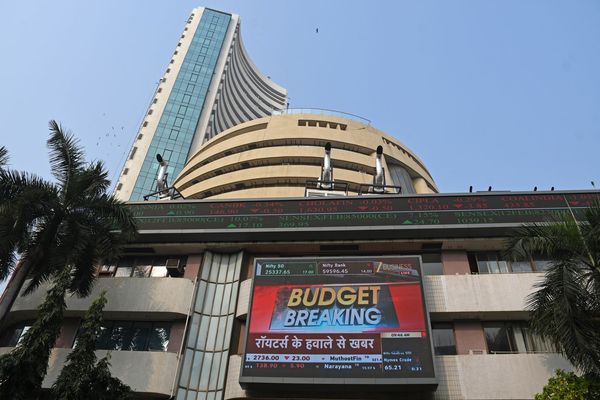
Indian stock market 2026 advances as benchmark indices rise in Mumbai India.
Technology and banking shares support broader market strength.
Investors track earnings, inflation trends, and global economic signals.
Mumbai, India – February 25, 2026 — Parliament News — The Indian stock market 2026 is demonstrating renewed strength as benchmark indices in Mumbai record sustained gains, reflecting resilient corporate earnings, stabilizing inflation, and growing investor participation across sectors.
Trading activity on Dalal Street intensified this week, with both institutional and retail investors increasing exposure to equities. Market participants point to strong performance in technology and financial stocks as key drivers of current momentum. The Indian stock market 2026 is increasingly viewed as a central pillar in emerging market investment strategies.
Benchmark Indices Show Broad Based Strength
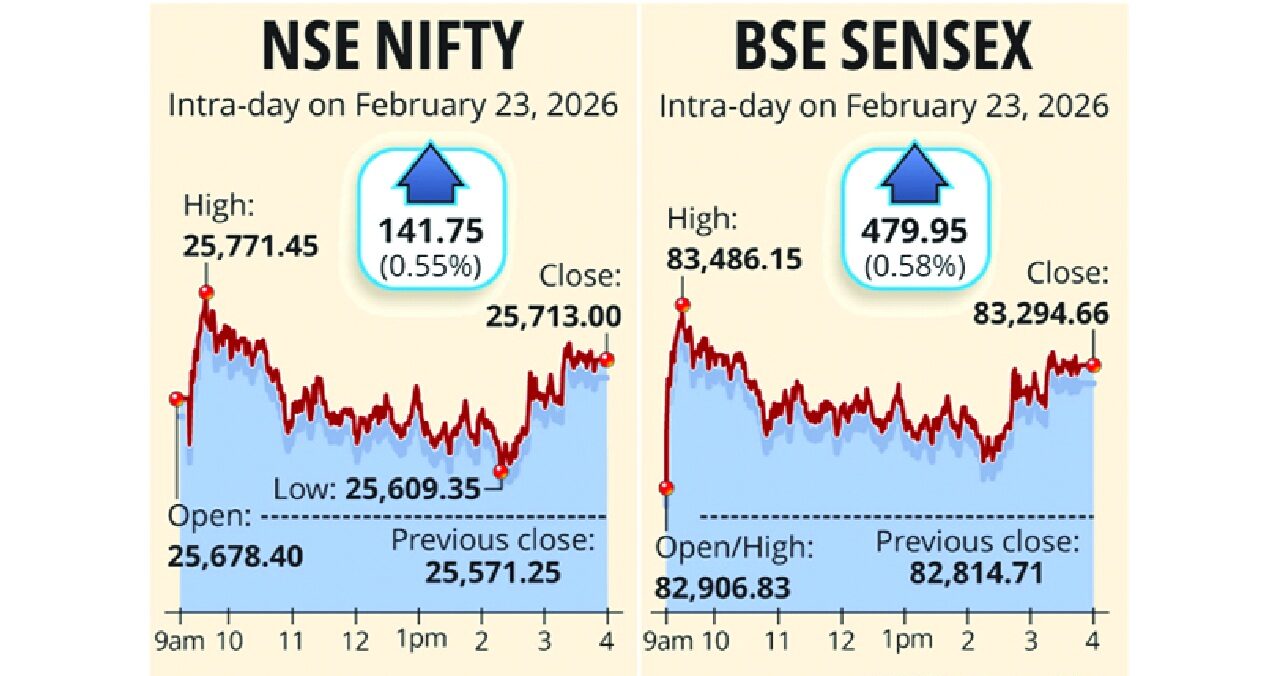
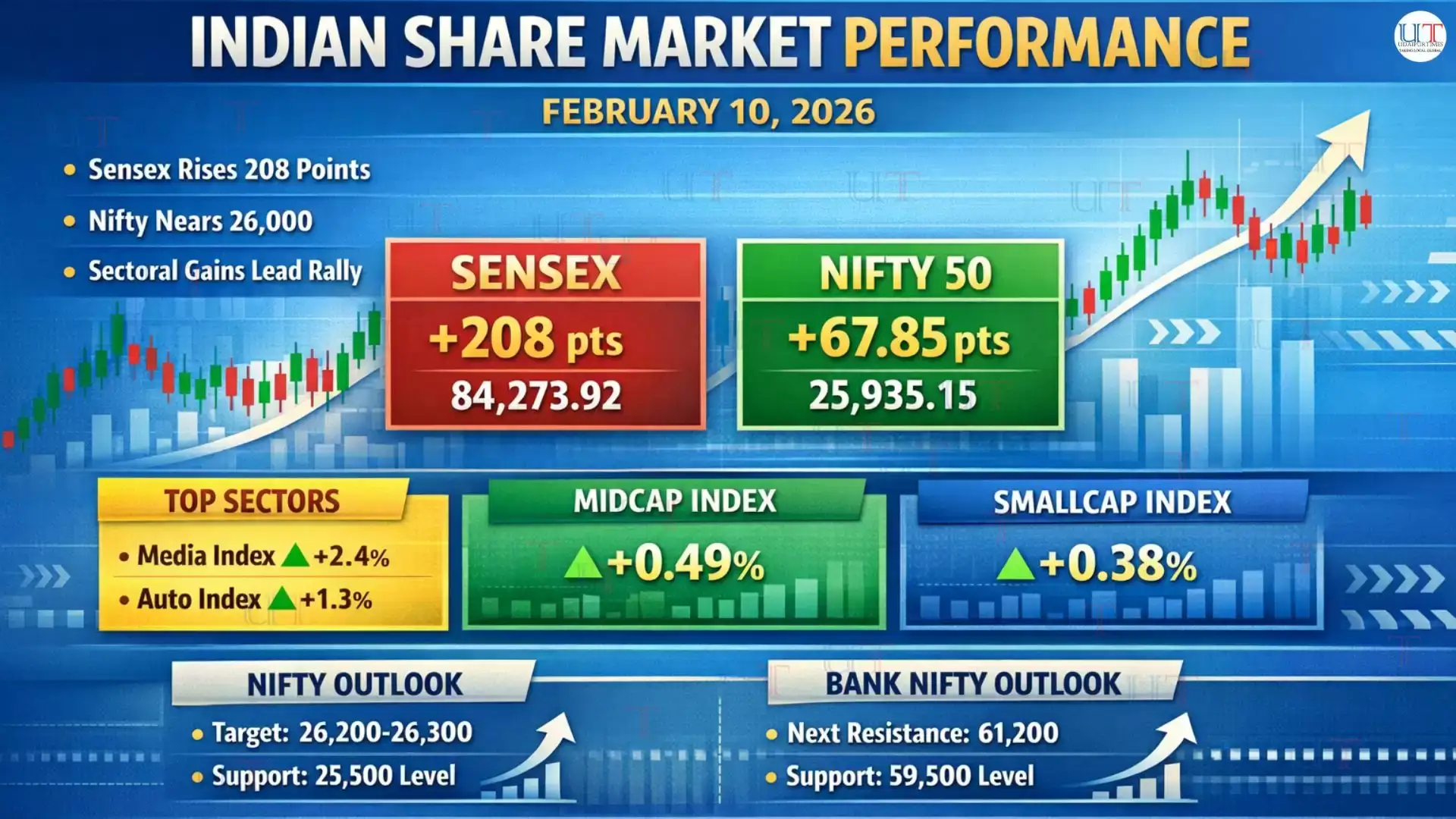
The BSE Sensex and NSE Nifty advanced steadily through the session, supported by coordinated buying across large cap and mid cap shares. Gains were not limited to a single industry, indicating broader market participation.
Analysts note that sustained advances in diversified sectors strengthen confidence in underlying fundamentals. The Indian stock market 2026 has shown resilience following short term volatility earlier in the quarter, suggesting structural stability rather than speculative movement.
A senior market analyst in Mumbai stated,
“When participation widens beyond headline stocks, it often signals that confidence is rooted in fundamentals rather than temporary sentiment.”
Technology and Digital Services Drive Momentum
Information technology firms have once again played a pivotal role in lifting sentiment. Indian companies specializing in cloud services, cybersecurity, and artificial intelligence continue to secure global contracts.
Revenue visibility remains strong for export oriented IT businesses, which benefit from stable demand in North America and Europe. As a result, the Indian stock market 2026 reflects sustained optimism in digital transformation spending worldwide.
Semiconductor design and software service providers contributed significantly to index gains, reinforcing India’s position in global technology supply chains.
Financial Institutions Anchor Stability
Banking and financial services firms added depth to the rally. Asset quality indicators show gradual improvement, while credit growth remains consistent across retail and corporate segments.
Predictable monetary policy has reduced uncertainty, supporting investor appetite for financial stocks. The Indian stock market 2026 benefits from a well regulated banking framework that enhances transparency and risk management.
Foreign institutional investors have resumed selective accumulation of high quality banking shares, adding liquidity to the market.
Macroeconomic Signals Reinforce Confidence
India’s macroeconomic indicators present a stable outlook for the remainder of the year. Inflation has moderated, supported by supply chain normalization and balanced fiscal measures.
Manufacturing activity continues to expand gradually, while infrastructure development projects generate employment and industrial demand. These elements contribute to the steady trajectory of the Indian stock market 2026.
Urban consumption patterns remain consistent, strengthening earnings prospects for consumer oriented companies.
Foreign Capital Flows and Global Attention
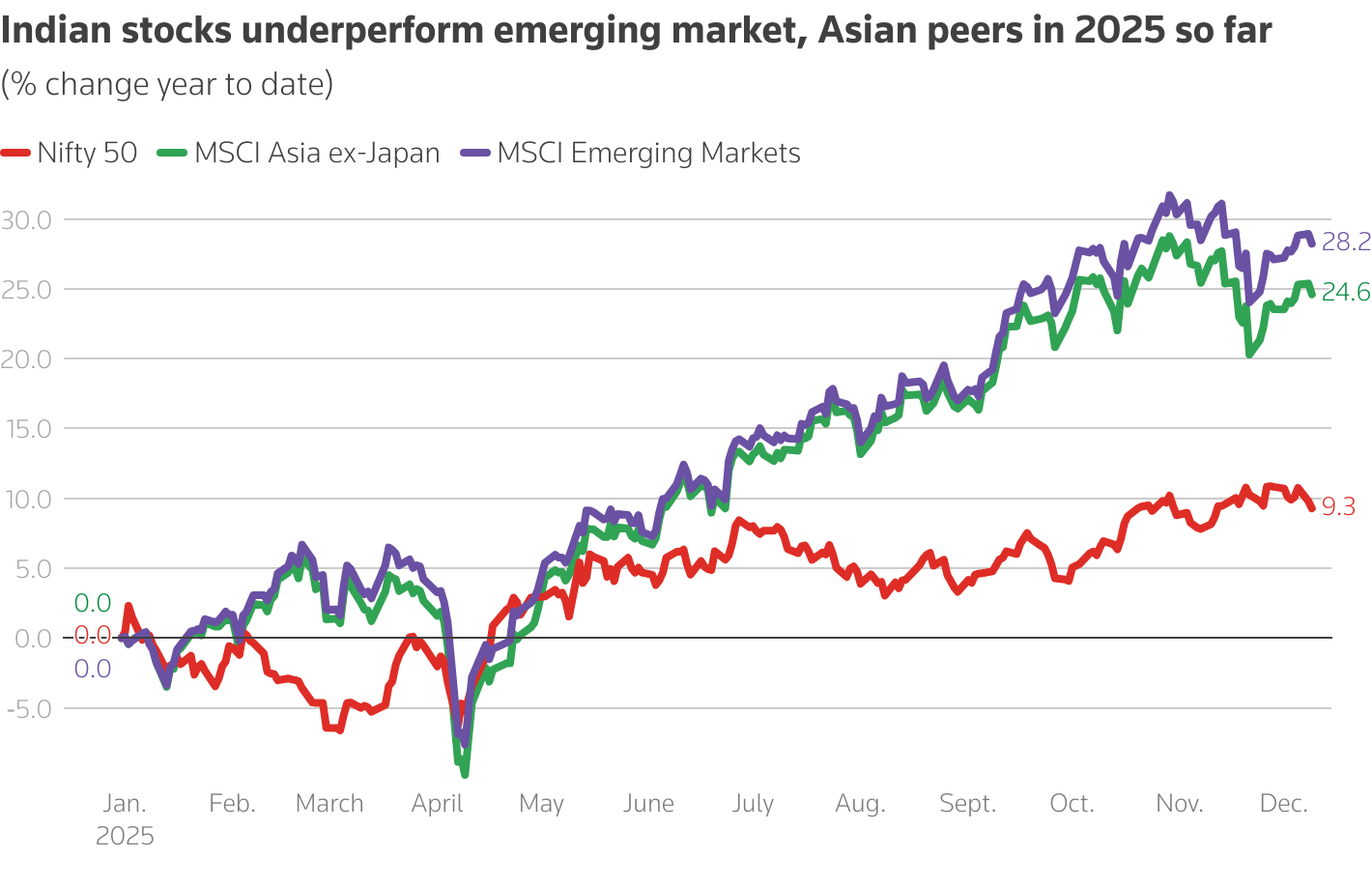
Global investors are closely monitoring Mumbai’s exchanges as part of broader emerging market strategies. Stable currency conditions reduce volatility risks, encouraging foreign participation.
As the Indian stock market 2026 advances, international funds seek exposure to sectors with strong earnings visibility and structural growth potential.
One portfolio strategist observed,
“India’s demographic advantage and technology leadership make it a compelling destination for long term capital allocation.”
Retail Investor Participation Expands
Retail investors remain active contributors to trading volumes. Digital brokerage platforms report increased engagement as more individuals participate in equity markets.
Educational initiatives and financial literacy campaigns have improved awareness of diversification strategies. The Indian stock market 2026 reflects this evolving investor base, combining institutional depth with growing retail sophistication.
Sector Diversification Beyond Technology
While technology leads, other industries have also strengthened. Consumer goods companies report stable revenue growth, supported by rising urban incomes.
Automobile manufacturers benefit from improved demand trends, and energy companies gain from infrastructure expansion. This diversification enhances resilience within the Indian stock market 2026.
Broader participation reduces vulnerability to sector specific downturns.
Historical Evolution of India’s Capital Markets
India’s equity markets have undergone significant transformation since economic liberalization in the 1990s. Reforms expanded foreign investment access and modernized regulatory frameworks.
Over time, innovation hubs and startup ecosystems strengthened corporate diversity. The Indian stock market 2026 builds upon decades of structural reform and technological advancement.
Historical performance demonstrates that regulatory clarity and investor transparency have been key pillars of sustained growth.
Risks and External Considerations
Despite positive momentum, analysts caution against complacency. Global trade tensions, commodity price volatility, and geopolitical shifts could influence short term performance.
Interest rate adjustments by major central banks remain a variable to monitor. The Indian stock market 2026, while resilient, operates within a globally interconnected financial environment.
Diversification and prudent allocation strategies remain essential safeguards.
Infrastructure and Innovation Investment
Government and private sector investment in renewable energy, digital infrastructure, and manufacturing capacity continue to shape long term prospects.
Startup ecosystems in Mumbai and Bengaluru attract venture capital focused on fintech, biotechnology, and clean technology.
Such investments reinforce the structural foundation of the Indian stock market 2026, positioning it for sustained competitiveness.
Broader Economic Implications for 2026
As equity markets expand, businesses gain improved access to capital. This environment supports mergers, acquisitions, and expansion initiatives.
Employment trends reflect steady hiring in technology and financial sectors. Consumer confidence indicators show cautious optimism, supported by stable income growth.
The Indian stock market 2026 thus serves as both a reflection and a catalyst of broader economic activity.
Outlook for the Remainder of the Year
Market participants expect moderate but steady progress if inflation remains controlled and corporate earnings maintain momentum.
Valuation assessments remain balanced relative to projected growth rates. Institutional investors continue to evaluate sector allocations carefully.
The Indian stock market 2026 stands at a strategic point where sustained expansion depends on disciplined governance and global stability.
A Defining Moment for India’s Financial Landscape
As 2026 unfolds, Mumbai remains the focal point of India’s financial ecosystem. The interplay between technology leadership, banking stability, and consumer demand defines current momentum.
The Indian stock market 2026 symbolizes the country’s economic transformation and integration into global capital markets.
While risks persist, coordinated participation across sectors suggests resilience and adaptability. Whether present gains extend into a prolonged growth cycle will depend on policy clarity, innovation investment, and global economic alignment.
For now, Mumbai’s trading floors continue to reflect cautious optimism, with investors monitoring data releases and corporate guidance as the year progresses.
India’s Equity Markets Enter a Strategic Inflection Point in 2026
The Indian stock market 2026 is approaching a decisive phase as sustained gains test long term investor confidence. Market participants in Mumbai India are closely monitoring earnings strength and macroeconomic stability.
Technology leadership continues to anchor performance, while banking and consumer sectors provide balance. Foreign capital flows remain steady, reinforcing global confidence in India’s structural growth story.
Domestic investors are increasingly active, reflecting broader financial participation across income groups. Policy clarity and inflation control will remain critical factors in maintaining upward momentum.
As the year advances, disciplined investment strategies and economic resilience will determine whether this expansion evolves into a lasting market cycle.