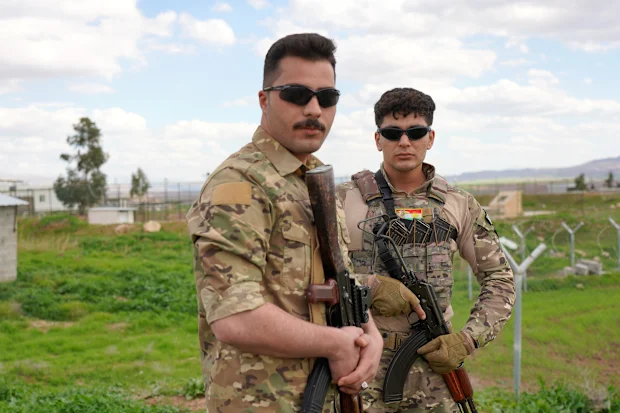
Erbil, Iraq — March 11, 2026 — Parliament Politics Magazine — The Iran opposition conflict Iraq has intensified following reports of a targeted drone strike that killed an Iranian opposition fighter in the Kurdistan region. Local security officials confirmed that the incident occurred in a mountainous border area where several Iranian Kurdish opposition groups have historically operated.
Authorities in the Kurdish regional government launched an investigation shortly after the attack. Security forces were deployed to the remote area to secure the site and collect evidence regarding the circumstances of the strike.
The incident highlights the growing tension surrounding the Iran opposition conflict Iraq, particularly in regions close to the Iran Iraq border where political rivalries and armed groups intersect.
Officials say the situation remains under investigation while regional authorities coordinate with Iraq’s federal government in Baghdad.
Border Region Remains a Strategic Flashpoint
Northern Iraq’s Kurdistan region has long been a sensitive geopolitical area due to its proximity to Iran and the presence of Kurdish opposition groups. These movements have historically opposed Iranian government policies and have occasionally maintained bases in remote mountainous areas.
Because of this presence, the Iran opposition conflict Iraq has periodically produced cross border tensions. Iranian authorities have repeatedly warned that opposition groups operating near its frontier represent a security concern.
At the same time Kurdish leaders have emphasized that their territory should not be used for attacks against neighboring countries. Balancing diplomatic relations while maintaining internal security has become one of the most difficult challenges facing regional authorities.
The latest strike has renewed international attention on the complex dynamics shaping the Iran opposition conflict Iraq.
Drone Technology Changes Regional Warfare
Military analysts say the increasing use of drones is transforming how cross border operations are carried out. Unmanned aerial systems allow surveillance and targeted strikes in remote regions that were once difficult to reach.
The latest incident connected to the Iran opposition conflict Iraq demonstrates how modern technology can be used to conduct precision operations with minimal warning.
Drones are capable of monitoring targets for extended periods before striking. This capability allows military planners to operate in mountainous terrain without deploying large numbers of ground forces.
Security experts say this shift toward drone warfare is likely to continue as technology advances and regional conflicts evolve.
Historical Comparison With Earlier Cross Border Strikes
The current developments within the Iran opposition conflict Iraq echo several earlier incidents that shaped relations between Tehran and Kurdish opposition groups.
Over the past two decades Iranian forces have launched artillery and missile strikes targeting opposition camps located in northern Iraq. These operations were often described by Iranian officials as defensive actions aimed at preventing attacks across the border.
One notable episode occurred several years ago when missiles struck facilities used by Kurdish opposition movements in the Kurdistan region. That event raised international concern and demonstrated how quickly tensions in the Iran opposition conflict Iraq can escalate.
While the tactics have changed, the underlying political tensions remain deeply rooted in decades of regional history.

Quote From Regional Security Expert
A regional security expert analyzing the situation explained the broader significance of the incident.
“The Iran opposition conflict Iraq reflects a long standing geopolitical struggle where political disputes, border security, and modern military technology all converge in a very sensitive region.”
The analyst added that drone operations have made it easier for governments to target individuals or groups across difficult terrain while limiting large scale military engagement.
Diplomatic Concerns and Regional Stability
International observers are monitoring the Iran opposition conflict Iraq closely because any escalation could affect broader regional stability. Iraq’s federal government has previously raised concerns about cross border military actions occurring within its territory.
Diplomatic efforts are likely to focus on preventing further escalation while encouraging dialogue between regional actors.
The Kurdish regional government has stated that maintaining stability remains its primary goal. Officials also emphasized that investigations are continuing to determine the exact circumstances surrounding the strike.
For communities living near the border, maintaining peace and security remains a pressing concern as tensions surrounding the Iran opposition conflict Iraq continue to unfold.
The Mountains That Hold the Region’s Tensions
The latest developments surrounding the Iran opposition conflict Iraq underline how unresolved political disputes can persist for decades in sensitive border regions.
Northern Iraq’s rugged mountains have long served as both refuge and battleground for opposition movements and military forces alike. Geography, politics, and security interests all intersect in this landscape.
As governments, opposition groups, and international observers assess the situation, the future of the Iran opposition conflict Iraq will likely remain an important issue shaping regional stability.
Conflict Snapshot Summary
The recent drone strike in Kurdistan highlights the continuing complexity of tensions between Iranian authorities and Kurdish opposition groups operating in northern Iraq. The event has intensified attention on border security, the growing use of drone warfare, and the delicate diplomatic balance maintained by Kurdish authorities.
While the investigation continues, the incident demonstrates that the Iran opposition conflict Iraq remains a critical geopolitical issue with implications for regional security and long term stability.