

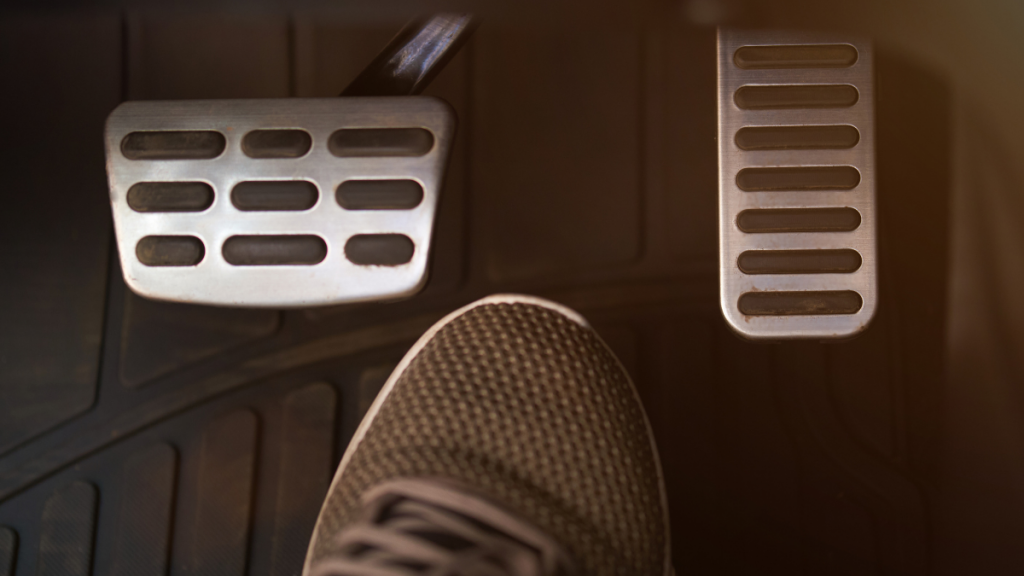
Much confusion exists as to the legality of driving barefoot in the UK. Fear of committing an act that would punish people under the law and consequently face the legal charges is very common. Yet, all these are just myths because there is nothing illegal in driving without shoes. Dual flip-flops are the same. You may drive in flip-flops, a flip-flop but this is only possible when you can manage the car safely.
When you are endangering yourself and or the trespassers, it will be unlawful. The Driving Standards Agency indicates that one should wear appropriate shoes, which can allow or to operate behind the wheel. Driving without shoes in the UK is allowed.
No particular law is available that prohibits driving without shoes. However, drivers must wear attire and footwear that does not hinder them on the control of the vehicle according to Rule 97 of the Highway Code. Barefoot driving is risky because it may slow down safe driving as it decreases braking power and control over the pedal, particularly when it is wet.
Is it illegal to drive barefoot in the UK?
It is not illegal to drive barefoot in the UK. Even though it is a popular myth but none is true. However, one must be careful while driving barefoot. You need to keep yourself from an accident. When you drive, taking care of the trespassers becomes your duty.
If you are wearing those shoes that don’t allow you to operate things behind the wheel, you will be in trouble. If you are caught driving unsafely or you cause an accident, chances are that you will end up with a major fine.
Why is driving barefoot dangerous?
The leading authorities in the UK highlight road safety in many ways. One of their biggest concerns is that it is dangerous to drive barefoot. According to Rule 97 of the Highway Code, drivers should wear clothes and clothing that help them drive safely. This law covers all the details of what you should wear and why.
When you are wearing the correct shoes will help you gain control of your car in the right way. As you try to drive barefoot feet you are likely to break this rule. Suppose your feet are wet as you have come out of the beach. When you drive barefoot, it will likely cause an accident.
If this isn’t enough, the Driver and Vehicle Standards Agency has also suggested something important. You must wear sensible shoes as you drive towards your destination. They also recommend that driving barefoot is simply not worth it. If you are not able to control the brakes, it will be a huge risk for the people involved.
New driving law changes in the UK
The following are some of the projected changes in the driving law in 2025 that will render the road safer, more sustainable, and overall a better experience in the steering wheel for everybody. And the new regulations will impact you, regardless of the size of the freight vehicle or an electric car, or a gas-powered car. This is a brief rundown of the critical upgrades you need to keep you a step ahead this year.
Electric Cars (EV): New Fees and Conditions
As of April 1, 2025, persons owning electric vehicles will no longer be exempt from the Vehicle Excise Duty (road tax). As early as 2025, EV owners will be forced to pay an annual fine of 10£; the cost will grow to 195£ starting in 2026.
- The green vehicle incentive will stop on Christmas Day 2025, when electric vehicles must also pay the London Congestion Charge.
- New government regulations should ensure that EV charging companies are more compliant, with fines of up to 10 thousand pounds imposed on non-compliant businesses; the regulations will ensure that EV charging stations are reliable, conveniently located, and simple to use.
- Automated emergency braking and lane-keeping will be fitted as standard to all newly produced automobiles.
Updates on fuel duty and road tax
Beginning in April 2025, all vehicles will pay higher road taxes, with older, high-emission vehicles paying more. Car taxes for vehicles that emit more than 255 grams of CO2 per kilometer will quadruple, from £2,745 to £5,490.
To help lower petrol prices, the government has maintained a temporary 5p per liter reduction in fuel duty, keeping it frozen at 52.95 pence per litre until at least March 2026. The new Fuel Finder program, which will make it easier for drivers to find cheaper fuel, requires gas stations to exchange real-time fuel prices by the end of 2025.
License and driving test modifications
To cut down on wait times, learner drivers will need to give at least 10 full working days’ notice to modify or cancel their driving test starting on April 8, 2025, without forfeiting the test price. As part of a larger safety plan anticipated this fall, new regulations may soon mandate that drivers over 70 complete mandatory eye exams to continue driving.
In addition to adding penalty points for failing to wear a seatbelt, the government is thinking about decreasing the alcohol consumption limit in England and Wales to match Scotland’s higher levels.
Expert drivers and Heavy Goods Vehicles (HGV)
Every HGV operating in Greater London will require a safety permit attesting to the driver’s ability to notice bikes and pedestrians. The Smart Tachograph 2 device, which precisely records driving durations and border crossings, must be fitted on new trucks, buses, and HGVs weighing more than 2.5 tonnes.
The regulations governing the Driver Certificate of Professional Competence (Driver CPC) are being revised to provide returning professional drivers with more options beyond the customary 35 hours of training.
Safety and regional initiatives
Scotland plans to eliminate casualties by 2025, whereby imposing a safer low speed of 20 mph on appropriate routes in built-up areas. There has been some discussion of putting in place tiered licensing of novice road users, but no current plans are in place to implement this system.
It can be viewed in these shifts, as cleaner cars and stricter laws against high-risk drivers will be promoted to this end. Becoming educated on the laws and staying in compliance will help keep you out of trouble and will keep the roads safer all around.
What are the consequences of driving barefoot?
If you are driving barefoot, it is unlikely that anyone will stop you. After all, it is difficult for anyone to know what you are wearing. However, if the police notice you losing control of the brakes, they will stop right away. Similarly, if you are caught in an accident, everyone will notice you instantly. When you are investigated for driving barefoot, it will cause more trouble. For this, you can be charged and will have to pay heavy fines.
There is no doubt that careless driving has bad consequences. You need to follow a certain standard to become a competent driver. If you are not driving properly and the reason is bare feet, you will be charged a £100 on-the-spot fine. Moreover, there will be three points on your driving license that explain the same situation. In any situation, if your case goes to court, you will have to pay a hefty £5,000 fine. It will give you nine points on your license. If things get worse, it can lead to a potential driving ban.
Are there specific footwear recommendations for safer driving in the UK?
There is no law in the UK prohibiting driving, communally, barefoot, or using specific oper or type of footwear. Still, the Road Traffic Act of 1988 stipulates that the driver must be capable of having all their vehicles under control. Under the UK Highway Code, one should not wear clothes or footwear that impairs the ability to use the controls of the vehicle. This means that although driving barefoot may be legal, it may end up being difficult when you cannot drive safely.
The shoes are instrumental in retaining your car under control. The thickest and strongest soles possible are recommended (up to 10 mm), as they provide the best sensation of the pedal but do not compromise traction.
The comfortable shoes fit properly and are flexible at the ankle, a factor in trainers, loafers, and driving control-oriented footwear. Of course, there exist types of shoes that may not be used when driving. Woolen shoes, flip-flops, sandals, and high-heeled shoes and shoes can make it difficult to control the pedals, cause the wheels to skid, or get snagged under pedals, all of which can be a dangerous situation.
Old shoes or even driving with bare feet or in flip-flops can have less effect on the braking, especially when feet are wet, and the brakes will be more susceptible to causing an accident.
Reckless/dangerous driving may also result in fines and license points, as the choice to wear such shoes can actually make driving unsafe or be a contributing factor to the accident. In conclusion, one of the steps to be undertaken is to find the appropriate shoes to be worn to secure safety to avoid loss of control and face legal implications of the loss of control of the vehicle. To drive safely and gain a sense of safety and stability on UK roads, it is essential to wear suitable shoes that provide good grip, a sense of the right pedal, and free movement.
Can you drive barefoot in the UK?
Some people believe that it is easy to drive while wearing flip-flops. You are not allowed to drive barefoot or while wearing flip-flops. Flip-flops will get you into an unfortunate accident or situation. It becomes difficult to control the components of the car. When you lift your feet on and off the pedal, the sole will lift to a much higher level. As you bend downwards, you can get caught under the pedal. This can be very dangerous, and you will drive carelessly. It may result in an accident as you will be able to stop the car at the right time.
What kind of shoes must you wear while driving?
As we have already discussed that it is difficult to drive in bare feet, in socks, or in flip-flops. In the same way, high heels aren’t a suitable choice either. Now the question is, what is ideal for driving? According to RAC, the best shoes for driving must have a dependable sole. It shouldn’t be very thick or thick either.