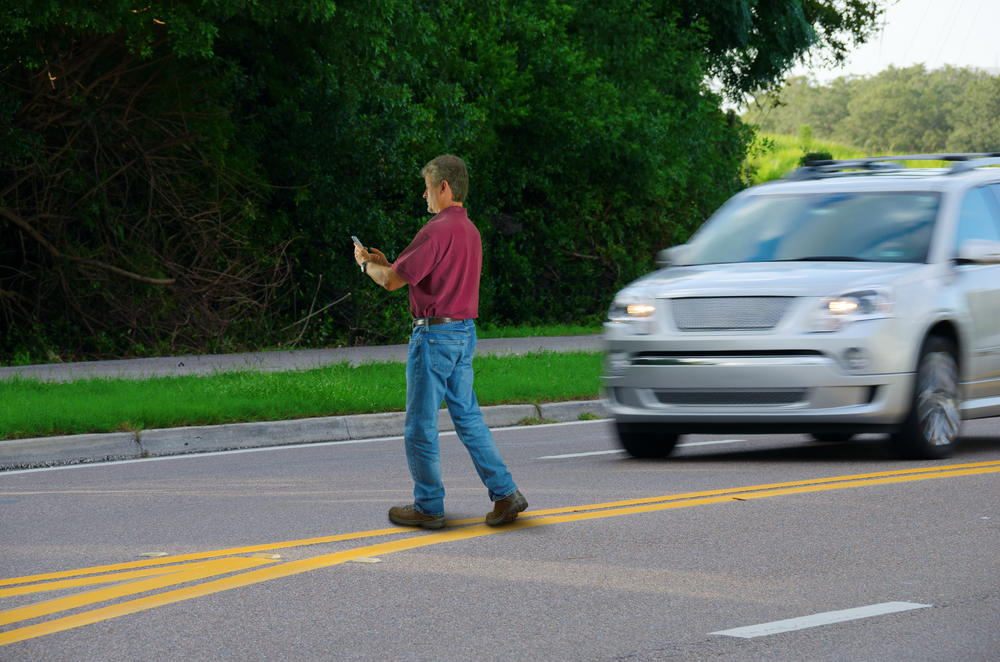
Many countries across the globe are imposing fines for ‘jaywalking,’ and the UK is no exception. These rules are imposed for the safety of the public so they don’t use the designated crossing. It is necessary to know more about jaywalking, as many Britons believe that it is not illegal. They think they can cross the road whenever or wherever they like. However, all these factors can lead to accidents and can become fatal. The concept of making jaywalking illegal was first introduced many years ago. The term “jaywalking” was introduced in the US. It refers to all those people who cross various roads without paying attention to their surroundings. This is why they generally get in the way of other shoppers as well.
Is jaywalking illegal in the UK?
Unlike, for example, the US, the UK has no legal provision against jaywalking. In Great Britain, pedestrian access is only prohibited on motorways and roads with “No Pedestrians” (no crossings permitted) signs. The UK Highway Code provides safety recommendations and hints regarding road crossing, but they are not legally binding. Crossing a road official crossing, literally the situation when a person violates the law in this way, is not outlawed per se, although strict rules require pedestrians to take precautions and cross the street reasonably.
Jaywalking is opposed for many reasons because it is illegal in the UK. If you don’t follow the rules, it can lead to heavy fines and a lot of trouble. Usually, the government enforces those rules that are for the benefit and safety of people. Many people risk their lives in front of ongoing traffic to cross the road. You will find many pedestrians walking on the roads. However, the vehicle codes state that the pedestrian must not cross the road where they see a ‘don’t walk’ sign.
If you notice an upraised hand symbol, it must not cross between the intersections. It is not only the UK that is imposing fines on jaywalking, as the USA and China are doing the same. These fines are anywhere between £115 and £150. It prevents pedestrians from putting their lives in danger in front of heavy traffic. If any area reports multiple jaywalking issues, it will be under threat of heavy fines.
History of Jaywalking
You will be surprised to know that over 40,000 citizens signed a petition to limit the speed of cars. However, this seems to be a problem all over the world. Many cars on the roads don’t limit their speed, and it becomes a common reason for accidents. Sometimes pedestrians are not at fault, but they get into trouble. Unfortunately, bad press and opposition hold pedestrians responsible for multiple accidents. Even the local scout groups keep handing out jaywalking flyers to the public. If anyone is seen walking carelessly, it can lead to a lot of trouble. Many towns and cities have little or no power to change the rules enforced on pedestrians. Jaywalking is considered illegal due to the rules and regulations set in the 1930s. Some people may disagree with these laws, but in the end, they have to follow them. The UK is still among those countries that are not very strict when it comes to jaywalking. They may not consider it a very big offense. At the same time, the number of pedestrian accidents and injuries is comparatively lower than in the USA. In some cities, people don’t care where or when to cross the roads. The reason may be that the government is still very serious about imposing stricter rules in the country.
Can you jaywalk in the UK?
Illegal use of roads occurs when a person crosses a road other than at a designated crossing point in England, Wales, or Scotland (Great Britain) (the motorway and roads labelled with signs saying no pedestrians are barred to pedestrians). Although the Highway Code will give us suggestions on safety advice for crossing a roadway, this is only a recommendation and cannot be taken to be legal. Traffic participants are expected to be alert when using the road as pedestrians.
Does the UK have jaywalking laws?
In the UK, anti-jaywalking laws are absent. However, except on freeways and on streets in which pedestrians are not permitted to cross, one may cross the street outside the official crossings. Even though the Highway Code provides safety regulations to pedestrians, the rules given in the Highway Code are just recommendations that do not make their enforcement mandatory. People on foot must be careful and pass through streets in a safe way; breaking the law is not punishable by crossing streets in case they are not allowed. Nonetheless, jaywalking is punishable by law in Northern Ireland due to the Road Traffic (Northern Ireland) Order 1995; when a careless crossing of a pedestrian endangers themselves or other people, they could be punished for this.
Is it illegal to jaywalk in the UK?
In Great Britain, jaywalking is not a crime. Pedestrians are not supposed to be on motorways or slip roads, except in an emergency. The road code was also never specific in giving recommendations for safe crossing, but it also did not give legal repercussions for crossing outside the designated areas. In Northern Ireland, jaywalking is illegal according to the Road Traffic (Northern Ireland) Order 1995 and may be fined. This came at a cost, as even though jaywalking is not illegal in the United Kingdom, the people of Northern Ireland have made jaywalking illegal and are punished.
Traffic in the UK
Many UK citizens don’t consider crossing the road a very big issue. They think it is quite natural to keep themselves safe. People living in large cities will possibly favor walking or cycling as a convenient mode of transport. It helps them avoid traffic congestion, and they can reach their preferred location safely and quickly. However, many other city dwellers opt to dispose of their cars altogether. As the Metro and other transportation facilities are so strong, pedestrians need not venture into a vehicle. Whether it is the London Underground or the Subway, it happens to be a good choice for all of them. This is a good way to save money on car taxes and fuel. They can maintain the quality of the car without putting in much effort.
When it comes to motorists, they are scrapping the use of cars for many reasons. Since the number of vehicles on the street is reducing, pedestrians have the freedom to find their way out and across the road without any form of fear. Traffic jams experienced in different cities, such as London, have resulted in individuals deciding to avoid using their vehicles daily. This causes controversy among individuals on whether jaywalking should be prohibited or not.
Is jaywalking a thing in the UK?
In the UK, neither the term “jaywalking” itself nor the term has any legal consideration. In the United Kingdom, it is acceptable to cross the road at any point, irrespective of crossings, provided that it is done intelligently and with safety in mind, though informally the term came to be used in the United States to refer to illegal pedestrian crossings. In Northern Ireland, by contrast, jaywalking is an offense that is punishable by fines, and these laws do not apply to the UK. As it is all about personal responsibility and safety, jaywalking is not exactly a thing in the majority of the UK, even though the act of not crossing at crossings takes place and is legal.
Can you be arrested for jaywalking in the UK?
The act of jaywalking is not a crime in the United Kingdom (England, Wales, and Scotland); hence, one cannot be arrested for jaywalking. Making highways safe is seen as a personal responsibility, and no laws illegalize doing so unless a specifically constructed crossing is involved, on motorways and at signs stating “No Pedestrians.” The UK Highway Code does make safety recommendations, but they are not legally enforceable, and jaywalking arrests are not an enforcement measure.
Is jaywalking an offense in the UK?
There are varied rules about signals at various pedestrian crossings, such as pelican, puffin, toucan, and horse crossings, being used in varying circumstances of walkers and automobiles. A case in point is a pelican crossing, whereby once a pedestrian is passing and the amber light is flashing, cars must yield to the pedestrian, and once the red light signals, cars must halt. Although there is no law against crossing the road at a place other than a crossing point, there are always specific instructions telling people to cross at a designated crossing point when it is available and to take care when using the Highway Code safety rules. Although one must admit that crossings that are not mentioned in the spots are lawful under the assumption that they are conducted mistake-free in terms of crossing the street, the rules are more concerned about safety and minimization of risk on the part of pedestrians.
Jaywalking penalties in the UK
Jaywalking is the only exception to criminal law in the United Kingdom, where Northern Ireland is the sole jurisdiction (it is covered by a criminal statute, the Road Traffic (Northern Ireland) Order 1995). Rules on jaywalking are policed by the Police Service of Northern Ireland (PSNI), who typically employ the issue of a fixed penalty notice to enforce data on an offense bearing the code 5008001. The punishment ordinarily comes in the form of fines, through prosecution referrals, or fixed penalty notices.
From 2018 to 2022, the PSNI estimated that 34 to 56 cases of jaywalking had been reported each year, both during the fines and prosecution proceedings. The strict legal basis is that when a pedestrian crosses a road irresponsibly in a manner that puts his/her life or the lives of other people at risk, he/she is on the wrong side of the law. And despite the sources not having information on specific amounts of the fines for jaywalking in Northern Ireland, the usual amounts of the fixed penalties in the region for matters about driving and road offenses are £30 to £60 or higher, depending on the severity of the offense. Jaywalking punishments in the UK are almost entirely administered through either fines or admonitions; arrests are very rare indeed.