

Even so, the UK has many characteristics of a pluralist democracy, such as the division of power from Westminster. The presence of many political parties in the House of Commons, the capacity of pressure groups to shape policy, and the success of their campaigns also affect plural democracy. But in reality, the current Conservative administration and the structure of the UK political system undermine a lot of this. As a result, the UK is not functioning as a true pluralist democracy these days. Decentralizing the powers all across a variety of regions, as opposed to having the power concentrated at Westminster, is also an essential aspect of pluralist democracy. A good example of this is the UK, where the devolved government of Scotland, Wales, and Northern Ireland have their own elected regional governments which control all the local transport, health, and education. This enables them to make laws and policies that are suitable in their societies.
Introduction to pluralist democracy
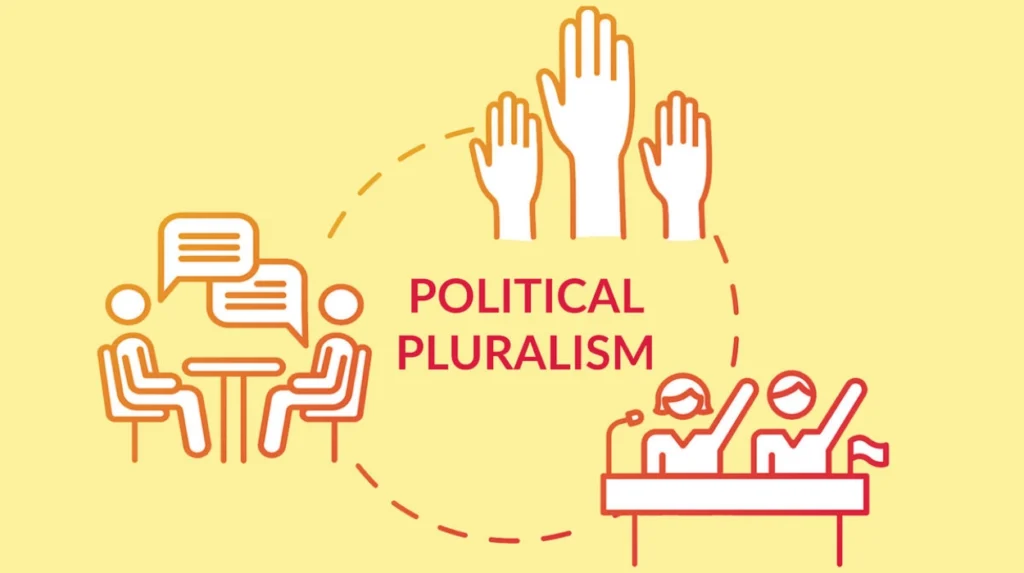
A theory of political power distribution known as pluralism maintains that rather than being centralized in the hands of a ruling class or elite, power is widely and equally distributed across society. Pluralists, in particular, have a favorable opinion of pressure-group politics because they think that these groups enhance the democratic process and encourage constructive disagreement and discussion.
The ability of organized organizations and interests to express popular demands and guarantee government response is the foundation of pluralist democracy. The following are prerequisites for a pluralist democracy:
- Power is widely distributed among rival organizations, and there aren’t any elite groups in particular.
- Because leaders are answerable to members, groups are internally democratic.
- The government is “neutral” in that it is open to hearing from any interest or group.
Which groups contribute to plurist democracy?
The pressure groups assist in promoting political diversity by pushing politicians to consider a wide array of perspectives across various groups in society, although these perspectives may not go hand in hand and cause conflicts between groups. As an illustration, the objectives of the pro-choice organization Planned Parenthood are directly conflicting with those of the anti-abortion American United to Life. Planned Parenthood is a famous health provider and political interest group, yet it is not a pressure group. According to people who support pluralism, such arguments are healthy in a democracy in the sense that they allow the people and the government to listen to various opinions, and this way, the decision they reach based on the debate is informed.
They argue that, in contrast to political party participation, joining pressure organizations provides more opportunities for political activity. Pressure organizations are responsible for notable social improvements in the United States, such as the legalization of abortion and racial integration.
On the other hand, proponents of elitist theory critique the impact of American pressure groups. Wealthy pressure groups have more influence than less well-funded ones because they spend a lot of money on elections, legal lawsuits, professional lobbyists, and advertising. As a result, a wealthy elite made up of government officials and leaders of pressure groups continues to control the country. A majority of Americans have supported improvements, but well-funded organizations have blocked them. The idea of prosperous firms, according to the progressives, is that they use their wealth to buy off the legislators so that they are able to establish a system that places the corporate interests first before other measures that would decrease inequality take place.
Key features of pluralist democracy
Here are some key features of plurist democracy:
- People create effective electoral alliances to attain positions of formal political authority in pluralist democracies.
- Political leaders and subleaders of the various community organizations engage in a process of negotiation to establish these alliances.
- Forming electoral coalitions is essential because it enables the leaders of the organization to express the needs and opinions of their members.
- According to Canadian pluralist Hamed Kazemzadeh, pluralist democracy allows a variety of groups, rather than the entire populace, to lead, control, and rule countries as an ethic of respect for difference.
- Since they permit freedom of association, modern democracies are by definition pluralist; nonetheless, pluralism can exist as part of democracy.
Historical development of the UK’s democratic system
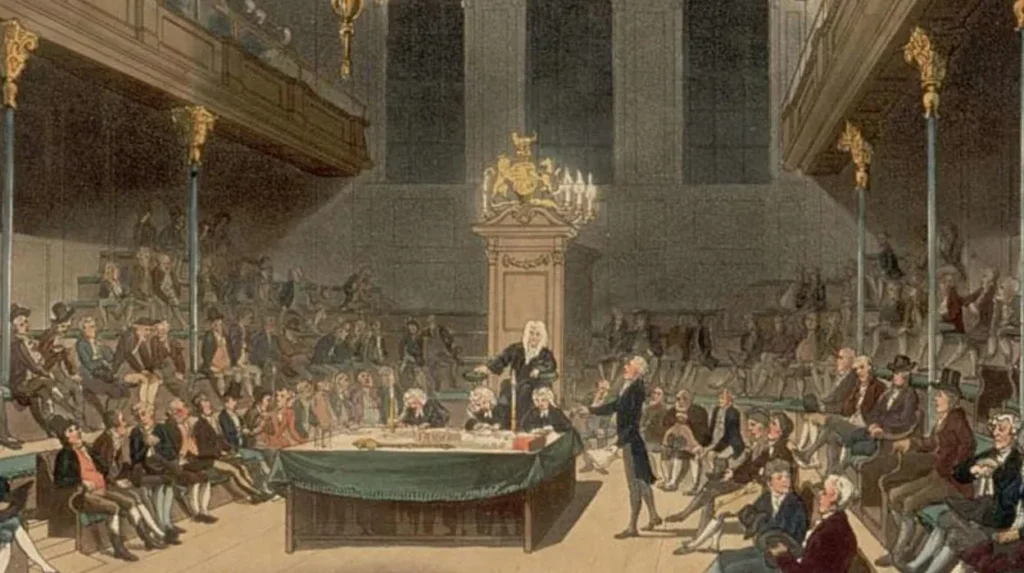
The English Parliament was the assembly that had the biggest impact on the evolution of representative government among those established in Europe throughout the Middle Ages. Parliament developed from councils summoned by kings to settle disputes and carry out judicial duties; it was less a deliberate creation than an accidental byproduct of opportunistic inventions. Over time, Parliament started to address significant state issues, most notably the collection of funds required to fund the monarch’s policies and choices. It progressively transformed into a legislative body as its judicial duties were progressively transferred to courts.
However, other significant features had not yet been determined. Following the Middle Ages, the monarchy dominated English politics for centuries. The monarchy was dissolved, and a republic, the Commonwealth, was founded (1649) during the English Civil Wars, which were headed by radical Puritans on one side. However, the monarchy was reinstated in 1660. Significant authorities had transferred to Parliament by 1800, most notably those of the prime minister’s appointment and term. The formation of political factions in Parliament in the early 18th century had a significant impact on this evolution.
Role of interest groups and lobbying in the UK
Lobbying is generally considered healthy for democracy since it can demonstrate the intensity and extent of approval or disapproval of a proposal, prevent unpredictable consequences, offer well-informed policies, and present a range of (possibly overlooked) opinions to policy-makers. And yet it may be problematic. It may, say, allow interested persons with special access to lawmakers to pursue their selfish interests at the cost of the common good. Consequently, others feel that lobbying misleads the citizens regarding the democratic results.
The Seven Principles of Public Life, or the Nolan Principles that are set by the Committee on Standards in Public Life, include selflessness, integrity, objectivity, accountability, openness, honesty, and leadership. These values are supposed to be maintained by those in public office.
Members of parliament are provided with guidelines in the House of Commons Code of Conduct. The law does not allow remuneration of MPs due to advocacy actions in the House, speaking, voting, and addressing ministers. MPs are also not allowed to try to provide money to those they have benefited from or anticipate receiving money from. These regulations do not, however, preclude an MP from participating in processes of issues in which they have a financial stake. Rules of registration and declaration of interests are applicable in these situations.
Challenges to pluralism in UK politics
The hallmark of modern democratic countries is pluralism. One could argue that pluralism is a necessary and enriching element of a true liberal democracy. However, pluralism is frequently seen as a danger to democratic, liberal, and egalitarian norms, whether this is true or not. Different ideas, such as tolerance and acknowledgment, have been employed in modern political thought to address pluralism’s problems.
Because of globalization, we are now closer. We are living in a single global community for the first time in the twenty-first century. Nonetheless, it is a community comprising many threads, which have to be carefully woven into a single thread. Diversity can be considered a strength in societies to make them healthier, more stable, and successful. But there is a reverse side when we can not cope with the conflicting demands of diversity, which is always likely to come with it. The lack of institutions and policies needed to regulate diversity can bring about conflict and bloodshed, because whole communities can feel marginalized and oppressed due to this situation. Pluralism is therefore a major issue for the twenty-first century.
The influence of media and civil society in the UK
For both good and bad causes, the UK media is arguably one of the most studied media systems globally. The UK’s media provides a rich source for media academics, from providing an example for excellent “public service broadcasting” to the phone hacking incident that brought up concerns about privacy, corporate malfeasance, and professional standards. Government, laws, and media policy, with an emphasis on the regulatory landscape and the process of formulating media policy.
Financing and consumption of journalism, with an emphasis on shifting news consumption patterns and the part played by a changing array of financing sources.
Technology, media, and government, with an emphasis on how news publishers are attempting to change their ties with the major internet platforms and how the government intends to regulate them. The report covers the following three areas of regulation: online, press, and broadcasting. While the press and the internet have been mainly uncontrolled, broadcasting has historically been the most strictly regulated medium in the UK and most other nations. Throughout the 2010s, Parliament has become more interested in regulating the internet sphere than it was in regulating the press, which was its primary emphasis following the Leveson Inquiry and the phone hacking scandal. The press has now effectively stopped the movement toward more comprehensive and independent regulation of its output after a protracted war of attrition.
In the meantime, the UK has virtually no regulations on the internet, and Parliament has generally been reluctant to understand the nature of the online world, much less give significant thought to how or whether it should be governed. The press, ironically, is one of the main voices advocating for strict regulation of the large internet companies in order to stop a growing list of “online harms” that the platforms are thought to be responsible for. This discussion is now in full swing.
Criticisms of the UK’s pluralist democracy model
When discussing development aid and diplomacy, the concept of democracy is usually perceived in terms of respect for political rights and civil liberties, especially the freedom of speech and right to vote, and the quality and independence of democratic institutions, i. e. the legislature, the judiciary, and the electoral system. The concept of human rights is well-known to the majority of the population concerning the international human rights system and the United Nations Declaration of Human Rights.
Numerous indices can be used to measure the quality of democracy and human rights, but the vast majority of them rely on the professional estimates of the national performance in the key spheres. To guarantee that respect for political rights and civil freedoms is understood from both the “top down” and the “bottom up,” these indices, which are rather controversial, should be used in conjunction with nationally representative surveys of public opinion.
Dear reader,
Opinions expressed in the op-ed section are solely those of the individual author and do not represent the official stance of our newspaper. We believe in providing a platform for a wide range of voices and perspectives, even those that may challenge or differ from our own. We remain committed to providing our readers with high-quality, fair, and balanced journalism. Thank you for your continued support.
