

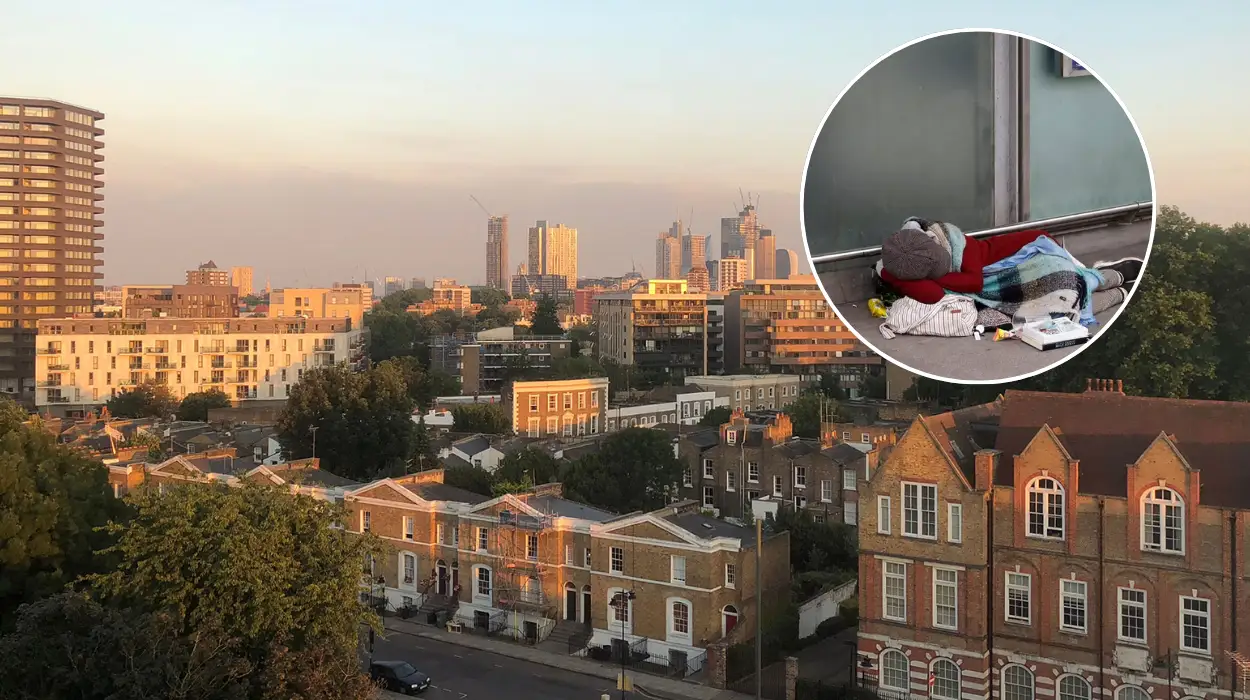
Islington (Parliament Politics Magazine) – Islington Council’s emergency housing budget rises to £15m for 2025/26, with officials citing strong outcomes and renewed focus on homelessness prevention.
The city’s homelessness budget increased from £5 million to £15 million between April 2024 and April 2025, when the number of homes in temporary accommodation (TA) peaked at 1,778, according to a Freedom of Information (FOI) request made to Islington Council by the Original Democracy Reporting Service (LDRS).
According to the same data, the city’s total spending on forestallment grew from £1.8 million in 2022 – 2023 to £11.6 million by April 2025, a further than six-fold increase in just three times.
The borough’s costly efforts, according to Islington’s senior housing officer last week, have helped it “stem the tide” of the surge of TA applications, which is the sixth-highest in London.
Director of Housing Operations Ian Swift told council members on Tuesday, November 11, that the borough should be “proud” of its preventative efforts, which have reduced the number of homeless people and households in TA compared to many other London boroughs. According to him, people living in temporary housing were also spending less time there than the average for London.
According to government figures, Islington families in TA with children were spending more time there on average than any other type of household in the borough, Swift continued, adding that the numbers were “still going up in the wrong direction.”
London is now seven times more dependent on temporary housing than it was in 2020, according to new research released last week by the charity Crisis.
However, another research conducted that same week by the Combined Homelessness and Information Network (CHAIN) revealed that rough sleeping has decreased in the capital this year for the first time in three years.
Mr. Swift pointed out that Islington continues to spend less on homelessness overall than a number of other authorities. In contrast to other inner London municipalities like Newham, which spend about 3% of their total budget, the Town Hall only spent 1.8%. According to data from the charity Trust for London, 1.7% of households in Islington and 5.6% of households in Newham live in temporary housing.
However, compared to the London average, Islington does send more households of which 90% remain in the city to be housed by other local authorities.
The housing director also warned of the knock-on-effects of the “dramatic and real” crisis facing the capital:
“Homelessness and the lack of affordability doesn’t just affect housing: it affects children’s and adult’s social care.”
“We work tirelessly to house those most in need. This is more challenging than ever before as we’ve seen a significant increase in the number of people experiencing homelessness at a time when our resources are stretched to the limit. We’re proud of our efforts to eliminate rough sleeping, and Islington has one of the lowest numbers of people sleeping rough in the country,” he said.
The council received £8.1 million in 2024, the fifth-highest sum for any council in England, to support essential homelessness services including rough sleeping. According to a previous assessment from the LDRS, the number of persons sleeping on the streets of Islington rose from 85 to 162 between 2023 and 2024.
The government’s recently announced £84 million boost fund for homelessness and rough sleeping will provide Islington with £750k, according to Cllr. Woolf.
Islington now has 223,024 residents, up 0.5 over the former five times, according to the Office for National Statistics. The city has the alternate-loftiest population viscosity in all of England and Wales, after Tower townlets.
What measurable outcomes the council aims to achieve with this funding?
Reduce the number of homes entering homelessness through early intervention and forestallment programs, targeting a significant drop in new homelessness cases. Increase the speed of rehousing by furnishing timely access to temporary and endless accommodation options, aiming to dock the average duration families spend in exigency casing.
Ameliorate casing stability for homes at threat by expanding customized support services that reduce reprise homelessness and help sustain vacancies. Enhance the quality and vacuity of temporary accommodation to insure safe, secure, and suitable casing surroundings for vulnerable residents.
The council measures success through homelessness forestallment rates, rehousing times, reductions in rough resting, resident satisfaction, and fiscal performance against the homelessness budget.
