


New York (Parliament Politics Magazine) January 13, 2026 – JPMorgan Chase reported fourth quarter net income of $14.2 billion, representing 9 percent growth when excluding Apple Card acquisition costs. Total revenue reached $43.8 billion, marking a 5 percent year-over-year increase despite $1.2 billion in deal-related expenses. Adjusted earnings per share of $4.85 exceeded Wall Street consensus by 8 percent.
JPMorgan Chase completed its $17 billion Apple Card portfolio acquisition from Goldman Sachs, adding 10 million customer accounts. The transaction generated integration costs impacting reported figures while strengthening the consumer lending franchise. Chief executive Jamie Dimon highlighted economic resilience during the earnings conference call.
Market analyst Recon John highlighted JPMorgan’s earnings beat across key metrics in an X post,
“JPMorgan posts an earnings beat to kick off Bank earnings: Revenue: $46.8B vs. $46.2B est.✅ EPS: $5.23* vs. $5.00 est. ✅ *The EPS figure excludes taking a one-time charge of $2.2B related to its takeover of the Apple Card portfolio from Goldman Sachs. Equity trading revenue rose 40% to $2.9B and surpassed expectations. Investment Banking was a negative, with revenue declining 5% to $2.3B. $JPM is flat premarket but up nearly 33% over the past year.”
JPMorgan posts an earnings beat to kick off Bank earnings:
Revenue: $46.8B vs. $46.2B est.✅
EPS: $5.23* vs. $5.00 est. ✅*The EPS figure excludes taking a one-time charge of $2.2B related to its takeover of the Apple Card portfolio from Goldman Sachs.
Equity trading revenue… pic.twitter.com/TQrCOle8YB
— Recon John (@ReconJohn_) January 13, 2026
JPMorgan Chase Posts Solid Quarterly Financial Results
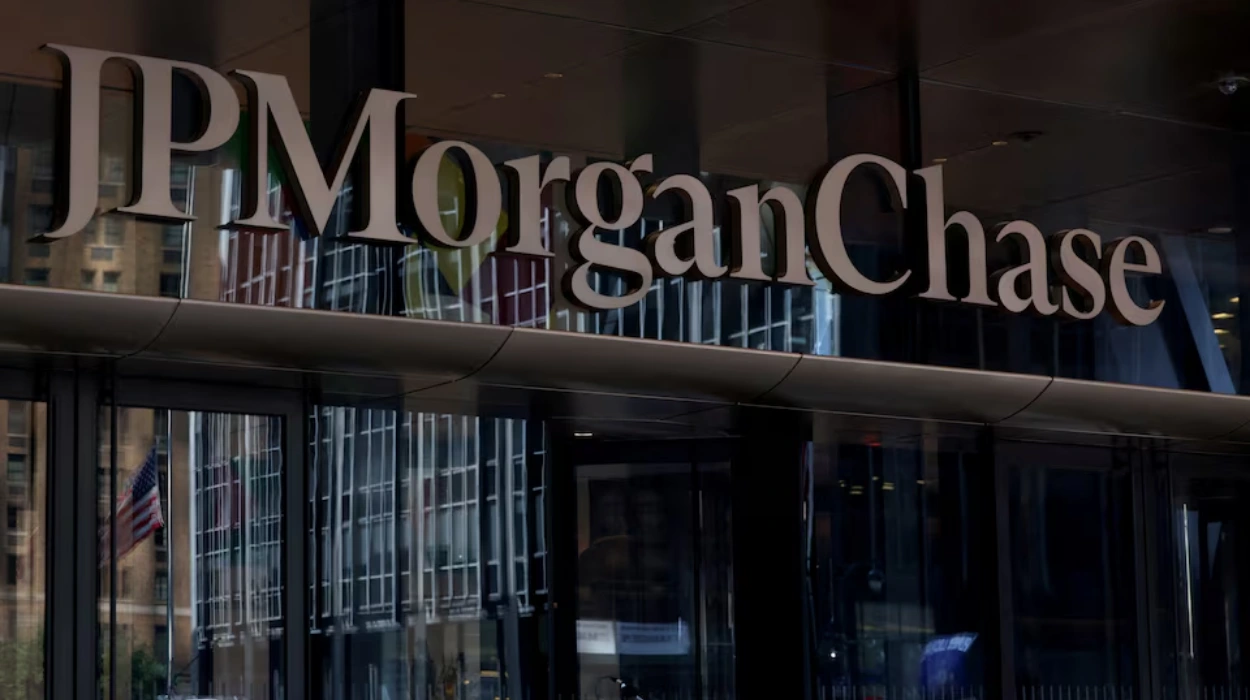 (Credit: REUTERS/Shannon Stapleton/File Photo)
Return on tangible common equity reached 19 percent, demonstrating capital efficiency. Net interest income climbed 7 percent to $24.5 billion from higher-yielding loans. Noninterest revenue grew 3 percent, totalling $19.3 billion across diversified segments.
Investment banking fees increased 22 percent year-over-year to $2.8 billion. Equities trading revenue rose 15 percent, reaching $3.4 billion amid market volatility. Fixed income trading produced $5.2 billion, representing a 4 percent sequential gain.
Common Equity Tier 1 ratio stood at 15.2 percent, surpassing regulatory thresholds. Total deposits measured $2.5 trillion, with 65 percent insured positions.
As reported by Ken Sweet of AP News, Jamie Dimon expressed optimism about the U.S. economy in a statement.
He added,
“While labor markets have softened, conditions do not appear to be worsening. Meanwhile, consumers continue to spend, and businesses generally remain healthy. These conditions could persist for some time, particularly with ongoing fiscal stimulus, the benefits of deregulation and the Fed’s recent monetary policy.”
Apple Card Portfolio Acquisition Drives Strategic Expansion
JPMorgan assumed $17 billion in Apple Card balances, transferring 10 million accounts from Goldman Sachs. Acquisition expenses totalled $900 million,n goodwill impairment plus $300 million in integration costs. Annualised fee revenue potential reaches $1.8 billion from acquired customers.
Apple Card portfolio maintains an average FICO score of 785, supporting premium credit quality. Full systems integration targets completion by the Q3 2026 timeline. Credit card loans expanded 12 percent year-over-year to $210 billion total.
Transaction volumes grew 18 percent, incorporating Apple Card contribution. Digital wallet penetration achieved 62 percent of consumer payments.
Investment Banking Fees Show Robust Quarterly Growth
Mergers and acquisitions advisory generated $1.4 billion, representing a 28 percent annual increase. Debt capital markets produced $1.1 billion from refinancing demand. Equity underwriting contributed $300 million across public offerings.
JPMorgan maintained its global number one position in announced M&A volume. Advisory roles covered 450 deals totalling $1.2 trillion transaction value during 2025. Capital markets completed 1,200 issuances aggregating $450 billion principal.
Pipeline supports Q1 2026 revenue projections across business lines.
Financial commentator Arthur KaInvest clarified the Apple Card earnings impact context in an X post,
“Additional information about $JPM earnings: The ‘small miss’ by JPMorgan Chase regarding the Apple Card deal refers to their Q4 2025 earnings report (released around January 13, 2026), where the bank reported a profit decline and missed Wall Street forecasts primarily due to costs tied to the recent Apple Card portfolio acquisition. …Excluding the Apple Card-related costs, adjusted EPS was $5.23, which beat forecasts ($4.85 expected), and the bank still had a strong year overall.
CEO Jamie Dimon noted the economy remains resilient but warned markets ‘underappreciate’ certain risks.”
Additional information about $JPM earnings:
The “small miss” by JPMorgan Chase regarding the Apple Card deal refers to their Q4 2025 earnings report (released around January 13, 2026), where the bank reported a profit decline and missed Wall Street forecasts primarily due to…
— ArthurKaInvest (@ArthurKaminsky) January 13, 2026
Consumer Banking Franchise Continues Steady Expansion
 (Credit: AP Photo/Jenny Kane)
Consumer loan balances reached $620 billion, reflecting a 6 percent growth trajectory. Core deposits grew to $1.1 trillion with a 4 percent quarterly increase. Digital interactions comprised 78 percent of client engagements.
The Chase mobile platform served 52 million monthly active users. Quarterly payment processing averaged $2.8 trillion in transaction volume. Credit card spending accelerated 11 percent, excluding the acquisition ramp.
Small business portfolio expanded to $75 billion, supporting 4.2 million clients. Digital loan originations captured 85 percent of applications received.
Corporate Investment Bank Achieves Revenue Diversification
Markets division generated $8.6 billion, representing 12 percent annual growth. Fixed income commodities and currencies trading produced $5.2 billion. Equities division contributed $3.4 billion from repurchase programme activity.
Asset and wealth management oversaw $5.8 trillion in client assets. Advisory fees increased 9 percent, totalling $4.2 billion quarterly. Portfolio allocation maintained 58 percent equity positioning.
The alternative investments platform managed $285 billion across strategies.
Credit Quality Remains Stable Across Portfolios
Net charge-offs equalled 2.8 percent of average loans, indicating consumer stability. Credit loss allowance covered 1.4 percent of outstanding balances totalling $23.4 billion. Delinquencies stabilised at 3.2 percent across consumer segments.
Commercial real estate non-performing loans measured 1.1 percent of balances. Office exposure is limited to an 8 percent conservative allocation. Multifamily delinquencies averaged 0.4 percent regionally.
Credit card payments averaged 28 percent of outstanding balances.
Expense Discipline Supports Long-term Profitability
Noninterest expenses totalled $26.5 billion, achieving a 61 percent efficiency ratio. Compensation rose 6 percent, supporting talent acquisition. Technology investments reached $4.2 billion, advancing cloud infrastructure.
Compliance costs measured $1.8 billion across operations. Marketing drove 2.5 million new checking accounts quarterly. Occupancy expenses declined 3 percent through workspace optimisation.
2026 expense growth guidance projects below a 4 percent trajectory.
Capital Returns Programme Accelerates Shareholder Value
The board approved $45 billion repurchase authorization through 2027. Quarterly dividend rose 8 percent to $1.40 per share, payable February 1. Shares outstanding declined 2.1 percent year-over-year.
Tangible book value per share increased 11 percent to $112.43. The ROTCE target range is maintained at 17 to 19 percent medium-term. Stress capital buffer achieved 12.3 percent regulatory exceedance.
Payout ratio stabilised at 28 percent, balancing growth investments.
Balance Sheet Maintains Substantial Growth Capacity
Assets totalled $4.1 trillion with $1.8 trillion diversified loan portfolio. Securities generated a 3.8 percent yield across holdings. Liquidity coverage ratio measured 142 percent minimum compliance.
Wholesale funding reached $650 billion, maintaining short duration. Federal Reserve reverse repo averaged $120 billion daily. Core deposits contributed $95 billion net interest margin.
Unencumbered collateral provided $850 billion funding capacity.
Regulatory Capital Position Exceeds Industry Standards
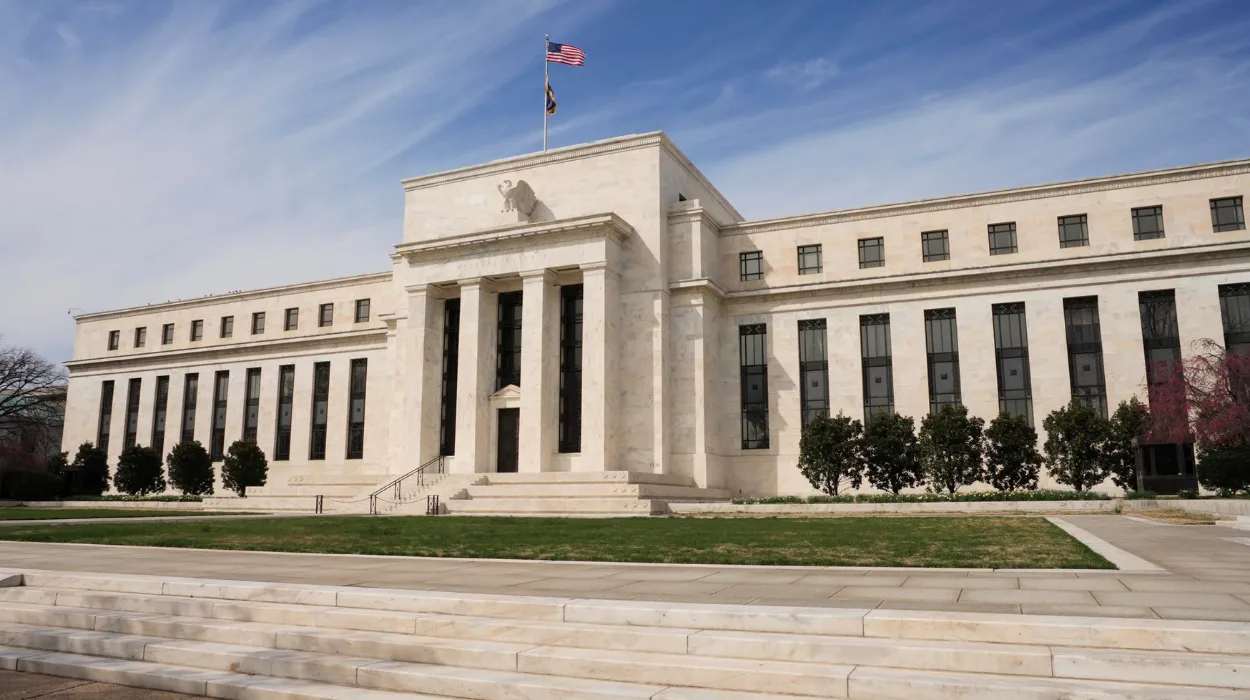
Federal Reserve stress tests confirmed capital adequacy thresholds. Standardised RWA totalled $620 billion conservative approach. Basel III Endgame compliance completed Q4 2025 requirements.
The supplementary leverage ratio achieved 6.2 percent GSIB exceedance. Resolution planning validated the single point of entry effectiveness. G-SIB surcharge maintained at 2.5 percent 2026 level.
Business Segments Deliver Balanced Performance Results
Consumer & Community
- Revenue: $17.2B
- Net Income: $5.1B
- ROTCE: 22%
Corporate & Investment
- Revenue: $14.8B
Net Income: $4.3B - ROTCE: 18%
Commercial Banking
- Revenue: $6.2B
- Net Income: $2.8B
- ROTCE: 25%
Asset & Wealth Management
- Revenue: $5.6B
- Net Income: $2.0B
- ROTCE: 16%
Commercial banking income grew 14 percent through middle-market expansion. Private bank assets reached $1.2 trillion under management.
Digital Investments Enhance Client Acquisition Channels
Cloud migration has completed 85 percent of core applications. AI models are deployed across 42 fraud detection systems. Generative AI tested customer service implementations.
Digital mortgages captured 67 percent of originations. Blockchain settlements processed $2.1 trillion annually. Cybersecurity spend totaled $1.4 billion protecting 65 million accounts.
Mobile deposits handled 180 million items quarterly.
Global Operations Support Revenue Diversification Goals
International revenue comprised 28 percent, totalling $12.3 billion quarterly. Asia Pacific wholesale generated $3.8 billion in revenue. European investment banking fees measured $2.1 billion.
Emerging markets loans represented 12 percent allocation. FX trading averaged $180 billion in daily volumes. Sustainable finance commitments totalled $2.5 trillion cumulative.
Cross-border payments grew 22 percent, serving 15,000 clients.
Management Guidance Projects Earnings Sustainability
2026 net interest income guidance reaffirmed $98 billion midpoint. The ROTCE target maintained a 17 to 19 percent range. Expense growth trajectory projects 3 to 4 percent CAGR through 2028.
Capital returns capacity supports $50 billion 2026 distributions. Credit provisions stabilised 0.9 to 1.1 percent of loans. Investment banking backlog provides first-half visibility.
Fintech acquisitions targeted payments platform expansion.
