

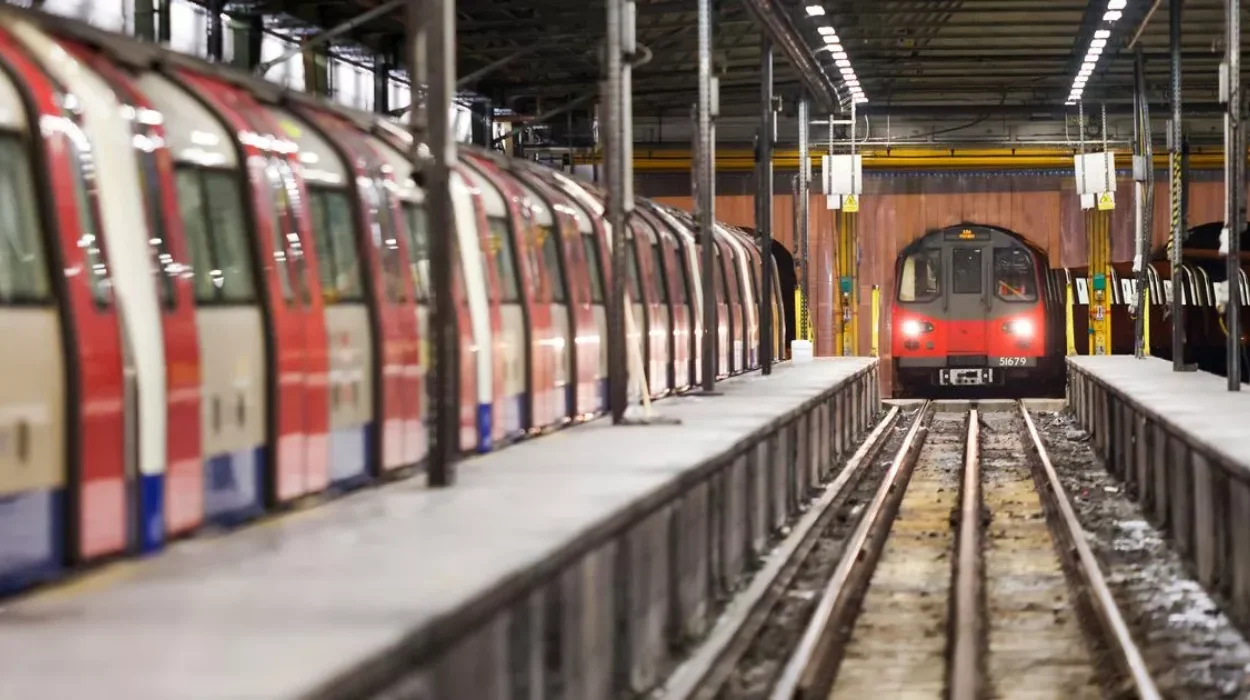
London (Parliament Politics Magazine) January 12, 2026 – Transport for London suspended all Victoria Line services from 6:30 am due to a reported signalling fault between Warren Street and King’s Cross St Pancras stations.
Commuters faced severe overcrowding on alternative lines, including Northern, Piccadilly, and Circle services, with delays exceeding two hours across central London. Replacement bus services proved insufficient for peak demand, stranding thousands during the morning rush.
TfL engineers worked throughout the morning to diagnose and resolve the issue. Full service restoration occurred by 11:15 am, though residual delays persisted into the afternoon.
Victoria Line signalling fault triggers suspension
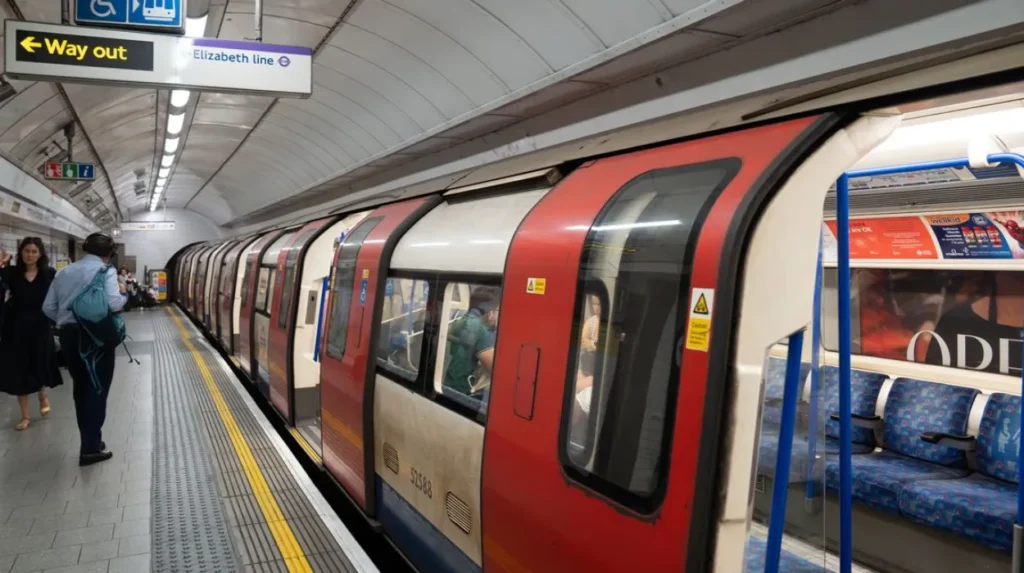
The Victoria Line, serving 16 stations from Brixton to Walthamstow Central, halted operations shortly after 6:30 am when an automatic signalling system failure occurred at Warren Street. As reported by Dan Moynihan of BBC News, TfL control room staff received alerts of multiple signal failures, prompting immediate suspension to ensure passenger safety.
TfL said in X post,
“Hi Ryan Sorry to hear this. The Victoria line is currently suspended while we fix a signal failure at Green Park. RG”
@TfL been in a tunnel for 30 mins outside Vauxhall. I cannot hear the driver announcements as the tannoy is inaudible. What is happening?
— Ryan Carey-Hills (@RyanCareyHills) January 12, 2026
Rebecca McCulloch of MyLondon reported that trains stopped in tunnels between Vauxhall and Victoria, with passengers instructed to remain onboard initially. Emergency detrainment procedures commenced by 7:00 am, affecting over 1,200 passengers across five stationary trains.
TfL issued its first service update at 6:45 am via station announcements and the TfL Go app, advising passengers to complete journeys online or seek alternative routes. By 8:00 am, no trains moved through the affected section, paralysing services to key hubs like Oxford Circus and Victoria Station.
Commuter disruption and overcrowding on alternatives
Northern Line platforms at Bank and Moorgate became dangerously overcrowded as Victoria Line users diverted northbound. Piccadilly Line eastbound trains from Heathrow faced 45-minute delays from platform refusals at Leicester Square.
Software engineer Diego Ceccarelli flagged interchange issues during the outage on X,
“Dear @TfL, when the Victoria line is suspended, Stockwell station closes to avoid crowding and it is not possible to use the Northern Line. The website always fails to report it like this morning. Could you please fix?”
dear @TfL, when the Victoria line is suspended, Stockwell station closes to avoid crowding and it is not possible to use the Northern Line.
— Diego Ceccarelli (@diegoceccarelli) January 12, 2026
The website always fails to report it like this morning. Could you please fix? pic.twitter.com/5ObfcDP2WO
Replacement buses operated on two routes: Route V1 (Brixton to Finsbury Park) and Route V2 (Victoria to Seven Sisters), but low-frequency service, buses every 20-30 minutes, failed to accommodate surge demand. As noted by transport correspondent Josh Barrie of The Standard, queues for buses stretched 200 metres at Victoria Coach Station by 7:45 am.
Office workers reported walking 3-5km between stations, with Google Maps data showing pedestrian traffic up 300 per cent along Oxford Street. Cycle hire usage spiked 180 per cent year-on-year during the 7-9 am window.
TfL response and engineering efforts

TfL chief operating officer Andy Lord stated at 8:30 am during a BBC Radio London interview,
“Our teams are on site with every available engineer to reset the signalling system. Passenger safety remains paramount.”
Low-voltage power supplies to trackside equipment were isolated for fault-finding.
Network Rail confirmed no overhead line issues affected National Rail connections at Blackfriars or Farringdon, though Thameslink services slowed due to station congestion. British Transport Police attended Warren Street at 7:15 am to manage crowds but reported no arrests.
By 9:30 am, signalling tests allowed limited shuttle services between Brixton and Victoria, expanding to full line operation by 11:15 am after manual override authorisation. TfL compensation claims opened immediately via the Delay Repay scheme for journeys over 15 minutes late.
Impact on key stations and businesses
Victoria Station, interchange for National Rail and District/Circle lines, recorded zero Tube movements for 4.5 hours, halting 80 per cent of normal throughput. Oxford Circus saw stationary escalators from overcrowding, with lifts operating at 120 per cent capacity.
City firms near Liverpool Street and Bank reported 25 per cent staff absences by 10 am, citing unfeasible travel times. Santander’s UK headquarters at London Wall activated work-from-home protocols, while Clifford Chance evacuated non-essential staff from Canary Wharf connections.
Retail footfall dropped 40 per cent at Oxford Street stores during peak hours, per Springboard data. Deliveroo and Uber Eats suspended operations in Zone 1 from 7-9 am due to road congestion around station cordons.
Historical context of Victoria Line disruptions
The Victoria Line, opened fully in 1971, experienced full suspensions four times in 2025: March (power failure), June (track fault), September (cyber incident), and November (flooding). Signalling upgrades completed in 2024 aimed to reduce failures by 30 per cent but faced integration delays.
TfL’s £1.2 billion Four Lines Modernisation programme targets Victoria Line renewal by 2028, including new trains and platform-edge doors. Today’s fault is traced to legacy Westinghouse signal relays installed in 1972, per TfL engineering bulletin.
Mayor Sadiq Khan’s office tweeted at 9:00 am,
“Unacceptable disruption—TfL must accelerate reliability investments.”
Transport spokesperson Seb Dance added,
“Every Londoner deserves a dependable Tube network.”
Passenger accounts and emergency measures
Commuter Sarah Jenkins, 32, told PA News Agency from Warren Street at 8:20 am,
“Trapped underground for 90 minutes, no air con, no updates. Walked to Euston in panic.”
Office worker Tom Reynolds posted a video of 400-metre platform queues at Green Park.
London Fire Brigade deployed four appliances to Victoria and King’s Cross for crowd ventilation, dispersing 2,500 passengers by 9:00 am. St John Ambulance treated 17people for anxiety attacks across affected stations.
TfL suspended fare gates at Brixton, Seven Sisters, and Finsbury Park from 7:00 am-12:00 pm, allowing gate-line exits without Oyster/ contactless penalties. Travelcards remained valid across all Underground and Overground routes.
Network-wide ripple effects
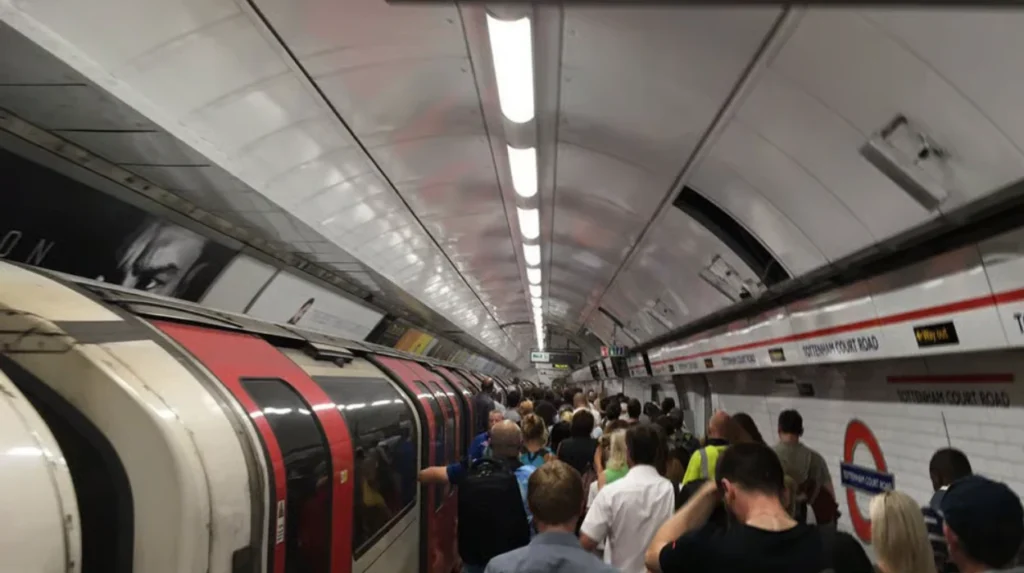
Central Line speeds reduced by 20 per cent from signal checks at Tottenham Court Road. Jubilee Line westbound skipped Bond Street for 90 minutes due to cross-platform congestion. DLR services from the Bank filled instantly, causing 30-minute waits at street level.
Elizabeth Line operated normally but absorbed 15 per cent extra load at Tottenham Court Road, with TfL Rail confirming no capacity issues. National Rail operators Southeastern and Thameslink added four extra stopping services to Cannon Street and London Bridge.
By midday, 87 per cent of scheduled Tube trains ran, recovering to 97 per cent peak service by 14:00. TfL’s real-time performance dashboard logged 128,000 affected passenger journeys.
Government and regulatory response
Department for Transport emergency protocols were activated at 7:30 am, coordinating with TfL via the London Transport Incident Management System. Rail Minister Kirsty Milne MP received hourly briefings at Westminster.
Office of Rail and Road inspectors attended the FL Network Control Centre by 10:00 am, initiating preliminary enquiries under the Railways and Transport Safety Act 2003. Formal investigation notice expected within 48 hours.
London Assembly transport committee chair Keith Prince AM scheduled an urgent question for Wednesday’s plenary, seeking details on contingency planning failures.